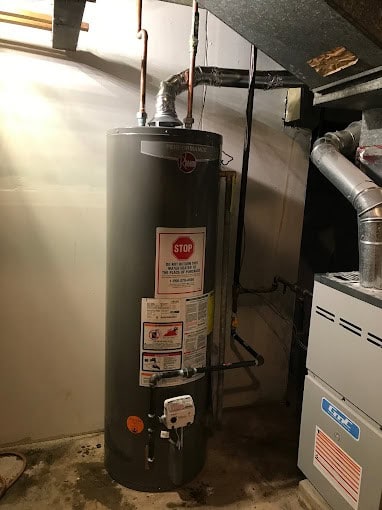
Deciding between tankless water heater repair and replacement? Discover the real costs, the 50% rule, and what homeowners insurance actually covers when water damage strikes.
Share:
Request a Callback
Want to skip the wait?
Simply enter your contact details, and we’ll call you when a Go Rooter Advisor becomes available.
Summary:
You turn on the shower expecting hot water, but it’s ice cold. Or worse—you notice water pooling near your water heater, and now you’re wondering if your homeowners insurance will cover the mess.
The problem is, nobody wants to throw money at a repair that won’t last, nobody wants to replace a unit that could’ve been fixed cheaply, and nobody wants to find out their insurance won’t cover the damage after it’s already happened. In Cook County, where hard water beats up on these systems faster than most places, these decisions get even trickier. This guide walks you through the real numbers, what insurance actually covers, and the factors that matter when you’re trying to figure out your next move.
Tankless water heater repair costs run anywhere from $150 to $1,300, with most homeowners paying around $600 for common fixes. That’s a wide range, and it exists because “broken” can mean a lot of different things.
A simple sensor replacement might cost $150 to $400. An ignition or burner issue typically runs $200 to $800. But if your heat exchanger is corroded or leaking, you’re looking at $500 to $1,300, and at that point, you’re not just fixing a part—you’re approaching replacement territory.
The type of repair matters as much as the price. Some fixes buy you years of reliable service. Others are Band-Aids on a system that’s already failing. That’s why the cost alone doesn’t tell you whether repair is the right call.

Not all repairs cost the same, even for the same problem. A few factors push the price up fast.
The part itself is the obvious one. Heat exchangers are expensive because they’re the core of the system. Sensors and thermostats are cheaper. But labor adds up too, especially if your unit is tucked in a tight attic or basement corner where the tech has to work around ductwork and pipes.
Gas units tend to cost more to repair than electric ones. They’ve got more components—igniters, burners, gas valves—and each one can fail. Electric models are simpler, but when the circuit board goes, you’re still paying $400 to $800 for the replacement.
Then there’s hard water. If you’re in Cook County, this is your reality. Chicago’s water is loaded with minerals that build up inside the heat exchanger and clog the system. That mineral scale doesn’t just reduce efficiency—it causes parts to fail faster. A descaling service costs $150 to $350, and if you’ve skipped it for years, the damage might already be done. At that point, you’re not just paying for descaling. You’re paying for the repairs caused by not doing it sooner.
Brand matters too. Some manufacturers use proprietary parts that cost more and take longer to get. Others have parts readily available at every supply house in town. If your unit is older or from a less common brand, expect to wait longer and pay more.
Certain problems show up more than others, and knowing what they cost helps you decide whether the repair makes sense.
Mineral buildup is the most common issue, especially in areas with hard water. It clogs the heat exchanger, reduces water flow, and makes the unit work harder. Professional descaling runs $150 to $350 and should happen annually if your water is hard. Skip it, and you’ll end up with a clogged system that needs a $500+ heat exchanger repair—or replacement.
Ignition failures happen when the gas supply is interrupted, the burner is dirty, or the igniter itself is worn out. Repairs cost $200 to $800 depending on what’s causing it. These are usually fixable, but if your unit is old and the ignition system keeps failing, it’s a sign other parts are next.
Sensor and thermostat issues cause inconsistent water temperature—hot one minute, cold the next. Replacing them costs $150 to $400. It’s a straightforward fix, but if you’re seeing error codes constantly or the unit keeps shutting down, the problem might be deeper than a bad sensor.
Valve and pipe leaks run $200 to $500 to repair. Small leaks from fittings can be tightened or resealed. But if the leak is coming from inside the unit or from corroded components, repair won’t hold. That’s when replacement becomes the better option.
Heat exchanger failure is the big one. It’s the most expensive repair at $500 to $1,300, and it’s often the point where replacement makes more financial sense. If your heat exchanger is leaking or corroded, and your unit is over 10 years old, you’re better off replacing the whole system.
Want live answers?
Connect with a Go-Rooter Emergency Plumbers expert for fast, friendly support.
When a water heater leaks and causes damage to your foundation or basement, the first question is usually whether insurance will cover it. The answer depends on how the damage happened.
Homeowners insurance typically covers sudden and accidental water damage. If your tankless water heater’s heat exchanger suddenly cracks and floods your basement, damaging the foundation, walls, or flooring, your policy will likely cover the resulting damage—but not the water heater itself. That’s a critical distinction. Insurance pays to fix the damage caused by the leak, not to replace the appliance that leaked.
If the leak happened slowly over time because of wear and tear, corrosion, or lack of maintenance, insurance will probably deny the claim. Insurers expect you to maintain your equipment, and gradual damage from neglect isn’t covered under most policies.
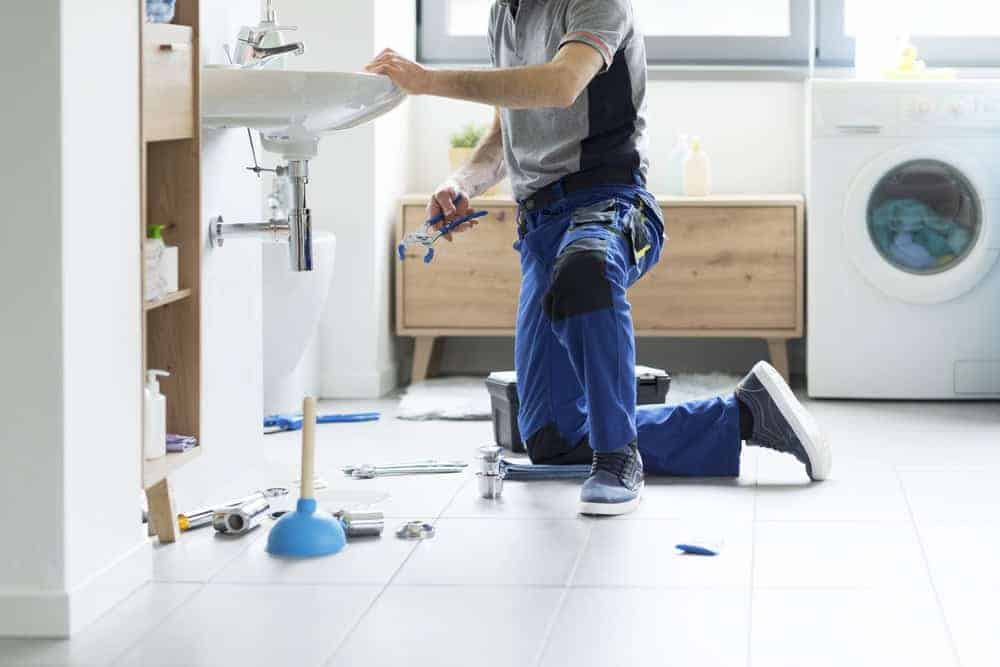
If your water heater causes damage, documentation is everything. Insurance adjusters need proof that the damage was sudden and accidental, not the result of long-term neglect.
Take photos and videos immediately. Show the water heater, the leak, and all the damage it caused—foundation cracks, soaked drywall, warped flooring, damaged belongings. The more you document, the stronger your claim.
Camera inspections are valuable here. We can run a camera to show exactly where the leak originated and how it spread. That video evidence proves the damage was sudden and helps your adjuster understand the scope of the problem. We offer camera inspection services specifically to help homeowners document plumbing issues for insurance purposes.
Keep receipts for any emergency repairs you make to stop the leak or prevent further damage. Insurance companies expect you to mitigate the damage, and those receipts show you acted quickly. But don’t start major repairs until the adjuster has seen the damage—you need their approval before you rebuild.
Write down a timeline of events. When did you first notice the leak? When did you call a plumber? What did they find? That written record helps your claim move faster and reduces the chance of disputes later.
Understanding what insurance doesn’t cover saves you from filing a claim that’s going to get denied.
The water heater itself is almost never covered. If it breaks down due to age, wear and tear, or mechanical failure, you’re paying for the repair or replacement out of pocket. Insurance covers the damage caused by the failure, not the appliance.
Gradual leaks aren’t covered either. If your water heater has been slowly dripping for months and you didn’t fix it, the resulting foundation damage, mold, or rot won’t be covered. Insurers view that as preventable damage caused by neglect.
Manufacturer defects and faulty installation are also excluded. If your water heater was installed incorrectly and that caused the leak, your installer’s workmanship warranty should cover it—not your homeowners insurance. Same goes for defects. That’s what manufacturer warranties are for.
Flood damage from external sources requires separate flood insurance. If your basement floods because of heavy rain and damages your water heater, your standard homeowners policy won’t cover it. You need a separate flood policy for that.
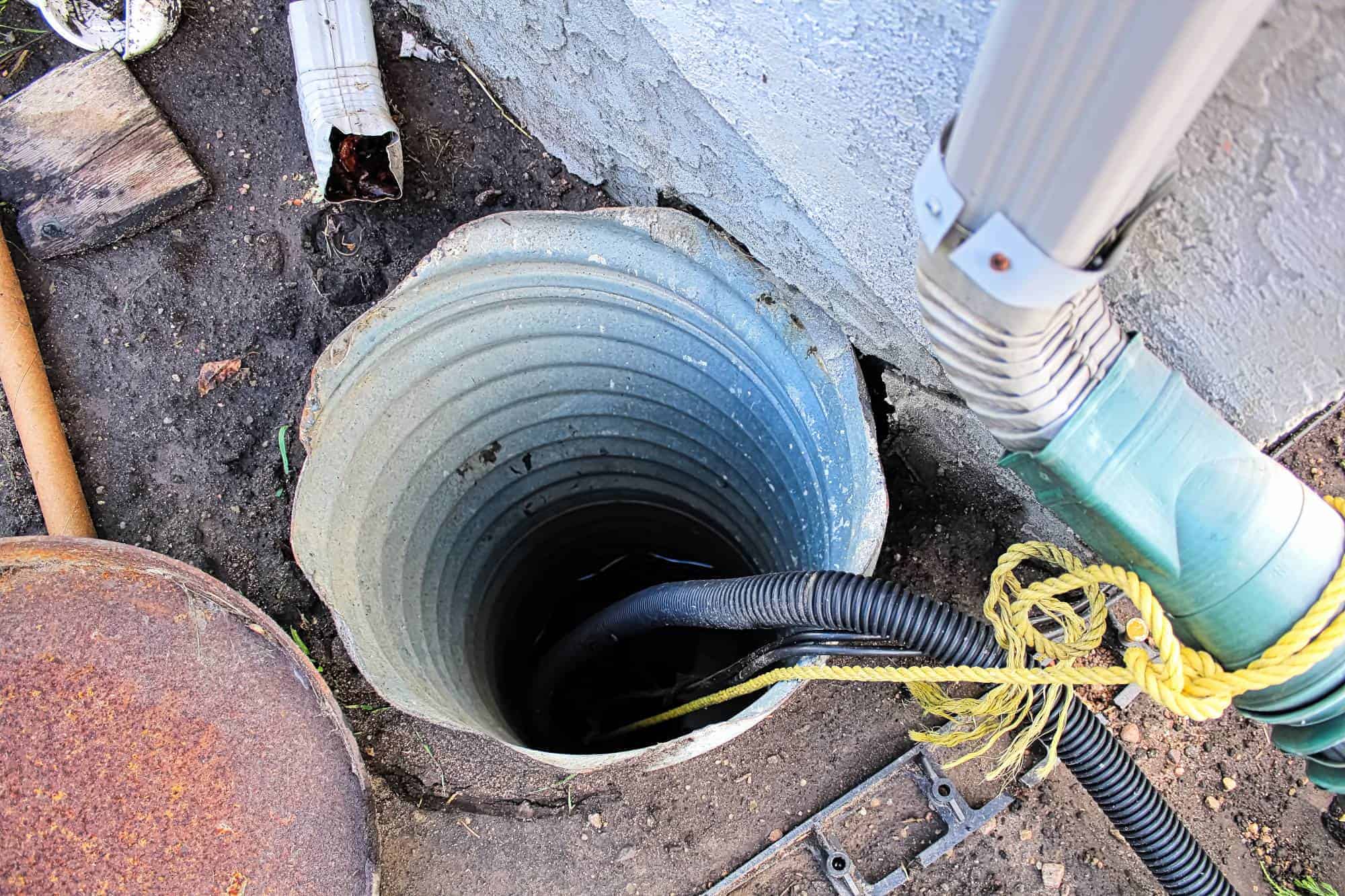
Underground water leaks are a different animal. If a pipe under your foundation or in your yard bursts and causes damage, coverage depends on where the leak is and what caused it.
Most homeowners insurance policies cover sudden and accidental discharge of water from your plumbing system. If an underground pipe bursts without warning and floods your basement or damages your foundation, that’s typically covered. But if the pipe leaked slowly over time and you didn’t notice until the damage was severe, the claim might be denied.
Service line coverage is often sold as an add-on or endorsement to your homeowners policy. It covers the cost of repairing or replacing underground water, sewer, or gas lines on your property. Without that endorsement, you’re paying for the pipe repair yourself, even if the resulting damage is covered.
Utility companies sometimes offer service line protection plans too. These are separate from your homeowners insurance and specifically cover the pipes running from the street to your house. If you’ve got old pipes under your property, that coverage is worth considering.
Article details:
Share:
Continue learning:
Request a Callback
Want to skip the wait?
Simply enter your contact details, and we’ll call you when a NY Spine Advisor becomes available.