Gas leaks pose serious risks to Chicago homeowners. Recognizing warning signs like rotten egg odors, hissing sounds, and physical symptoms can protect your family and property.
Share:
Request a Callback
Want to skip the wait?
Simply enter your contact details, and we’ll call you when a Go Rooter Advisor becomes available.
Summary:
Natural gas in its pure form has no smell at all. You wouldn’t know it was there. That’s exactly why utility companies add a chemical called mercaptan to the gas supply, giving it that distinctive rotten egg or sulfur odor. It’s not pleasant, but it’s intentional.
The smell is your first line of defense. If you catch even a faint whiff of that sulfur-like odor near your gas appliances, meter, or anywhere in your home, take it seriously. In urgent situations, contacting a professional for emergency plumbing services is critical. Some people describe it as smelling like rotten eggs, others say it’s more like sulfur or even a skunk-like scent. However you’d describe it, you’ll know it’s not normal.
Don’t assume a weak smell means a small problem. Gas can dissipate quickly in well-ventilated areas, making leaks seem less severe than they actually are. You also can’t rely solely on your nose—some people have a diminished sense of smell, and certain conditions can mask or reduce the odorant’s effectiveness.

Your body often knows something’s wrong before you consciously recognize the problem. Exposure to natural gas, even at low levels, triggers physical symptoms that many people mistake for other issues. Headaches, dizziness, and fatigue top the list. You might feel nauseous or notice your breathing feels off.
Here’s the pattern to watch for: symptoms that improve when you leave your home but return when you’re back inside. That’s a major red flag. During Chicago’s winter months, when homes are sealed tight for heating efficiency, these symptoms can intensify because gas has less opportunity to escape through ventilation.
Higher concentrations bring more severe reactions. Memory problems, confusion, loss of concentration, and in extreme cases, loss of consciousness can occur. Natural gas exposure can lead to asphyxiation because it displaces oxygen in the air. If multiple people in your household are experiencing flu-like symptoms with no apparent cause, especially during heating season, consider the possibility of a gas leak.
Pets can show symptoms too. Watch for unusual lethargy, loss of appetite, or disorientation in your animals. They’re often more sensitive to changes in air quality than humans are.
Don’t wait to feel better. If you suspect gas exposure is causing your symptoms, evacuate immediately and seek fresh air. Then call for help from a safe distance. Your health isn’t worth the risk of confirming your suspicions while still inside.
Your body often knows something’s wrong before you consciously recognize the problem. Exposure to natural gas, even at low levels, triggers physical symptoms that many people mistake for other issues. Headaches, dizziness, and fatigue top the list. You might feel nauseous or notice your breathing feels off.
Here’s the pattern to watch for: symptoms that improve when you leave your home but return when you’re back inside. That’s a major red flag. During Chicago’s winter months, when homes are sealed tight for heating efficiency, these symptoms can intensify because gas has less opportunity to escape through ventilation.
Higher concentrations bring more severe reactions. Memory problems, confusion, loss of concentration, and in extreme cases, loss of consciousness can occur. Natural gas exposure can lead to asphyxiation because it displaces oxygen in the air. If multiple people in your household are experiencing flu-like symptoms with no apparent cause, especially during heating season, consider the possibility of a gas leak.
Pets can show symptoms too. Watch for unusual lethargy, loss of appetite, or disorientation in your animals. They’re often more sensitive to changes in air quality than humans are.
Don’t wait to feel better. If you suspect gas exposure is causing your symptoms, evacuate immediately and seek fresh air. Then call for help from a safe distance. Your health isn’t worth the risk of confirming your suspicions while still inside.
Want live answers?
Connect with a Go-Rooter Emergency Plumbers expert for fast, friendly support.
The moment you suspect a gas leak, your priority shifts to safety. Don’t try to locate the source. Don’t investigate. Don’t think you need to confirm your suspicions before acting. Just get out.
Evacuate everyone immediately, including pets. Leave doors open as you exit to help ventilate, but don’t waste time opening every window in the house. Speed matters more than thorough ventilation at this point. Once you’re out, stay out. Move to a location where you no longer smell gas.
Here’s what you absolutely cannot do: use any device that could create a spark. That means no light switches, no phones (even cell phones if you’re still inside), no doorbells, no garage door openers, no flashlights, and definitely no matches or lighters. Even the small spark from flipping a light switch can ignite gas that’s reached a certain concentration in your home.
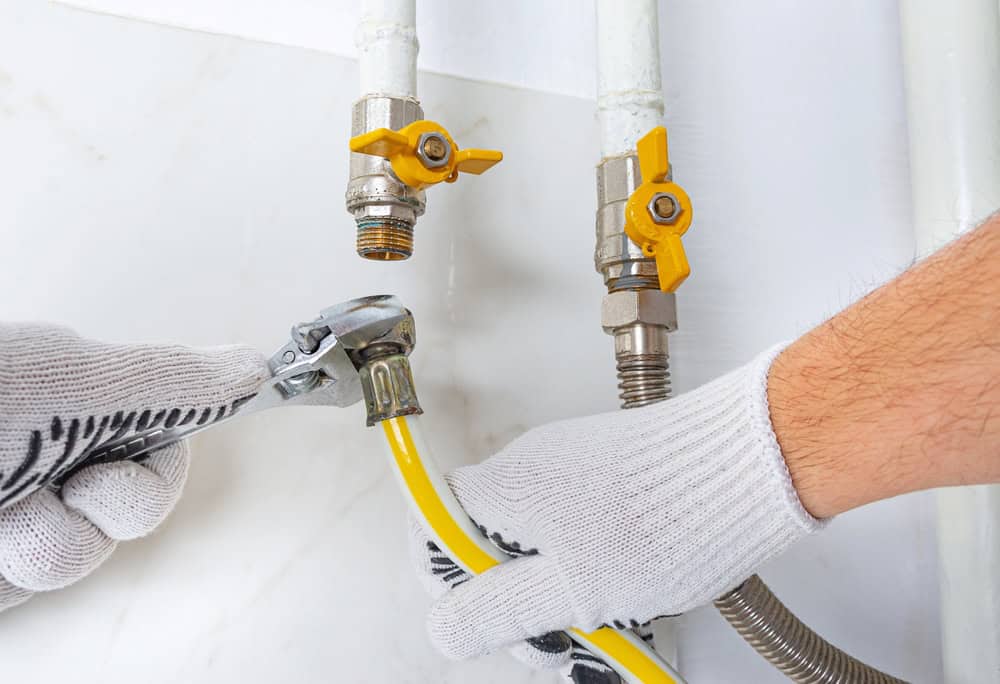
Knowing where your gas shut-off valve is located before an emergency happens can save critical time. The main shut-off valve is typically next to your gas meter, either outside your home or in a utility space. In Chicago, you’ll usually find it on the side of your building, sometimes in a basement or mechanical room.
The valve runs parallel to the pipe when gas is flowing. To shut it off, you need a 12-inch or larger adjustable wrench. Give the valve a quarter turn in either direction until it’s perpendicular (crosswise) to the pipe. That’s it—the gas is now off.
Keep that wrench with your emergency supplies or near the valve, but don’t attach it to the meter or gas piping itself. You want it accessible but not in a place where someone could tamper with your meter.
Here’s the critical part: once you shut off the gas at the meter, do not turn it back on yourself. Ever. This isn’t a DIY situation. Your gas utility company or a licensed professional needs to inspect your system, check for leaks, restore service properly, and relight pilot lights on your appliances. Turning gas back on without proper safety checks can create an even more dangerous situation than the original leak.
If you can safely access your gas meter during an evacuation and you know how to shut it off, go ahead. But if there’s any delay, any uncertainty, or any risk involved in reaching the meter, skip it and just get out. Your life is more valuable than the extra step of shutting off the valve. You can always call Peoples Gas or a licensed plumber once you’re at a safe distance.
Once you’re safe, you need to make calls. From your safe location away from the building, call 911 first if you believe the situation is immediately life-threatening. Then contact Peoples Gas—that’s Chicago’s gas utility provider for emergency gas services.
Peoples Gas will send someone to assess the situation and determine if there’s an active leak. If they find one, they’ll typically shut off your gas service and may red-tag your system until repairs are made. Here’s where homeowners get stuck: the utility company identifies the problem, but they don’t fix it. That’s your responsibility.
You’ll need a licensed plumber who specializes in gas line repair to assess the damage, make necessary repairs, and test your system before the gas company will restore service. This isn’t work for a handyman or a general contractor. Gas line work in Chicago requires proper licensing, knowledge of local building codes, and experience with the specific requirements Peoples Gas has for restoration of service.
We provide 24/7 emergency response for gas line issues throughout Chicago and Cook County. When you’re dealing with a gas emergency, you need someone who can respond fast, diagnose accurately, and complete repairs so you can get your gas service restored without unnecessary delays. Upfront pricing means you know the cost before work begins—no surprises when you’re already stressed.
The repair process typically involves isolating the leak, replacing damaged sections of pipe, pressure testing the entire system, and coordinating with Peoples Gas for inspection and service restoration. Depending on the extent of damage, repairs might take a few hours or require more extensive work. Older Chicago homes, particularly in neighborhoods like Lincoln Park, Lakeview, and Oak Park, often have aging gas infrastructure that may need more comprehensive attention.
Don’t wait on gas line repairs. The longer you’re without gas service, the longer you’re without heat, hot water, and cooking capability. In a Chicago winter, that’s not just inconvenient—it’s potentially dangerous in its own right.
Gas leaks are serious, but they’re also manageable when you know what to look for and how to respond. That rotten egg smell, physical symptoms that improve when you leave home, hissing sounds near appliances, and dying vegetation outside are all warning signs you can’t afford to ignore. Your response matters: evacuate first, call for help from a safe distance, and never turn gas back on yourself after shutting it off.
Prevention is your best strategy. Annual inspections of your gas lines and appliances, particularly before Chicago’s heavy heating season, catch problems before they become emergencies. Installing carbon monoxide detectors (which detect a different but related threat) and knowing where your gas shut-off valve is located gives you tools to protect your family.
If you’re dealing with a gas leak or need professional gas line repair in Chicago, IL, we’re available 24/7 for fast response and reliable repairs. Your safety is too important to leave to chance.
Article details:
Share:
Continue learning:
Request a Callback
Want to skip the wait?
Simply enter your contact details, and we’ll call you when a NY Spine Advisor becomes available.