Barrington Hills' wooded properties face serious sewer line threats from tree root intrusion. Hydro jetting offers a powerful, landscape-safe solution that removes roots completely.
Share:
Request a Callback
Want to skip the wait?
Simply enter your contact details, and we’ll call you when a Go Rooter Advisor becomes available.
Summary:
Roots don’t attack your sewer line out of spite. They’re doing exactly what nature designed them to do—seeking water and nutrients to keep the tree alive.
Your sewer line is basically a nutrient delivery system. It carries warm, moisture-rich wastewater that roots can detect from surprising distances. Even the tiniest crack or loose joint releases vapor into the surrounding soil, and tree roots are remarkably good at finding it.
Barrington Hills properties face higher risk than most areas. The combination of mature landscaping, older homes with clay or cast iron pipes, and large lots with long sewer runs creates the perfect conditions for root intrusion. Many estates in the area were built before modern PVC became standard, which means your pipes likely have vulnerable joints and materials that deteriorate over time.
The process starts small. Roots don’t smash through solid pipes like you might imagine. Instead, they exploit weaknesses.
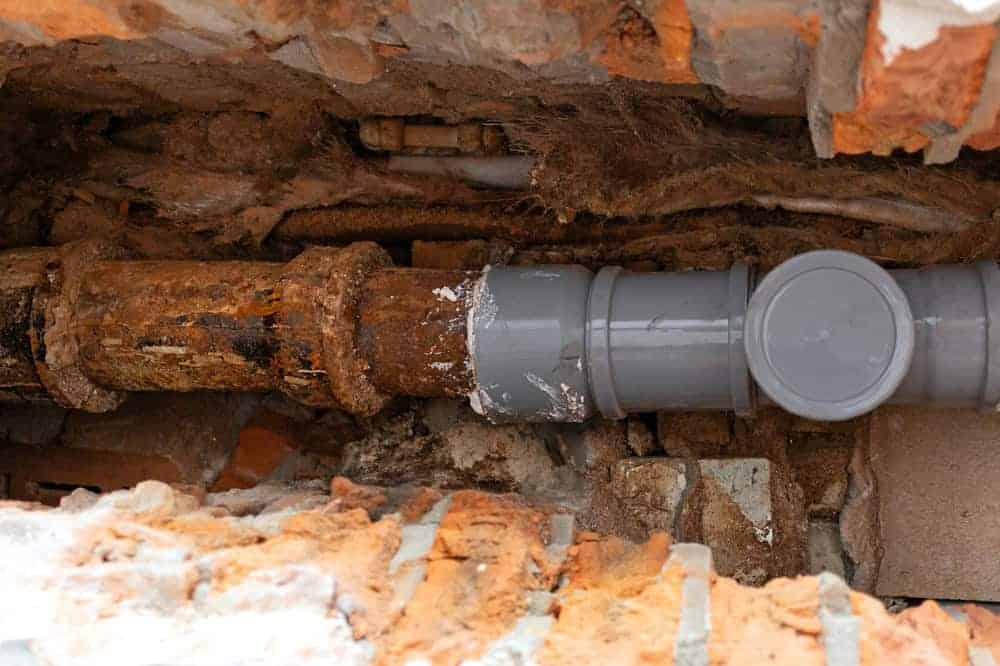
Clay pipes develop cracks as they age. Cast iron corrodes. Concrete deteriorates, especially with Chicago’s freeze-thaw cycles that expand and contract the soil. Even modern PVC can have improperly sealed joints. Any of these creates an entry point.
Hair-like feeder roots are the first invaders. They’re thin enough to slip through cracks as narrow as 1/16 of an inch. Once inside, everything changes.
The inside of your sewer pipe is like a greenhouse for roots. Constant moisture, nutrient-rich waste, and oxygen create ideal growing conditions. Those tiny feeder roots thicken into larger anchor roots. They branch out. They multiply.
As roots grow inside the pipe, they create a dense mass that catches everything flowing past—grease, toilet paper, waste, debris. What started as a small intrusion becomes a serious blockage. In severe cases, the expanding roots exert enough pressure to crack or collapse the entire pipe.
This process takes time. You might not notice anything for months or even years. But roots are patient, and they’re working 24/7 underground while you’re unaware there’s a problem.
That’s why properties with mature trees need proactive inspection, not reactive emergency calls after sewage backs up into your basement.
The process starts small. Roots don’t smash through solid pipes like you might imagine. Instead, they exploit weaknesses.
Clay pipes develop cracks as they age. Cast iron corrodes. Concrete deteriorates, especially with Chicago’s freeze-thaw cycles that expand and contract the soil. Even modern PVC can have improperly sealed joints. Any of these creates an entry point.
Hair-like feeder roots are the first invaders. They’re thin enough to slip through cracks as narrow as 1/16 of an inch. Once inside, everything changes.
The inside of your sewer pipe is like a greenhouse for roots. Constant moisture, nutrient-rich waste, and oxygen create ideal growing conditions. Those tiny feeder roots thicken into larger anchor roots. They branch out. They multiply.
As roots grow inside the pipe, they create a dense mass that catches everything flowing past—grease, toilet paper, waste, debris. What started as a small intrusion becomes a serious blockage. In severe cases, the expanding roots exert enough pressure to crack or collapse the entire pipe.
This process takes time. You might not notice anything for months or even years. But roots are patient, and they’re working 24/7 underground while you’re unaware there’s a problem.
That’s why properties with mature trees need proactive inspection, not reactive emergency calls after sewage backs up into your basement.
Want live answers?
Connect with a Go-Rooter Emergency Plumbers expert for fast, friendly support.
Root problems don’t announce themselves with a loud bang. They develop gradually, giving you warning signs if you know what to watch for.
The earlier you catch root intrusion, the easier and cheaper it is to fix. Wait until you have a complete blockage and sewage backing up into your home, and you’re looking at emergency service rates plus potential property damage.
Pay attention to these signals that roots might be infiltrating your sewer line.
One slow drain is usually a localized clog. Multiple slow drains signal a main line problem.
If your kitchen sink drains slowly, then you notice the bathroom tub doing the same thing, then the toilet starts gurgling when you run the washing machine, you’re not dealing with separate issues. You’re seeing symptoms of a blockage in your main sewer line.
Gurgling happens when air gets trapped behind a partial blockage. As water tries to flow past the obstruction, it creates air pockets that bubble back up through your fixtures. That gurgling sound is literally the sound of your sewer line struggling to function.
These symptoms often start subtle. You might notice the kitchen drain is a bit slower than usual, but not slow enough to call a plumber. Then it gets a little worse. Then the bathroom starts acting up too.
Don’t wait for it to progress to a complete backup. By the time you have sewage coming up through your basement floor drain, the root mass has grown large enough to block the entire pipe. That’s an emergency situation that requires immediate professional attention.
The smart move is calling for a camera inspection as soon as you notice multiple fixtures draining slowly. The camera shows exactly what’s happening inside your pipes—whether it’s roots, grease buildup, or something else entirely. You can see the problem yourself before deciding how to fix it.
For Barrington Hills properties with mature trees, slow drains aren’t something to ignore or try fixing with drain cleaner. They’re your sewer line telling you to take a look before the problem gets expensive.
Sometimes the first clue appears in your yard, not your drains.
If you notice an area of grass that’s significantly greener and more lush than the surrounding lawn, especially in a strip that follows your sewer line path, that’s a red flag. Sewage leaking from root-damaged pipes acts like fertilizer. The grass above the leak gets extra nutrients and moisture, so it grows faster and greener than the rest of your lawn.
You might also see soggy spots in your yard when it hasn’t rained. Or small depressions and sinkholes forming. These happen when leaking sewage erodes the soil around your damaged pipe.
Foul odors outside your home, particularly near where your sewer line runs, indicate sewage escaping from damaged pipes. It’s not a normal smell you can ignore or blame on something else. It’s distinctly sewage.
Trees growing noticeably larger or healthier than others of the same species nearby might be tapping into your sewer line. A tree with direct access to your sewer’s nutrients and water will outperform trees that have to survive on rainfall and soil nutrients alone.
Inside your home, persistent sewage odors coming from drains signal that something is blocking proper venting. When roots partially block your sewer line, sewer gas can back up into your home instead of venting properly through your roof.
The worst-case outdoor sign is sewage actually pooling on the surface of your yard. If you’ve reached that point, you have a serious break in your sewer line that needs immediate professional attention.
None of these outdoor signs should be ignored or explained away. They’re all indicators that your sewer line is compromised and roots are likely involved. A camera inspection will confirm what’s happening underground and show you the extent of the damage.
For Barrington Hills homeowners, catching these signs early means you can schedule hydro jetting to clear the roots before they cause pipe failure. Wait too long, and you’re looking at pipe replacement instead of cleaning—a difference of thousands of dollars.
Tree roots and sewer lines are a bad combination, but they don’t have to mean disaster for your Barrington Hills property. The key is staying ahead of the problem.
If you have mature trees and an older home, camera inspections should be part of your regular maintenance schedule. Annual inspections catch root intrusion early, when it’s still easy and affordable to fix. Hydro jetting removes roots completely, restoring full flow and giving you years of protection instead of temporary patches.
The alternative is waiting for an emergency. Sewage backing up into your home. Weekend or holiday service rates. Potential pipe replacement if roots have caused structural damage. Property damage from flooding. Health hazards from sewage exposure.
Your Barrington Hills property is a significant investment. The mature trees and wooded privacy are part of what makes it valuable. Protecting your sewer line from those same trees is just smart homeownership.
If you’re experiencing slow drains, gurgling toilets, or any other warning signs, don’t wait to see if it gets worse. It will. Contact us at Go-Rooter Emergency Plumbers for a camera inspection and find out exactly what’s happening in your sewer line before it becomes an emergency.
Article details:
Share:
Continue learning:
Request a Callback
Want to skip the wait?
Simply enter your contact details, and we’ll call you when a NY Spine Advisor becomes available.