When your water heater quits in Chicago, you need real solutions fast. We deliver same-day repairs with transparent pricing and no surprise fees.
Share:
Request a Callback
Want to skip the wait?
Simply enter your contact details, and we’ll call you when a Go Rooter Advisor becomes available.
Summary:
That first shock of cold water in the shower says everything. Your water heater failed, your routine just derailed, and you need answers fast.
Can it be repaired or does the whole thing need replacing? What’s actually wrong? And who can fix it today without hitting you with surprise fees?
Chicago’s brutal winters, hard water, and aging home infrastructure create specific challenges for water heaters. Understanding what goes wrong and how to address it helps you make smarter decisions when problems hit. Let’s start with what actually causes these failures.
Chicago’s climate punishes water heaters. Winter groundwater temperatures drop 20-30 degrees below summer levels, forcing your unit to work significantly harder for the same result. Hard water accelerates mineral buildup inside tanks. And older homes throughout Cook County often have systems operating years past their intended lifespan.
Problems announce themselves gradually or hit without warning. Water that never gets quite hot enough. Strange rumbling from the basement. Puddles forming around the tank base. A pilot light that won’t stay lit. Or simply nothing but cold water no matter how long you wait.
Most failures fall into predictable patterns, each with different implications for cost and timing.
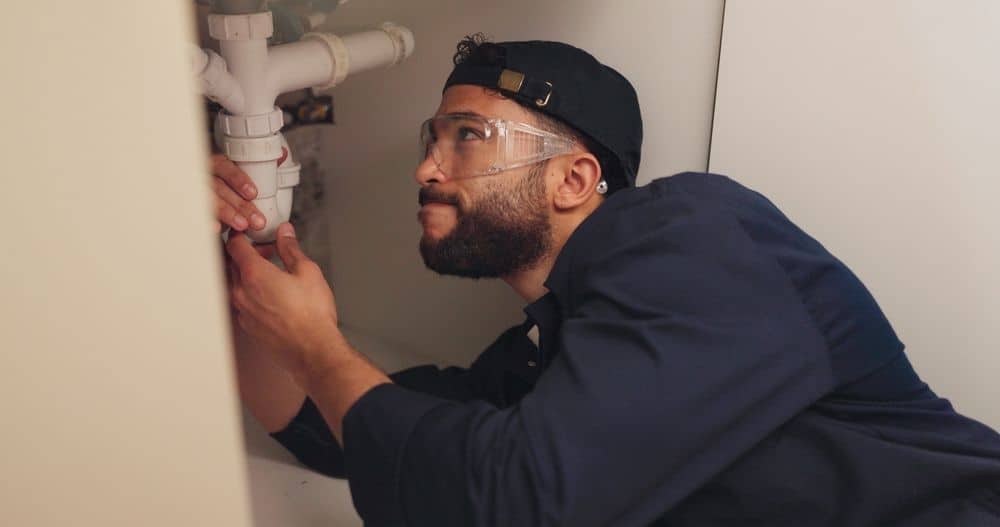
When your water runs cold or swings between scalding and lukewarm, you’re usually looking at a failed heating element, broken thermostat, or sediment blocking heat transfer. Electric models have heating elements that burn out. Gas systems develop pilot light, thermocouple, or gas valve issues.
Chicago’s winter water temperatures make marginal systems fail completely. If your water heater was already struggling, colder incoming water pushes it over the edge. The unit runs longer trying to compensate, wearing out faster.
Sediment creates an insulating barrier between your heat source and the water. The harder your system works around this, the faster it dies. Chicago’s hard water makes this worse—minerals accumulate quickly without annual flushing.
Heat loss through pipes adds another layer. Hot water travels through cold basements and exterior walls before reaching your shower. The temperature drop during transit makes homeowners think their water heater is broken when it’s actually a distribution issue.
Accurate diagnosis separates these problems. Failed elements need replacement. Sediment requires flushing. Thermostats need calibration or swapping out. But you can’t always tell the difference without proper testing, which is why guessing costs more than diagnosing.
That rumbling, popping, or banging isn’t normal. It’s sediment hardening at the bottom of your tank, creating hot spots and forcing unnecessary wear on your system. As water heats repeatedly, minerals separate and settle. Without intervention, thin layers become thick, hardened deposits.
Chicago’s hard water accelerates everything. Minerals deposit with every heating cycle. Skip annual flushing and you’re building toward failure.
This isn’t just annoying—it’s destructive. Sediment reduces your tank’s actual capacity, wastes energy, and creates uneven heating that stresses tank walls. Your system runs longer for the same result, burning through its lifespan faster.
In gas models, sediment sits between the burner and the water it’s heating. Your flame has to stay on longer, burning more fuel for less hot water. You pay more and get less.
Flushing removes sediment before it hardens into permanent damage. Chicago homeowners with hard water should treat annual flushing as mandatory, not optional. Wait too long and the sediment won’t drain out at all—a clear sign your water heater’s finished.
Professional maintenance catches this early, before you’re shopping for emergency replacements at the worst possible time.
Want live answers?
Connect with a Go-Rooter Emergency Plumbers expert for fast, friendly support.
Replacement in Cook County runs $1,700-$3,800 depending on system type, fuel source, and installation complexity. A standard 50-gallon electric unit typically costs $1,700-$2,300 installed. Gas models run $1,700-$2,500 for the same capacity.
These numbers include the unit, labor, old heater removal, and basic installation. They don’t cover Chicago’s $75 permit fee, 10.25% sales tax, or upgrades to gas lines, venting, or electrical circuits that older homes sometimes need.
Accessible locations keep costs down. Water heaters in tight crawl spaces, upper floors, or requiring structural work to access will increase labor time and cost.
Tankless installation costs more upfront—$2,791-$3,859 for gas models, $1,400-$3,000 for electric. That’s roughly double a traditional tank. But you’re buying 15-20 years of service versus 8-12, plus 24-34% energy savings for lower-usage households.
Installation complexity drives the cost difference. Tankless units often need upgraded gas lines (3/4-inch versus the 1/2-inch in older homes), new venting, or electrical panel upgrades for electric models. Gas line upgrades add $200-$800. Venting runs $100-$600. Electric panel upgrades cost $1,000-$2,500 if needed.
The upside? Many installations qualify for federal tax credits. In 2026, ENERGY STAR certified gas tankless models with UEF of 0.95+ may qualify for a 30% federal tax credit up to $600. Add utility rebates and you can trim hundreds off your investment.
Proper sizing matters. Undersized units won’t meet demand. Oversized units waste money. Professional sizing calculates your peak flow rate in gallons per minute, accounting for simultaneous usage and Chicago’s cold incoming water.
Gas water heaters cost slightly more upfront ($1,700-$2,500) than electric models ($1,700-$2,300) but often deliver lower operating costs in Chicago, where 80% of homes use natural gas for heating.
Your fuel source shapes long-term costs more than purchase price. Natural gas typically costs less per therm than equivalent electricity, making gas cheaper to operate. But electric models install easier (no venting), work without gas service, and don’t create carbon monoxide risks.
Both types last 8-12 years with proper maintenance. Both face the same enemies: sediment, corrosion, hard water. The difference is what fails first and repair costs.
Gas models have more failure points—pilot lights, thermocouples, gas valves, venting systems. Electric models are simpler but heating element replacement still runs $150-$400.
Switching fuel types during replacement adds significant cost. Electric to gas needs new gas lines, venting, and permits. Gas to electric requires electrical upgrades and panel verification. Most homeowners stick with existing fuel types to avoid complications.
Chicago codes require proper venting for gas models to prevent carbon monoxide buildup. Professional installation ensures code compliance and protects your insurance—DIY gas work can void your homeowner’s policy.
Professional installation takes 2-3 hours for tank replacements, 5-6 hours for tank-to-tankless conversions. The process starts with shutting off water and power or gas, draining the old unit, then disconnecting supply lines and venting.
A 50-gallon heater holds 400 pounds of water when full, so complete draining matters. Most services include old unit disposal, though some charge extra.
New unit installation requires precise connections to water, gas or electrical, and venting for gas models. Everything must meet Chicago codes and manufacturer specs. Improper installation voids warranties and creates hazards.
Article details:
Share:
Continue learning:
Request a Callback
Want to skip the wait?
Simply enter your contact details, and we’ll call you when a NY Spine Advisor becomes available.