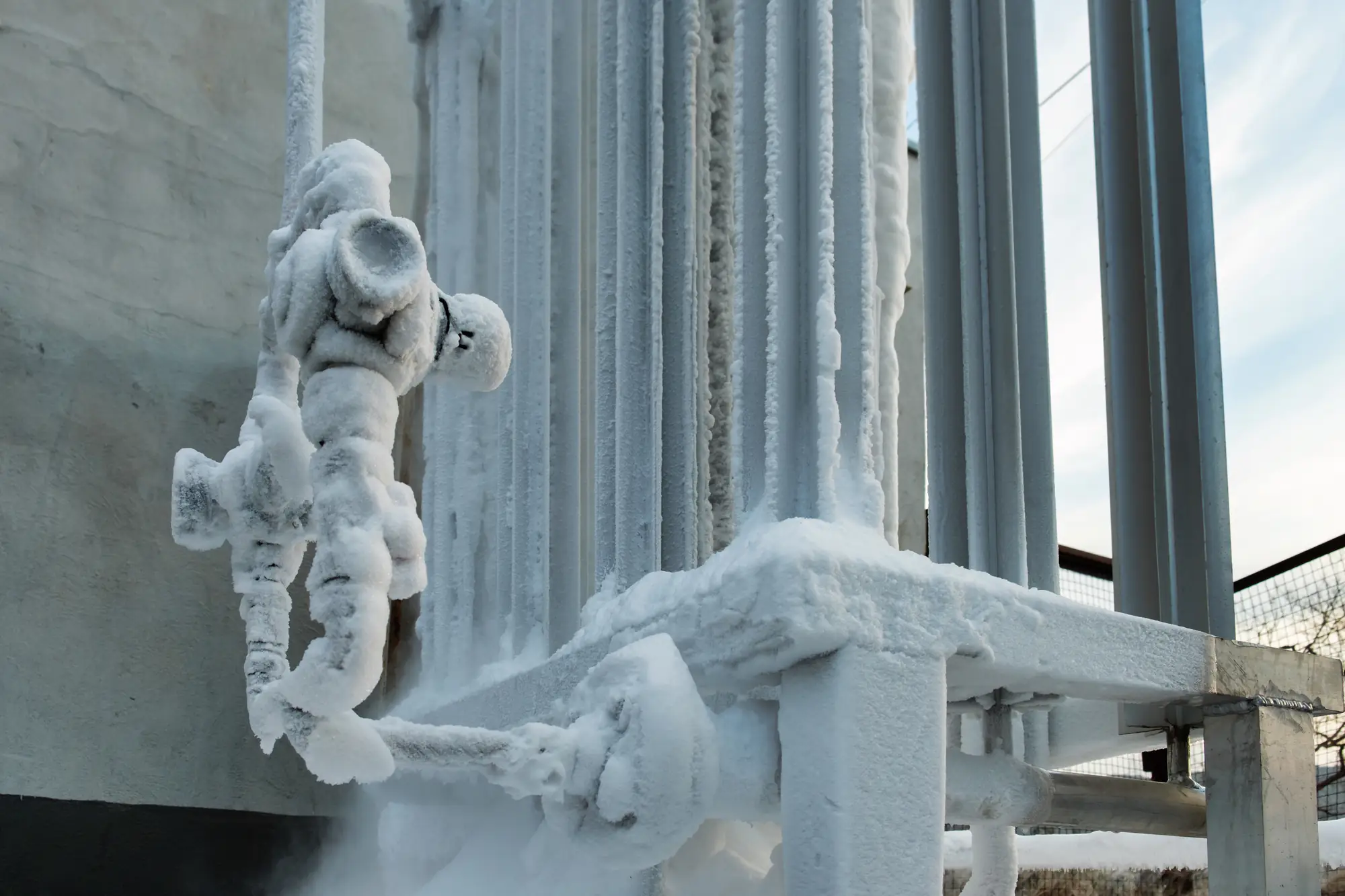
Chicago's brutal winters create perfect conditions for frozen pipes. Learn why this happens every year, how to spot the warning signs, and what to do before burst pipes flood your home.
Share:
Request a Callback
Want to skip the wait?
Simply enter your contact details, and we’ll call you when a Go Rooter Advisor becomes available.
Summary:
Turn on the faucet at 6 AM on a January morning in Cook County. Nothing comes out. Maybe a trickle if you’re lucky. You check the bathroom—same thing. Outside, the thermometer reads 12°F, and somewhere in your house, water has frozen solid inside your pipes. The clock is ticking before those pipes burst and send hundreds of gallons flooding through your home.
This isn’t a rare disaster—it’s a Chicago winter reality that hits thousands of homes every year. Frozen pipes in winter don’t care if you’re in Lincoln Park or Oak Lawn, whether your house is 100 years old or brand new. When temperatures drop and stay down, vulnerable pipes freeze. What happens next depends entirely on what you do in the next hour.
Chicago earns its reputation as one of America’s coldest cities every single winter. Daytime highs barely crack the mid-30s for weeks at a time. Nighttime temperatures plunge into the low 20s, teens, or worse during polar vortex events. This isn’t a quick cold snap—it’s sustained, brutal cold that penetrates deep into homes.
Pipes freeze when temperatures hit 20°F or below and stay there for several hours. Just six hours of sustained cold is enough to freeze vulnerable pipes solid. Add in Chicago’s lake-effect winds that strip heat from buildings, and you’ve got perfect conditions for frozen pipes in winter throughout Cook County, IL.
The city’s housing stock makes the problem worse. Older Chicago homes have pipes running through unheated basements, along exterior walls, and in drafty crawl spaces. Even newer construction can have vulnerable spots if pipes weren’t properly insulated during building. Every winter, the same homes deal with the same frozen pipe problems because the underlying vulnerability never got fixed.

Outdoor hose bibs freeze first because they’re directly exposed to freezing air with zero protection. If you didn’t disconnect your garden hoses and drain these lines before winter, they’re already at risk every time temperatures drop.
Pipes in unheated spaces come next—basements, crawl spaces, attics, and garages. These areas feel warmer than outside, but they’re still cold enough to freeze pipes when Chicago weather turns brutal. The temperature might be 38°F in your basement when it’s 15°F outside, but that’s not warm enough to protect pipes during extended cold.
Pipes along exterior walls are the sneaky ones. They’re inside your house, so they feel safe. But they’re right up against the cold with only drywall and insulation between them and freezing temperatures. Kitchen sinks and bathroom pipes on outside-facing walls freeze more often than homeowners expect, especially during polar vortex events.
Gaps and cracks in your foundation or exterior walls create localized freeze zones. A quarter-inch opening where pipes enter your basement can let in enough frigid air to freeze a pipe when wind chill drives temperatures into single digits. Walk your basement and look for these gaps before the next cold snap hits.
The short span of pipe just inside your house that connects to outdoor faucets deserves special attention. This section sits in the cold zone between inside and outside but still holds water year-round. It’s one of the most common places for burst pipes to happen in Chicago homes.
Chicago doesn’t just get cold—it stays cold in ways that specifically target your plumbing. A city in the South might hit 20°F for a few hours overnight, but Chicago can stay below freezing for days or weeks straight. Your pipes never get a chance to thaw and recover between cold snaps.
Sudden temperature drops catch homeowners off guard every year. You might have a 45°F day in December followed by a polar vortex that crashes temperatures to 5°F overnight. Pipes that were fine yesterday are frozen solid by morning because there wasn’t time to adjust heating, add insulation, or take other protective steps.
Lake-effect weather patterns create microclimates that official forecasts don’t capture. Your neighborhood in Cook County might be five degrees colder than the temperature reported for downtown Chicago. Those few extra degrees make the difference between pipes that survive and pipes that freeze.
Wind chill accelerates heat loss from your home. Bitter winds pull warmth away from basement rim joists, crawl space vents, and attic spaces faster than still air would. Interior temperatures in vulnerable areas drop below safe levels even when your main living space feels comfortable.
Power outages from ice storms and heavy snow create emergency situations fast. When your furnace stops running during a winter storm, interior temperatures can drop fast enough to freeze pipes in just a few hours. This is when pipes that have never frozen before suddenly become problems, and homeowners who thought they were safe discover they’re not.
Want live answers?
Connect with a Go-Rooter Emergency Plumbers expert for fast, friendly support.
Water’s not flowing from your faucets, or you’re getting just a trickle. You’ve got frozen pipes somewhere in your Cook County home. What you do right now determines whether this stays a manageable inconvenience or becomes a burst pipe disaster with thousands of dollars in water damage.
Shut off your main water supply immediately. Find that valve right now if you don’t know where it is. When frozen pipes burst—and they often do when they thaw—having the water shut off limits flooding damage. You don’t want to be searching for the shutoff valve while water pours into your basement.
Keep affected faucets open. As ice melts, water needs somewhere to go. An open faucet relieves pressure in the system and lets thawed water flow out instead of building up behind the ice blockage. This simple step can prevent burst pipes even if the ice has already cracked the pipe.
If you can see and reach the frozen pipe, you might be able to thaw it safely before calling for emergency help. The key word is safely—the wrong approach bursts pipes, starts fires, or turns a small problem into an expensive disaster.
Use gentle, indirect heat from a hair dryer. Start at the faucet end and work toward the frozen section, heating the pipe slowly and evenly. Don’t blast one spot with concentrated heat for minutes at a time. You’re trying to gradually warm the entire frozen section, not cook a specific point until it fails.
Space heaters work for frozen pipes behind walls or under floors. Place the heater in the room, open cabinet doors to let warm air circulate around pipes, and give it time. Raising the room temperature just five or ten degrees might be all it takes to thaw the pipe without direct intervention.
Heating pads wrapped around accessible frozen pipes provide controlled, even heat that won’t damage the pipe. Towels soaked in hot water work too. Apply them to the frozen section and replace them as they cool. This takes longer than a hair dryer but reduces the risk of thermal shock that can burst pipes.
Never use open flames to thaw frozen pipes. No blowtorches, no propane heaters, no charcoal stoves. The heat is too intense and uneven. You’ll damage the pipe, create fire hazards, and potentially cause the pipe to burst from thermal shock. Every winter, Chicago firefighters respond to house fires started by homeowners trying to thaw pipes with torches.
Never use electrical appliances near standing water. If your frozen pipe has already cracked and water is leaking, don’t use electric hair dryers or heating pads anywhere near the water. The risk of electrocution isn’t worth it—call a professional plumber instead.
Know when to stop trying DIY methods. If you’ve been working on a frozen pipe for 30 minutes without seeing results, or if you can’t locate where the pipe is frozen, it’s time to call for professional help. Hidden frozen pipes require specialized equipment to locate and thaw safely without tearing your house apart, which is what our Chicago frozen pipe repair service brings to the call.
Some frozen pipe situations in Cook County, IL need professional attention immediately. Trying to handle them yourself wastes critical time and increases the risk of serious water damage. Here’s when you should stop attempting DIY fixes and call for emergency plumbing help.
Call us immediately if you see water stains, moisture, or active leaking anywhere near frozen pipes. This means the pipe has already cracked or burst. Every minute water flows, it causes more damage to floors, walls, ceilings, and everything in its path. A burst pipe can release 250 gallons of water per day—enough to destroy a basement in hours.
Call us if you can’t locate the frozen section. Pipes freeze inside walls, under floors, in ceilings, and in other hidden spaces you can’t access without demolition. We have thermal detection equipment and acoustic tools that find frozen sections without cutting into your home. Guessing and cutting into walls hoping to find the problem rarely ends well.
Call us if multiple faucets throughout your house have no water. This suggests extensive freezing in your plumbing system, possibly including your main water line. Thawing this much pipe safely requires professional-grade equipment and expertise. It’s not a DIY situation—it’s an emergency that needs immediate professional response.
Call us if you smell gas anywhere near frozen pipes. Frozen water pipes sometimes affect nearby gas lines, or the freezing process can shift pipes and connections. If you smell gas, leave the building immediately and call both the gas company and us from outside. Don’t try to thaw anything yourself.
Call us if frozen pipes are in your basement, crawl space, or other hard-to-reach areas. These spaces are uncomfortable, sometimes unsafe, and difficult to work in effectively. We have the tools, protective equipment, and experience to work in tight spaces efficiently while you stay comfortable.
Call us if you’ve had frozen pipes before in the same location. Repeat freezing every winter suggests an underlying problem that DIY thawing won’t fix. We’ll identify why those specific pipes keep freezing and implement a long-term solution like proper insulation, heat tape installation, or pipe relocation.
At Go-Rooter Emergency Plumbers, we provide 24/7 response throughout Chicago and all of Cook County, IL. Our trucks carry professional pipe thawing equipment specifically designed for Chicago winters. We understand local housing construction, know where pipes typically freeze in different types of homes, and focus on preventing future problems—not just fixing today’s emergency. We offer same-day service, upfront pricing, and the kind of fast response that prevents frozen pipes from becoming burst pipe disasters.
Frozen pipes in winter aren’t just possible in Chicago and Cook County—they’re practically guaranteed if you don’t take prevention seriously. Now you know why this happens every year, which pipes freeze first, what to do when you discover frozen pipes, and when to stop trying DIY fixes and call for professional help.
The best time to protect your plumbing is before temperatures drop below 20°F and stay there. Insulate vulnerable pipes in your basement and crawl space, seal gaps where cold air enters around your foundation, disconnect outdoor hoses, and consider having your plumbing inspected to identify freeze-risk areas before the next polar vortex hits. These steps prevent the stress, expense, and water damage of burst pipes.
If you’re dealing with frozen pipes right now, or if you want to make sure it doesn’t happen this winter, we’re here to help. Our team knows Cook County homes inside and out, responds 24/7 without extra charges for nights or weekends, and focuses on long-term solutions that keep your pipes flowing all winter long—not just quick fixes that fail next time it gets cold.
Article details:
Share:
Continue learning:
Request a Callback
Want to skip the wait?
Simply enter your contact details, and we’ll call you when a NY Spine Advisor becomes available.