If your drain keeps backing up after snaking, there's a reason. Here's how to know which method actually solves the problem — not just buys you time.
Share:
Request a Callback
Want to skip the wait?
Simply enter your contact details, and we’ll call you when a Go Rooter Advisor becomes available.
Summary:
You called a plumber. They snaked the drain. It worked — for a while. Then the same drain backed up again, and now you’re wondering if snaking is actually fixing anything or just delaying the inevitable.
That frustration is exactly what brings most people to this question. And it’s a fair one. Snaking and hydro jetting aren’t interchangeable — they do different jobs, and using the wrong one for your situation is how you end up calling a plumber three times for the same drain. Here’s what’s actually going on inside your pipes, and how to know which approach makes sense for your Cook County home.
A drain snake — sometimes called a power rodder here in Chicago — is a long, flexible metal cable with a corkscrew or blade tip. It gets fed into the drain, spins through the blockage, and either breaks it up or hooks it so it can be pulled out.
For a straightforward clog — a clump of hair, a wad of toilet paper, something that got flushed that shouldn’t have — snaking works well. It’s fast, it’s relatively affordable, and it restores flow.
The problem is what snaking doesn’t do. It punches through the clog, but it doesn’t clean the pipe walls. All the grease, mineral scale, and buildup coating the inside of the pipe? Still there. And that buildup is exactly what catches the next piece of debris and starts the next clog. So if your drain keeps backing up every few months, snaking isn’t failing — it’s just doing what it was designed to do. It was never meant to be a permanent solution for a pipe with years of accumulation on its walls.
Here’s a useful benchmark that plumbers use: if the same drain has been snaked more than twice in a single year, snaking is no longer solving the problem — it’s buying time between backups. That’s not a knock on the method. It just means the underlying cause hasn’t been addressed.
In most cases, that underlying cause is buildup on the pipe walls. Grease from cooking accumulates in kitchen drain lines over years. Mineral deposits from hard water — and Cook County’s Lake Michigan-sourced water supply does carry minerals — leave a rough, narrowing scale on the interior of older pipes. Hair and soap scum do the same in bathroom drains. Each time a snake clears a path through the middle of all that, the buildup stays put. The cleared opening gets smaller over time, and clogs come back faster and faster.
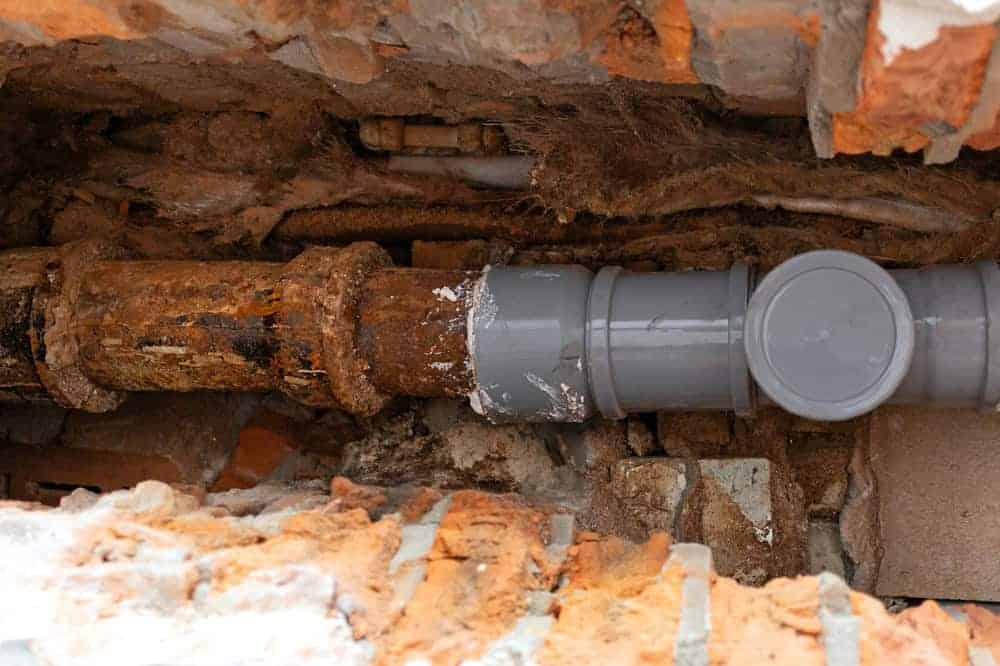
This pattern is especially common in Cook County homes built before 1980. A large portion of the housing stock in Chicago and the inner suburbs — Berwyn, Cicero, Westchester, Lyons — was built in the 1950s and 1960s with cast iron sewer lines. Those pipes are now 60 to 75 years old. Cast iron corrodes from the inside out, creating a rough, flaky surface that catches debris like velcro. Snaking a heavily scaled cast iron pipe is a bit like vacuuming a carpet that really needs shampooing. You’re clearing the surface, not the source.
If your home was built before 1980 and you’re dealing with recurring clogs, there’s a good chance the pipe walls themselves are part of the problem — not just whatever happened to go down the drain last week.
To be fair: snaking is the right tool for plenty of situations. A single, identifiable clog in a newer home with PVC pipes — something fell in, or too much went down at once — doesn’t need hydro jetting. The pipe walls are likely clean, the clog has a clear cause, and a snake will resolve it cleanly and quickly. Same goes for a toilet clog caused by too much paper, or a bathroom drain that’s slow because of a hair buildup right near the surface.
Snaking is also the appropriate first response when the pipe material is unknown or when there’s any concern about the pipe’s structural condition. Older clay tile sewer laterals — common in pre-1960 Cook County homes — can have cracked or shifted joints that are vulnerable to high-pressure water. In those cases, running a camera first to assess the pipe’s condition before recommending any method is the responsible move. That’s exactly how we approach it: look before you act.
The short version is this — snaking is the right choice when the clog is a one-time event in a pipe that’s otherwise in good shape. When the same drain keeps backing up, when multiple drains are slow at once, or when the home has aging cast iron or clay pipes with years of buildup, snaking is treating a symptom. The buildup that caused the clog is still coating the pipe walls, and it will cause another clog. That’s where hydro jetting drain cleaning comes in.
Want live answers?
Connect with a Go-Rooter Emergency Plumbers expert for fast, friendly support.
Hydro jetting uses highly pressurized water — typically between 3,000 and 4,000 PSI — delivered through a specialized nozzle to scour the interior walls of the pipe clean. It doesn’t just punch a hole through a clog. It blasts away the grease, mineral scale, and organic buildup that’s been accumulating on the pipe walls, often for decades. The water flushes everything downstream and out of the system.
The result isn’t just a cleared drain — it’s a pipe that’s been restored close to its original interior diameter. That’s a fundamentally different outcome than snaking, and it’s why hydro jetting results tend to last significantly longer. Most homeowners find their pipes stay clear for a year or more after a proper hydro jetting service, compared to weeks or a few months after snaking.
Cook County has a specific set of conditions that make hydro jetting the more appropriate recommendation for a lot of homes — not as an upsell, but as the right tool for the actual problem.
Start with the pipes themselves. A significant portion of Cook County’s residential housing was built before 1980, which means cast iron or clay sewer laterals that are now anywhere from 45 to over 70 years old. These materials don’t age gracefully. Cast iron corrodes internally, creating a rough surface that catches everything passing through it. Clay tile joints crack with the freeze-thaw cycles Chicago delivers every winter, opening small gaps that tree roots actively seek out. Neither problem gets better with a snake. Hydro jetting at 3,000 to 4,000 PSI can cut through root intrusion, blast away decades of grease and mineral scale, and restore the pipe’s interior in a way that snaking simply can’t.
Then there’s Cook County’s combined sewer system, which mixes stormwater with sewage. About 42% of Cook County is covered in impervious surfaces — streets, driveways, parking lots — so when it rains hard in the spring, that water has nowhere to go except into an already-overloaded system. Homeowners in neighborhoods across Chicago and in suburbs like Lansing, Calumet City, and Chicago Heights know this pattern well: heavy rain, basement backup, call the plumber. If grease and scale buildup on the pipe walls is already narrowing the drain, that backup happens faster and more severely. Clearing the pipe walls with hydro jetting doesn’t change the infrastructure, but it gives your drain the best possible chance of handling what the system throws at it.
Tree-lined neighborhoods add another layer to this. In places like Park Ridge, Wilmette, Evanston, and Beverly, mature oak and maple trees have root systems that actively seek out moisture — and older clay and cast iron sewer joints are exactly where they find it. A snake can temporarily clear roots, but they grow back. Hydro jetting cuts through root intrusion more completely and leaves pipe walls smooth and clean, which makes it harder for new roots to gain a foothold.
Snaking a drain typically runs between $100 and $400 depending on the job. Hydro jetting costs more — typically in the $350 to $600 range for a residential service call, depending on the condition of the pipe and the severity of the buildup. On a single visit, snaking looks like the cheaper option.
But here’s where the math shifts. If you’re snaking the same drain two or three times a year at $200 or $300 a visit, you’re spending $400 to $900 annually on a problem that keeps coming back. One hydro jetting service that keeps the pipe clear for a year or more starts to look a lot more cost-effective — especially when you factor in the time, the inconvenience, and the slow creep of a drain that’s never quite right.
We start hydro jetting services at $55, and we offer $40 off for new customers. We also offer free quotes, so there’s no guesswork before you commit to anything. Before we recommend hydro jetting over snaking, we run a camera inspection through the line. That’s not an add-on — it’s how we make sure we’re recommending the right method for what’s actually in your pipe. If snaking is the right call, we’ll tell you that. The camera inspection is how we back that up.
Not all hydro jetting is the same. Consumer-grade equipment marketed as hydro jetting often operates at a fraction of the pressure needed to actually scour pipe walls. Professional hydro jetting at 3,000 to 4,000 PSI requires commercial-grade equipment and a licensed plumber who knows how to assess pipe condition before applying that pressure. Illinois requires a plumbing license for any drainage system work — and that requirement exists for good reason, especially when you’re working with high-pressure equipment in older pipes.
If your drain backed up once and has been fine since, snaking was probably the right call. If the same drain keeps coming back, or if you’re in an older Cook County home with cast iron or clay pipes, snaking is most likely clearing a path through buildup that’s still coating the pipe walls — and the clock is already running on the next backup.
Hydro jetting isn’t always the answer, but for homes dealing with recurring clogs, aging pipe materials, tree root intrusion, or the kind of grease accumulation that builds up in kitchen lines over decades, it’s often the fix that actually holds. The difference isn’t just pressure — it’s whether you’re clearing the clog or cleaning the pipe.
We’ve been serving Cook County since 2001, and we’ve seen both situations more times than we can count. If you’re not sure which one applies to your home, that’s exactly what the camera inspection is for. Reach out to Go-Rooter Emergency Plumbers for a free quote — we’re available 24/7, and we’ll tell you honestly what we find.
Article details:
Share:
Continue learning:
Request a Callback
Want to skip the wait?
Simply enter your contact details, and we’ll call you when a NY Spine Advisor becomes available.