Chicago's aging sewer system affects nearly every home in Cook County. Here's what's actually causing basement backups — and what you can do about it.
Share:
Request a Callback
Want to skip the wait?
Simply enter your contact details, and we’ll call you when a Go Rooter Advisor becomes available.
Summary:
If your basement has ever flooded during a heavy rain, you’ve already had your introduction to Chicago’s sewer system — just not the kind anyone would choose. The water backing up through your floor drain or laundry tub isn’t random bad luck. It’s the predictable result of a 100-year-old infrastructure design that was never built to handle modern rainfall patterns, modern impervious surfaces, or the sheer volume of water that now runs off Chicago’s streets and rooftops during a serious storm. Here’s what’s actually going on beneath your feet — and what Cook County homeowners can do about it.
Chicago’s sewer system is what engineers call a combined sewer system, which means a single set of pipes carries both sanitary sewage from your home and stormwater runoff from streets, rooftops, and driveways. About 75% of the city still uses this design, and most of it was built before 1930. When the weather is dry, the system works fine — sewage flows to one of the Metropolitan Water Reclamation District’s treatment plants, gets processed, and that’s that.
The problem is rain. When a storm hits and rainfall exceeds roughly half an inch per hour, the combined pipes start to fill faster than they can drain. Once the system reaches capacity, water has nowhere to go but back — and in older Cook County neighborhoods, that means back up through the lowest drain in your home.
Most people have heard of the Deep Tunnel — officially called the Tunnel and Reservoir Plan, or TARP. It’s a genuinely impressive piece of engineering: 110 miles of deep rock tunnels sitting 150 to 300 feet underground, capable of holding 2.3 billion gallons of combined sewage and stormwater. The MWRD built it specifically to reduce the kind of overflow events that flood basements and pollute waterways. And it has helped — combined sewer overflow events dropped from around 100 days per year before TARP to about 50 days per year after Phase I was completed in 2006.
But here’s the thing most homeowners don’t realize: the Deep Tunnel can’t protect your basement on its own. Even when there’s plenty of room in the tunnels, basement backups still happen. Why? Because the problem isn’t always capacity at the tunnel level — it’s capacity at the neighborhood level. The small local sewers that run under your street may not be able to move water fast enough to reach the MWRD’s intercepting sewers or the TARP tunnels before your pipes surcharge.
In one major storm event, the city received over 2,500 “water in basement” 311 calls from residents across 49 of Chicago’s 50 wards — even with the Deep Tunnel in operation. The McCook Reservoir, which serves central Chicago and 36 surrounding suburbs including much of Cook County, reached near capacity during heavy rain events in 2023. That’s not a failure of engineering — it’s a reflection of how much water now runs off Cook County’s surfaces during a serious storm.
About 42% of Cook County is covered by impervious surface: streets, parking lots, driveways, rooftops. Water that used to soak into the ground now flows directly into the sewer system, and it gets there fast. An 800-square-foot roof sends roughly 500 gallons of water into the sewer during a heavy rain. Multiply that by hundreds of thousands of homes across Cook County, and you start to understand the scale of the problem.
The city has added catch basin restrictors — sometimes called Rain Blockers — in some neighborhoods, which intentionally slow the flow of water into the sewer by turning streets into temporary holding areas. It’s a real solution, but it means your street floods so your basement doesn’t. And it doesn’t work everywhere.
Basement flooding from combined sewer overflow is not evenly distributed across Cook County. Certain neighborhoods see it far more often than others, and the pattern isn’t random — it follows the age of the housing stock, the condition of the local sewer infrastructure, and how much impervious surface surrounds each home.
Chicago’s bungalow belt — the arc of single-family neighborhoods stretching across the Northwest and Southwest Sides — bears a disproportionate share of the problem. These homes were built between roughly 1910 and 1940, which means their private sewer laterals are often made of clay or cast iron. Those materials crack, shift, and let tree roots in. They don’t flex under ground movement the way modern PVC pipe does. And because the city inspects its sewer lines only every 10 to 15 years on average, problems in the public mains can go undetected for a long time.
Community areas that consistently appear in flooding data and 311 complaint records include Chicago Lawn, Gage Park, West Lawn, Garfield Ridge, and Chatham on the Southwest Side, as well as Jefferson Park and Austin. The pattern holds in the inner-ring Cook County suburbs too — Cicero, Berwyn, and parts of Evanston experience significant basement flooding from combined sewer events despite being served by the same regional infrastructure.
What makes older homes particularly vulnerable is the basement layout itself. Most Chicago bungalows and two-flats have unfinished or semi-finished basements with floor drains, laundry tubs, and sometimes a basement bathroom. All of those fixtures are direct entry points for sewer backup when the system surcharges. If your home has any of those and sits in one of these neighborhoods, you’re not imagining the risk — it’s real and it’s structural.
Want live answers?
Connect with a Go-Rooter Emergency Plumbers expert for fast, friendly support.
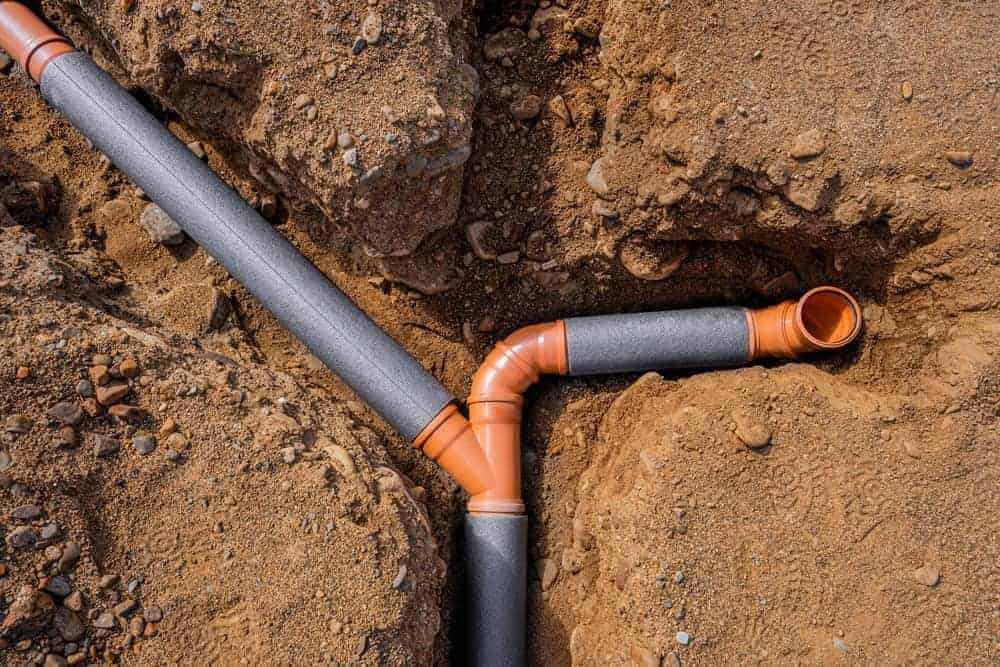
The combined sewer system is the most common cause of basement backups in Cook County, but it’s not the only one. Even on a dry day, your home’s private sewer lateral — the pipe that runs from your house to the city main — can back up on its own. Understanding the difference matters, because the fix is different depending on what’s actually causing the problem.
Tree root intrusion is the second most common cause of sewer backups in the Chicago area. Mature oaks, elms, and maples are everywhere in Cook County’s older neighborhoods, and their roots actively seek moisture. Clay pipe joints are especially vulnerable — roots find the smallest gap and expand until the pipe is partially or fully blocked. Grease buildup, debris accumulation, and pipe collapse from age or ground movement are also common culprits. A lateral that’s 80 years old and has never been inspected could be partially obstructed right now, functioning well enough most of the time but failing completely the first time the city’s system surcharges.
If sewage is coming up through your floor drain or laundry tub, the first thing to do is stop using water in the house immediately. Don’t flush toilets, run the dishwasher, or use any sink. Every additional gallon you send down the drain makes the backup worse. If the water level is rising and you have any electrical outlets, appliances, or panels near floor level, get out of the basement and turn off the circuit breaker for that area before going back in.
Once you’ve stopped the immediate situation from getting worse, call a plumber — not an answering service that will schedule you for tomorrow morning. During an active backup, you need someone who can actually dispatch a technician now. That’s the whole reason 24/7 emergency availability matters: not as a marketing line, but as a practical reality when you’re standing in an inch of sewage at midnight.
When the plumber arrives, the right first step is a camera inspection — not immediately breaking out the power rodder or recommending a $4,000 flood control installation. A sewer camera goes down the line and shows exactly what’s happening: whether it’s a blockage from roots or grease, a partial collapse, a joint separation, or a system capacity issue that no amount of line cleaning will fix. That distinction matters enormously.
If your line is structurally compromised, rodding it will clear the immediate clog but leave the underlying problem in place. If the backup was purely a combined sewer event with a healthy lateral, the conversation about flood control looks very different than if your clay pipe is cracked in three places. We’ve seen too many homeowners spend money on repairs that didn’t address the real cause, because nobody looked first. The camera inspection step isn’t an upsell — it’s the only way to give you an honest answer about what’s actually wrong and what will actually fix it.
A backwater valve is a one-way gate installed in your sewer lateral, typically in the basement floor. When water flows normally — out of your home and toward the city main — the valve stays open. When the city’s sewer system surcharges and water tries to flow backward into your home, the valve closes automatically, blocking the backflow before it reaches your floor drain or laundry tub.
For most Chicago bungalows and two-flats with basements across Cook County, a backwater valve is the most practical and cost-effective form of flood protection available. It doesn’t require converting your entire sewer system, it works passively without any electrical components, and it directly addresses the mechanism that causes the most common type of basement backup in Cook County. Installation typically involves cutting through the basement floor, accessing the lateral, and setting the valve in the line with a cleanout or valve box above it for future inspection — as required by Chicago building code.
Here’s something most homeowners don’t know: the City of Chicago has a Private Drain Program that can cover the cost of repairing sewer lines under sidewalks, parkways, and streets for qualifying properties. If your lateral extends into the public right-of-way and has a documented problem, you may be eligible for repairs at no cost to you. We participate in this program and can inspect your line and walk you through whether you qualify. It’s one of the most underutilized resources available to Cook County homeowners, and it exists specifically because the city recognizes that aging private laterals contribute to the combined sewer overflow problem.
One thing worth saying clearly: a backwater valve is not the right first step for every home. If your lateral has significant root intrusion, a partial collapse, or deteriorated pipe material, installing a valve over a compromised line creates its own problems. That’s why we always recommend a camera inspection before any flood control installation. Once we know the actual condition of your lateral, we can tell you whether a backwater valve is the right solution, whether the line needs repair or replacement first, or whether something else is driving your backups entirely.
We currently offer $300 off flood control installation, $50 off main line rodding, and $100 off sewer repair— but the discount only helps if you’re getting the right service to begin with.
Chicago’s combined sewer system is not going away anytime soon, and the Deep Tunnel — as impressive as it is — can’t protect every basement in every neighborhood during every heavy storm. What you can control is the condition of your own lateral and whether your home has the right protection in place before the next major rain event.
The most important thing we want you to take away from this is simple: don’t wait until you’re standing in sewage to find out what’s going on with your pipes. A camera inspection before a problem becomes a crisis is almost always cheaper, faster, and less disruptive than an emergency repair. And if you do end up in an emergency, you deserve a plumber who answers the phone at 3 AM, gives you a straight answer about what’s wrong, and tells you the price before any work begins.
If you have questions about your sewer lateral, want to know whether your home qualifies for the City of Chicago Private Drain Program, or just want someone to take a look before storm season hits — Go-Rooter Emergency Plumbers is available 24/7 and offers free quotes. We’ve been working in Chicago and Cook County since 2001, and we know these neighborhoods, these pipes, and these problems.
Article details:
Share:
Continue learning:
Request a Callback
Want to skip the wait?
Simply enter your contact details, and we’ll call you when a NY Spine Advisor becomes available.