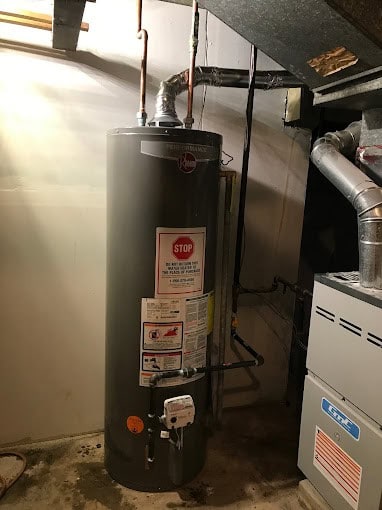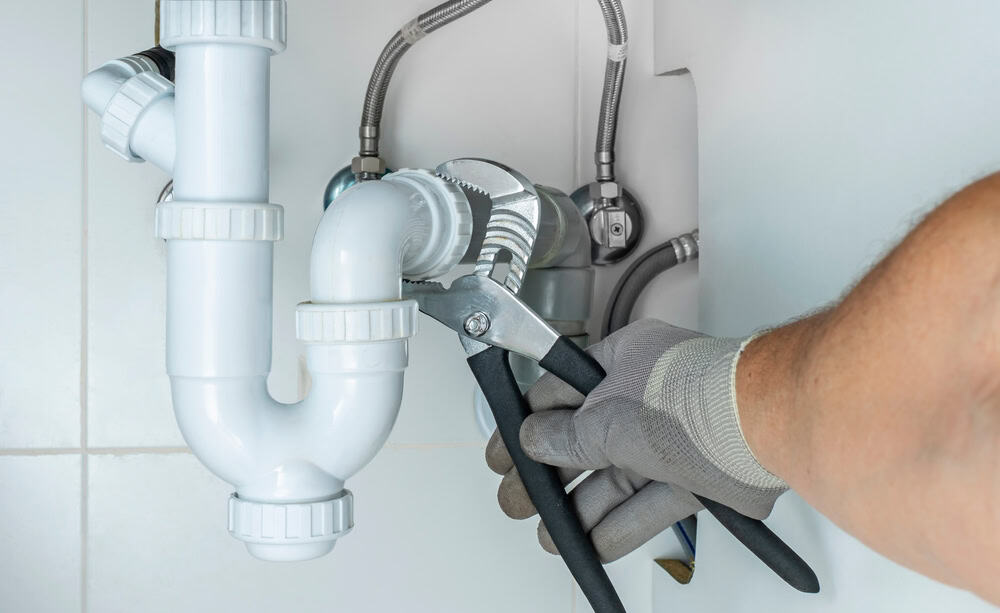
Installing a gas water heater in Chicago means navigating permits, venting rules, and city-specific codes most homeowners don't know exist until something goes wrong.
Share:
Request a Callback
Want to skip the wait?
Simply enter your contact details, and we’ll call you when a Go Rooter Advisor becomes available.
Summary:
If your water heater just failed — or you’ve been putting off replacing an aging unit — you’re probably looking for a straight answer on what this actually involves in Chicago. Not a vague estimate. Not a list of upsells. Just: what does this cost, what does the city require, and how do I make sure it’s done right?
Cook County has specific code requirements that affect every gas water heater installation, and a lot of homeowners don’t find out about them until they’re already mid-project. Here’s what you need to know before you call anyone — and what to expect once you do.
Chicago doesn’t treat water heater replacement as a minor home repair. Under Chicago Municipal Code Title 18-29, all plumbing work — including water heater installation — requires a permit, and that permit can only be issued to a licensed, bonded plumbing contractor. That means no unlicensed handymen, no DIY swaps, and no skipping the paperwork. Illinois state law (225 ILCS 320) reinforces this at the state level: a licensed plumber is required for all water heater installation work, full stop.
For straightforward like-for-like replacements, Chicago’s Easy Permit Program typically gets approval within a day. But the permit still has to be filed — and it has to be filed by someone who’s properly bonded with the city. Skipping this step doesn’t just risk a fine. It voids your manufacturer’s warranty and can create serious problems when you go to sell the home.

Venting is where a lot of installations in Cook County get complicated — especially in older homes. If you live in a Chicago bungalow or a two-flat built before 1980, there’s a real chance your existing vent pipe doesn’t meet current code for a modern gas water heater. That’s just the reality of working with housing stock that’s 60 to 100 years old.
The code requirements are specific. Horizontal vent runs must slope upward at a minimum of a quarter inch per foot toward the chimney or termination point. There needs to be at least five feet of vertical rise between the vent collar and the vent cap. Single-wall flue pipe — common in pre-1980 construction — often has to be replaced with B-vent or another approved material to meet current standards. None of this is optional, and none of it is visible until someone actually looks.
There’s also a requirement that often surprises people: the Chicago Energy Transformation Code (2022) mandates a 30-amp electrical outlet within three feet of every gas water heater in a single dwelling unit. It’s a Chicago-specific rule that many out-of-area contractors simply don’t know about. If your installation doesn’t include this and it’s flagged during inspection, you’re looking at an additional electrical job on top of everything else.
The temperature and pressure relief valve — the T&P valve — also has specific installation requirements. The discharge pipe has to run full-size to the outside of the building or down to the floor, terminating no more than six inches above grade. It can’t be threaded at the outlet end, and it can’t have a shutoff valve. These details matter because a T&P valve is a safety device, not an afterthought.
Depending on your existing water service configuration, Illinois Plumbing Code Section 890.1130(g)(7) may require an expansion tank alongside your new water heater. This comes up when a check valve or pressure-reducing valve is present on the water supply line — which creates what’s called a closed system. In a closed system, thermal expansion has nowhere to go, and without an expansion tank, it puts stress on the water heater and the plumbing throughout the house.
Whether you need one depends on what’s already in your home. A licensed plumber should assess this before installation, not after. If an expansion tank is required and isn’t installed, you’re not just out of code compliance — you’re shortening the lifespan of the new unit you just paid to have installed.
This is one of those details that separates a thorough installation from a fast one. A contractor who doesn’t mention expansion tanks either doesn’t know about this requirement or is hoping you won’t ask. Ask directly: does my system need one, and is it included in the quote?
Cook County’s water supply — drawn from Lake Michigan — contributes to moderate hard water conditions throughout most of the city and its suburbs. Scale buildup inside tank water heaters reduces efficiency over time and can shorten the unit’s lifespan. It’s not a reason to panic, but it is a reason to ask your installer about maintenance and what to expect from the unit over time.
Want live answers?
Connect with a Go-Rooter Emergency Plumbers expert for fast, friendly support.
Cook County spans 130-plus municipalities, from Rogers Park to Calumet City, from Oak Park to Skokie. Each has its own permit office and inspection process. We know how to navigate that across the entire county — contractors who work in just one neighborhood often get tripped up by permit requirements that vary by municipality.
When you’re evaluating local water heater installers, licensing and bonding with the City of Chicago are the baseline. Beyond that, the questions worth asking are: Do you pull the permit as part of the job? Will you assess the existing venting before you quote me? Is the price you give me the price I’ll pay?
A proper installation doesn’t start with disconnecting the old unit. It starts with an assessment. Before any work begins, a qualified installer should look at your existing gas line, venting configuration, available space, and whether an expansion tank or electrical outlet upgrade is required. In Chicago’s older housing stock — the bungalows, two-flats, and coach houses that make up huge swaths of neighborhoods like Bridgeport, Logan Square, and Beverly — that pre-installation assessment often uncovers something that needs to be addressed before a new unit goes in.
Once the assessment is done and the permit is filed, the actual installation involves disconnecting and removing the old unit, making any required venting upgrades, connecting the gas line with a proper shutoff valve and drip leg, installing the new unit with correct T&P valve routing, and testing everything before we leave. Cleanup is part of the job — the old unit should be removed and disposed of, not left in your basement.
A straightforward replacement on a standard Chicago home takes a few hours. If venting upgrades are needed, plan for more. The honest answer is that timeline depends on what’s there when we show up, which is exactly why the pre-installation assessment matters. A contractor who gives you a firm timeline over the phone without seeing your setup is guessing — and that guess is often wrong in Cook County’s older homes.
The goal isn’t just to get hot water running again. It’s to make sure the installation will hold up through Chicago winters, pass inspection, and not create a problem three years from now. That means doing it right the first time, not patching things together and hoping for the best.
When you’re getting quotes from hot water heater installation companies in Chicago, the price difference between them can be significant — sometimes $800 to $1,500 apart for what sounds like the same job. That gap usually comes down to what’s included. One quote might cover the unit and basic labor. Another includes the permit, venting assessment, expansion tank if needed, and disposal of the old unit. Those aren’t the same job.
A few things worth checking before you commit. First, ask whether the permit is included. If a company is quoting you without mentioning a permit, either they’re planning to skip it or they’re going to add it later. Second, ask specifically about venting — especially if your home is more than 40 years old. In Cook County, venting upgrades are common enough that they should be part of the conversation from the start, not a surprise add-on after the old unit is already disconnected. Third, ask what happens if something isn’t right after the job is done. A company that stands behind its work will have a clear answer. One that doesn’t will get vague.
Upfront pricing matters more than a low headline number. Knowing the full cost before work begins — not after the old unit is sitting on your floor — is the difference between a smooth experience and a frustrating one. The same goes for licensing: any company you hire should be able to confirm they’re licensed under Illinois law and bonded with the City of Chicago. That’s what makes the permit possible and the work legal.
Review volume and recency are also worth paying attention to. A contractor with dozens of recent, specific reviews from Cook County homeowners is giving you real signal. Generic five-star ratings with no detail don’t tell you much. Look for reviews that mention the specific job, the pricing experience, and whether the installer cleaned up — those details reflect how the company actually operates.
Chicago’s code requirements for gas water heater installation exist for good reasons — venting failures and unpermitted work cause real problems, and they’re more common than most homeowners realize. Understanding what’s required before you hire anyone puts you in a much better position to ask the right questions and recognize a thorough quote from a cheap one.
The short version: make sure the permit is included, ask about venting upfront, confirm the installer is licensed and bonded with the city, and get a price you agree to before any work starts. Those four things will take you a long way.
If you’re dealing with a failed unit or an aging system that’s overdue for replacement, we serve all of Chicago and Cook County with same-day availability, upfront pricing, and the kind of local code knowledge that only comes from working in this area every day. Call us at 773-661-4800 — we’re available around the clock, including nights, weekends, and holidays.
Article details:
Share:
Continue learning:
Request a Callback
Want to skip the wait?
Simply enter your contact details, and we’ll call you when a NY Spine Advisor becomes available.