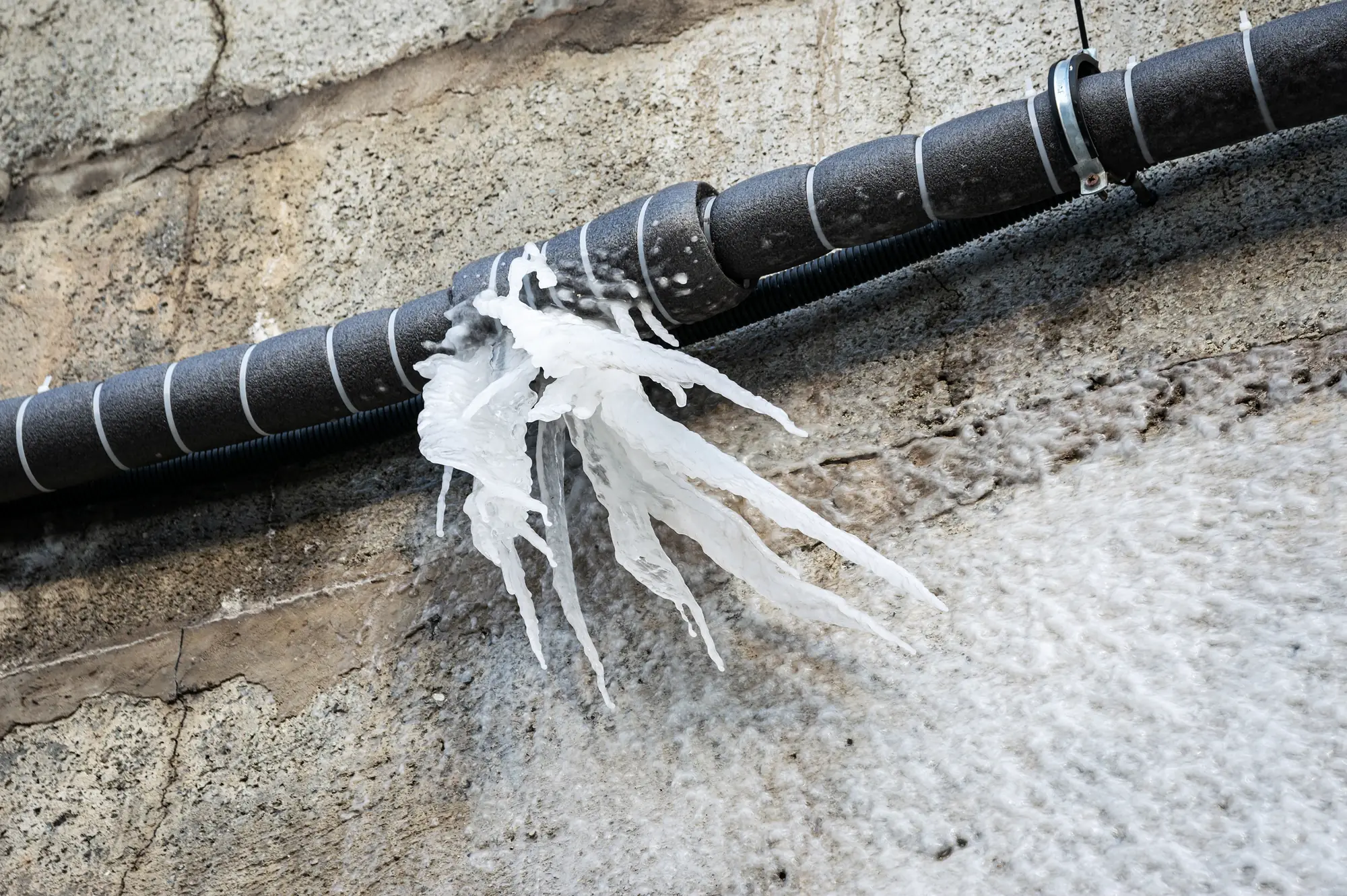
Thinking about going tankless? Here's an honest look at what electric and gas installation actually costs in Cook County — and what drives the final number.
Share:
Request a Callback
Want to skip the wait?
Simply enter your contact details, and we’ll call you when a Go Rooter Advisor becomes available.
Summary:
If you’re researching tankless water heaters, you’ve probably already noticed that the prices online vary wildly — anywhere from $1,400 to over $6,000 depending on who you ask. That gap isn’t random. It reflects real differences in fuel type, home infrastructure, and whether the contractor is quoting you the full picture or just the unit and labor.
This page breaks down what tankless installation actually costs in Cook County, IL — gas versus electric, replacement versus new install — so you can walk into any conversation with a plumber already knowing what questions to ask and what numbers to expect.
The average tankless water heater installation in Cook County runs about $2,577, with most homeowners landing somewhere between $1,383 and $3,806 depending on their home’s setup. That range exists because the unit itself is only part of the cost. Labor, permits, and whatever your home’s existing infrastructure requires — gas line sizing, venting upgrades, electrical panel capacity — all factor into the final number.
The honest answer to “how much will this cost me?” is: it depends on whether your home is already set up to support a tankless unit. A newer home with adequate gas lines, proper venting, and a modern electrical panel will come in at the lower end. A pre-1960 Chicago bungalow or a two-flat in Logan Square with original plumbing and undersized gas lines? You’re likely looking at additional infrastructure work before the unit even goes in.

Electric tankless units tend to look like the budget-friendly option at first glance. The units themselves typically run $600 to $1,000, and total installed costs nationally average $1,400 to $3,000. But here’s what that number often leaves out: whole-house electric tankless systems draw a significant amount of power — enough that many older Cook County homes will need an electrical panel upgrade before installation is even possible.
In a Chicago bungalow or a post-war ranch in Oak Lawn or Berwyn, the existing electrical service is frequently 100 amps or less. A whole-house electric tankless unit typically requires 200-amp service and dedicated high-amp circuits. That upgrade alone can add $1,000 to $3,000 or more to your project, depending on your current panel and how much work is involved in bringing the service up to code.
There’s also a performance consideration specific to this area. Chicago groundwater temperatures can drop to 35–40°F in the middle of winter, which means a tankless unit has to work significantly harder to reach a usable temperature. Electric tankless systems have flow rate limitations that can make this more challenging in deep winter, especially in larger households running multiple fixtures at once. For a single bathroom or a bathroom addition, electric tankless makes sense. For a whole-house solution in Cook County with Chicago winters, gas is almost always the stronger recommendation.
One more thing worth knowing: the permit requirement doesn’t disappear just because you’re going electric. Under Illinois law, all water heater installations require a permit, and Cook County’s Department of Building and Zoning enforces this for unincorporated areas. Any contractor who suggests skipping the permit to save money is cutting a corner that could create real problems at resale or if you ever need to file an insurance claim.
Gas tankless water heaters are the more common choice in Cook County, and for good reason. Natural gas is widely available throughout the county, and gas units handle the high-demand, cold-weather conditions of a Chicago winter far better than most electric alternatives. The units themselves range from about $1,000 to $2,600, with total installed costs running $2,100 to $5,600 nationally — and Cook County’s labor costs and licensing requirements push that toward the higher end of the range.
The infrastructure consideration that catches most homeowners off guard is the gas line. A traditional tank water heater typically uses 30,000 to 40,000 BTUs per hour. A gas tankless unit can demand 150,000 to 200,000 BTUs per hour during peak operation. In many older Cook County homes — bungalows, two-flats, vintage condos in Lakeview or Hyde Park — the existing gas line simply isn’t sized to handle that load. Upgrading it isn’t optional; it’s a code requirement. Venting is another common addition: gas tankless units require Category III or IV stainless steel venting, which is different from the B-vent used in most older homes. Budget an additional $200 to $800 for venting upgrades depending on the run length and your home’s layout.
The long-term math does tend to work in gas tankless’s favor. These units last more than 20 years according to the U.S. Department of Energy — roughly double the lifespan of a traditional storage tank. They eliminate standby heat loss entirely, which is the energy wasted keeping a full tank of water hot around the clock. Most households see $150 to $200 in annual energy savings compared to a tank unit. And if you choose an ENERGY STAR certified model, you’re eligible for a 30% federal tax credit, up to $600 — something worth factoring into your upfront cost calculation before you decide whether the switch makes financial sense.
One thing that’s specific to Chicagoland: hard water. The water in Cook County is hard enough to cause scale buildup inside a tankless heat exchanger over time, which reduces efficiency and can shorten the unit’s life if left unaddressed. A good installer will either include a scale inhibitor as part of the installation or walk you through an annual descaling schedule. If they don’t bring it up, ask.
Want live answers?
Connect with a Go-Rooter Emergency Plumbers expert for fast, friendly support.
Not every tankless installation starts from scratch. There’s a meaningful cost difference between replacing an existing tankless unit, converting from a traditional tank to tankless for the first time, and installing a brand-new system in a home that’s never had one. Understanding which situation you’re in helps you set a realistic budget before you call anyone.
Like-for-like tankless replacement — swapping an old tankless unit for a new one of the same fuel type — is typically the most straightforward and least expensive scenario. The gas line is already sized, the venting is already in place, and the permit process is simpler. Tank-to-tankless conversion is a different project entirely. You’re not just replacing a unit; you’re often upgrading gas lines, switching venting systems, and modifying connections — all of which add cost and complexity.
If your tankless unit has already failed — or is clearly on its way out — the timeline matters as much as the cost. A household without hot water in a Chicago winter isn’t a situation most families can wait days to resolve. Same-day replacement is possible, and it’s worth asking about when you call.
For a like-for-like replacement where the existing infrastructure is intact, you’re generally looking at a lower total cost than a first-time installation because the major infrastructure work is already done. The cost breakdown includes the new unit, labor, removal and disposal of the old unit (typically $50 to $200), and permit fees. If the old unit was properly installed and maintained, the gas line, venting, and connections usually don’t need to be touched.
That said, if the failed unit was installed without permits or by someone who cut corners on venting or gas line sizing, a replacement becomes an opportunity to bring everything up to code — which is worth doing even if it adds to the upfront cost. Unpermitted work creates problems when you sell the home and can complicate insurance claims if something goes wrong. Illinois law (225 ILCS 320) requires all plumbing work to be performed by a licensed plumber, and Cook County enforces this. A licensed contractor will pull the permit, do the inspection, and document everything properly. That documentation matters more than most homeowners realize until they need it.
One thing we see regularly in older Cook County homes: the original tankless installation was done without accounting for hard water impact on the heat exchanger. If the unit that failed was never descaled, the replacement is a good time to add a scale inhibitor to the system and set up a maintenance plan going forward. It’s a small addition that protects a significant investment.
A tank-to-tankless conversion is a bigger project than most people expect when they first start pricing it out. You’re not just swapping one appliance for another — you’re changing the way your home heats water, which often means modifying the infrastructure that supports it. In Cook County’s older housing stock, that infrastructure gap is frequently significant.
The most common additional costs in a tank-to-tankless conversion are gas line upgrades, venting system replacement, and permit fees. As mentioned earlier, gas tankless units demand far more BTUs per hour than a traditional tank, and most older gas lines in Chicago bungalows and two-flats weren’t designed for that load. Upgrading the gas line to the correct diameter for a tankless unit is not optional — it’s a safety and code requirement. Venting is similarly non-negotiable: the Type B vent pipe used in most older homes doesn’t meet code for high-efficiency gas tankless units, which require stainless Category III or IV venting.
When you add it all up — unit, labor, gas line work, venting upgrade, permit, and removal of the old tank — a tank-to-tankless conversion in Cook County commonly runs $3,000 to $5,000 or more for gas, depending on the complexity of the infrastructure work. That’s a real number, and any contractor who quotes you significantly below that without doing a thorough assessment of your home’s existing setup is either missing something or planning to find it after you’ve committed.
This is exactly why the pre-installation assessment matters so much. Before we quote any tankless installation, we assess the existing gas line, venting system, and electrical setup. What we find determines what the job actually costs — and we tell you that number before any work starts, not after. No homeowner should be surprised by a bill that’s $1,500 higher than the original quote because we “discovered” a gas line issue mid-job. That kind of thing is avoidable with a proper upfront assessment, and it’s the standard we’ve held ourselves to since we started doing this work in Cook County in 2001.
The cost of a tankless water heater installation in Cook County is real and variable — but it shouldn’t be a mystery. Gas typically makes more sense than electric for whole-house applications in this climate, conversions cost more than replacements, and the infrastructure your home already has determines a significant portion of the final number. Any quote that doesn’t account for your specific gas line, venting, and electrical setup isn’t a real quote yet.
What separates a good installation from a frustrating one is usually the conversation that happens before the work starts. A contractor who walks through your home, assesses what’s there, and gives you a firm number upfront is doing the job right. One who quotes low and finds problems later is not.
If you’re ready to get a straight answer on what tankless installation would cost in your specific Cook County home, we serve all of Cook County with upfront pricing, same-day availability, and over two decades of experience with the homes — and the winters — in this area. Give us a call or submit a request online and we’ll get back to you within 24 to 48 hours.
Article details:
Share:
Continue learning:
Request a Callback
Want to skip the wait?
Simply enter your contact details, and we’ll call you when a NY Spine Advisor becomes available.