Your ejector pump sits sealed in the floor until something goes wrong. Here's how it works, what failure sounds like, and what Chicago homeowners should know.
Share:
Request a Callback
Want to skip the wait?
Simply enter your contact details, and we’ll call you when a Go Rooter Advisor becomes available.
Summary:
Most people never think about their ejector pump until the night it makes itself known. A basement toilet gurgles. An alarm beeps from a utility closet. Something smells off near the laundry sink, and you can’t find the source. If you own a two-flat, a greystone, or a bungalow with a finished basement anywhere in Chicago, there’s a decent chance one of these pumps is sitting under your floor right now, doing a job you’ve never had to watch. This guide covers what a sewage ejector pump does, how to tell when yours is on its way out, and what to expect when it’s time to replace it. First, the basics.
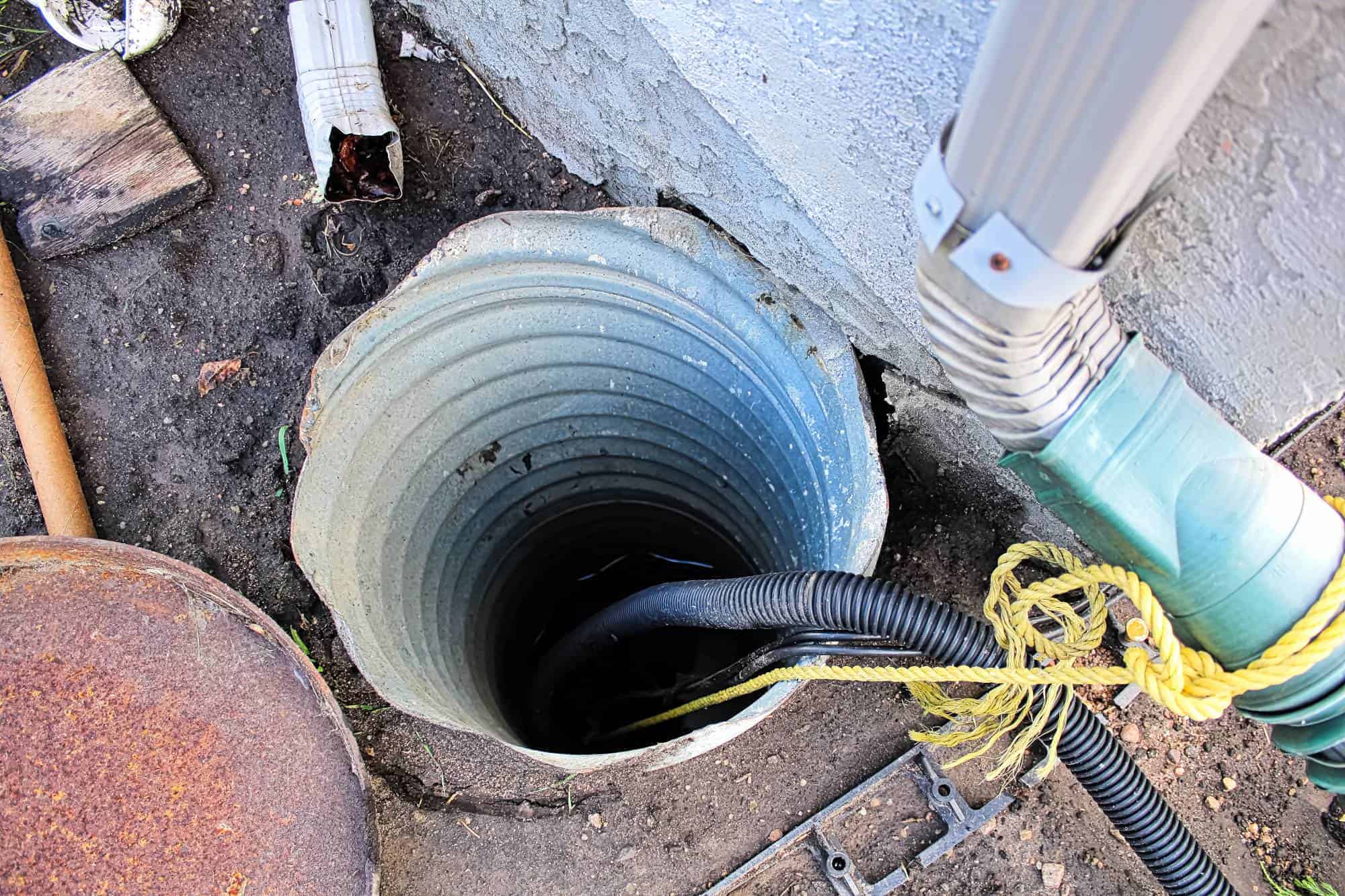
A sewage ejector pump moves wastewater uphill. If you have a bathroom, laundry, or utility sink below the level of the sewer line, gravity can’t carry what goes down the drain out to the street. So it all runs into a pit in the basement floor, and the pump lifts it up and into the sewer line.
That setup is common across Chicago. Garden-level units in two-flats, finished basement bathrooms in bungalows, and laundry hookups in greystones often depend on one. Chicago’s plumbing code (Section 18-29-712) says drains that can’t reach the sewer by gravity must empty into a tightly covered, vented sump and be lifted by automatic pumping equipment. In plain terms, the city expects the pit to be sealed and the pump to run on its own.

The sequence is simpler than most people expect. Every time you flush, run the washer, or drain a sink on that level, the wastewater runs into the basin. A float, which works a lot like the one in a toilet tank, rises with the water. When it reaches a set point, it switches the pump on.
The pump then pushes the wastewater up through a discharge pipe and out to the main sewer line. A check valve on that pipe keeps everything from flowing back into the pit once the pump shuts off. When the level drops, the float drops with it, and the pump goes quiet until the next time. That cycle repeats many times a day in a busy household, and you never notice.
That is the problem. A sump pit is open, so you can glance in and see if the water is moving. An ejector basin is sealed and vented on purpose, because it holds sewage and the gas that comes with it. Nobody looks inside. There’s no drip, no visible wear, and no warning, so most owners assume the pump is fine because nothing has gone wrong yet.
Then a float sticks or a check valve gives out, and the first sign is a gurgling toilet or a beeping alarm. A quiet ejector pump isn’t proof of a healthy one. A quick yearly check of the float, the check valve, and the alarm catches most of what goes wrong before you’re dealing with it at midnight. It’s a short visit, and it’s the step most people skip.
No, and the mix-up is common enough that plenty of Chicago homeowners use the two names interchangeably. A sump pump handles groundwater and rain that seep into an open pit near your foundation. An ejector pump handles what comes out of your toilets, sinks, and washing machine. One moves water. The other moves sewage, which is why its pit has a gas-tight cover and a vent.
You might have both, and they’re separate systems with separate pumps. A working sump pump tells you nothing about the state of your ejector.
The local picture matters here. Most of Chicago’s sewers were built before 1930, and they’re combined, meaning rain and toilet waste share the same pipes. According to WBEZ, citing Metropolitan Water Reclamation District modeling, the system can be overwhelmed after just two-thirds of an inch of rain in an hour. A Chicago Sun-Times analysis of 311 data found more than 27,000 flood-related reports in about two years, with over 40 percent of them about basements. May 2020 alone brought more than 9.5 inches of rain to the city. Chicago is also very flat, which doesn’t help water drain away.
When the sewer is that full, your ejector pit and its check valve are part of what keeps your household plumbing working. Flood control setups are built around that pairing. The pit and pump are a different component from a backwater or flood control valve, though. If backups keep happening after pump work, a camera inspection shows if the real problem is in the line and not in the pit.
Want live answers?
Connect with a Go-Rooter Emergency Plumbers expert for fast, friendly support.
Most plumbing sources put the life of a sewage ejector pump at about 7 to 10 years. Some go longer and some give out sooner, depending on how often they cycle, what goes down your drains, and if the float and valves have been kept up. If you bought a home with a pump of unknown age, assume the clock started before you arrived.
Age alone isn’t a reason to tear anything out. Repair makes sense when the problem is a stuck float or a worn check valve on a fairly young pump. Replacement makes more sense when the pump is near the end of that window, the problems keep coming back, or there’s an odor after the last service. We’d rather say repair it than sell you a new system you don’t need.
Your house usually tells you before the pit does. A basement toilet that gurgles or flushes slowly is the classic sign. Lower-level drains that back up for no clear reason, a sewage smell you can’t trace, or a pump that runs and runs without shutting off all point the same direction.
A pump that never shuts off often means a stuck float. One that hums and moves nothing can mean a failing motor or a blocked discharge line. Then there’s the alarm. Most ejector systems have a high-water alarm, and when it sounds, something is off: the pump has failed, the float is stuck or tangled, the discharge line is blocked, a surge of wastewater has outpaced the pump, or the power is out.
That last one matters in Chicago, where a summer thunderstorm can knock out power right when the sewer is at its busiest. If the alarm goes off, stop running water. No flushing, no laundry, no dishwasher. Keep kids and pets away from the pit, and don’t pry the cover off, since that’s where the sewage gas collects.
Then call a plumber. We answer the phone around the clock, including at 2 a.m., and we handle same-day repairs. When we arrive, we figure out if it’s the pump, the float, the valve, or the line, and we agree on the price with you before any work starts.
Cost first, since it’s the question everyone asks. We don’t publish a flat price because the jobs aren’t flat. Published Chicago cost guides put an average ejector pump replacement around $2,300, with a range from $630 to $4,300, and those are estimates, not quotes.
What moves the number is the condition of the basin, if concrete has to be broken to reach it, if the check valve and gate valve need replacing, and what the permit involves. Our approach is a price you agree to before we start, with no surprise additions afterward. Compare that with a failure: one maintenance guide from Empire Home Protect puts sewage backup cleanup after a failed ejector at $2,000 to $10,000.
Permits are the part people don’t expect. Chicago code requires a sealed, vented sump and a check valve on the discharge line, and buildings other than single-family homes also need a gate valve. A new ejector installation needs a permit through the Chicago Department of Buildings, filed by a City of Chicago-licensed plumber, so confirm what applies to your building before any work begins. Unpermitted basement or garden-unit work has a way of surfacing when you sell or refinance, and two-flat owners are the ones who usually get caught off guard.
Can you swap it yourself? We’d steer you away from it. It’s a sealed pit full of sewage gas, with valves to replace and possible permit requirements. Check your homeowners policy now, because standard policies often exclude surface flooding, and sewer backup coverage is usually a separate endorsement.
An ejector pump is easy to forget until it’s the only thing you can think about. The short version: it’s a sealed pit and a pump that lift wastewater out of below-grade bathrooms and laundry, it tends to last about 7 to 10 years, and a gurgle, a smell, or an alarm is worth acting on. A yearly check is a lot easier on your nerves than an emergency call.
If you own a Lincoln Park, IL two-flat with a garden unit, a Pilsen, IL basement with an older setup, or a bungalow up near Norwood Park, IL and you’re wondering how old your pump is, call Go-Rooter Emergency Plumbers today at 773-661-4800 for an immediate inspection and honest replacement estimate.
Article details:
Share:
Continue learning:
Request a Callback
Want to skip the wait?
Simply enter your contact details, and we’ll call you when a NY Spine Advisor becomes available.