Garbage disposals don't work the way most people think. Here's a plain, honest breakdown of what they actually do — and what they can't.
Share:
Request a Callback
Want to skip the wait?
Simply enter your contact details, and we’ll call you when a Go Rooter Advisor becomes available.

Summary:
If you’ve ever stood at your kitchen sink wondering whether you can put something down the disposal — or why it’s making that grinding noise again — you’re not alone. Most people use a garbage disposal every day without really knowing what it does or how it works. That gap in understanding is exactly why so many Cook County kitchens end up with slow drains, persistent odors, and surprise plumbing calls.
This isn’t a lecture. It’s just a plain explanation of what the appliance actually does, what it genuinely can’t handle, and what that means for your kitchen drain — especially in an older Chicago-area home where cast iron pipes and mineral-heavy water create their own set of challenges.
Here’s the misconception almost everyone has: a garbage disposal works like a blender, with spinning blades that chop food into smaller pieces. That’s not what’s happening. There are no blades.
What’s actually inside is a spinning plate — called an impeller plate — with small blunt lugs mounted on it. When you turn the unit on, that plate spins at high speed and uses centrifugal force to push food waste outward against a fixed grind ring along the inner wall of the chamber. The grind ring does the real work, breaking food down into particles small enough — under 2mm — to flush safely through your drain line. It’s more like a grinder than a blender, and that distinction matters more than it sounds.
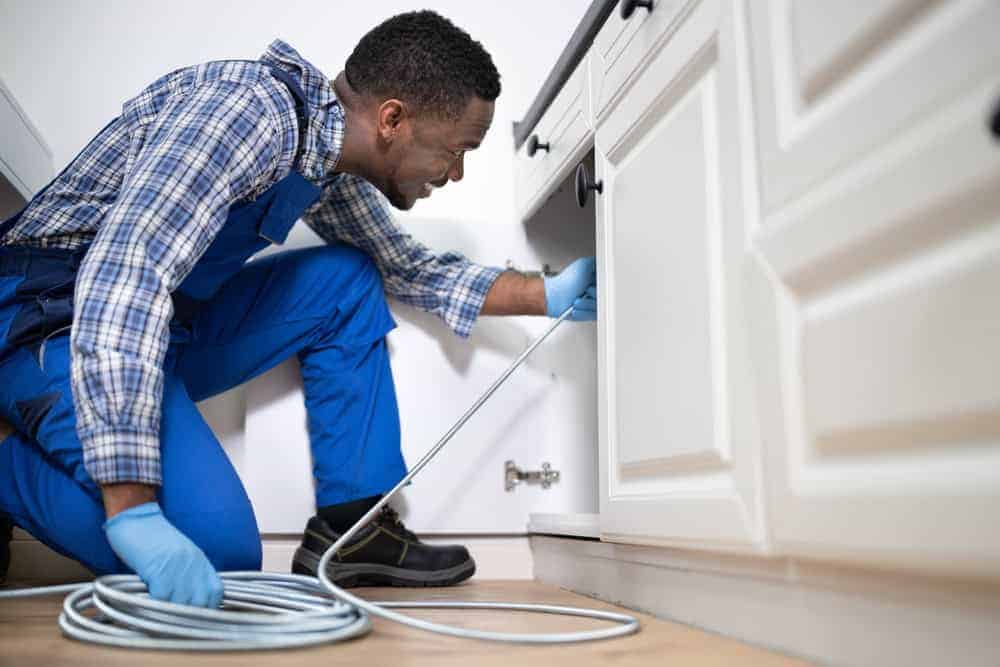
Understanding the parts helps you understand the problems. The grinding chamber — sometimes called the hopper — is where food waste enters from the drain opening. At the bottom of that chamber sits the impeller plate, driven by an electric motor that typically runs anywhere from 1/3 to 1 horsepower depending on the model. Higher horsepower means more torque and a better ability to handle larger volumes of food waste without jamming.
The grind ring, also called the shredder ring, lines the outer wall of the chamber. As food particles get flung against it repeatedly, they’re broken down into a fine slurry. Once the particles are small enough, water carries them through the drain outlet and into your home’s drain line — the same line that connects to the kitchen sink drain and eventually to the municipal sewer system.
That last part is worth noting for Cook County, IL homeowners specifically. The vast majority of homes across Cook County connect to municipal sewer — not a septic system — which means a garbage disposal is generally appropriate and legal to use here. If you were in a rural part of Illinois with a septic tank, the calculus would be different, because food waste adds to the solid load in the tank and can accelerate how often it needs pumping. But for most of the 135 municipalities that make up Cook County, that’s not the concern.
What is a concern — and something we see regularly — is what happens after the food leaves the disposal and enters the drain line itself. The disposal does its job. The drain line is where things go wrong.
One of the most common pieces of advice we give about garbage disposals is to run cold water — not hot — while the unit is operating. Most homeowners either don’t know this or assume hot water is better because it seems like it would help flush things through. The opposite is true.
When you run hot water during disposal operation, any fats or grease in the food waste liquefy. They flow easily through the disposal itself, which makes it seem like everything is fine. The problem happens downstream. As that liquefied grease travels further into your drain line and cools, it re-solidifies — coating the inside of the pipe and slowly narrowing the passage. Over time, that buildup catches other debris, and what started as a thin film becomes a stubborn clog that no amount of drain cleaner will fully clear.
Cold water keeps fats in a solid state while they’re being ground up, so they get broken into small particles and flushed through rather than coating your pipes on the way out. It’s a small habit that makes a real difference, especially in Cook County homes where many kitchens have cast iron or galvanized drain lines that are already narrower and more corroded than modern PVC. Those older pipes have less tolerance for any kind of buildup, and Chicago’s water — which carries a notable mineral load from its Lake Michigan source — compounds the problem over time. Mineral deposits and grease buildup together can turn a minor slowdown into a full blockage faster than most homeowners expect.
Run cold water for about 30 seconds before you turn the disposal on, keep it running the whole time the unit is operating, and let it run for another 15 to 20 seconds after you shut the disposal off. That’s enough to flush the particles fully through the drain outlet.
Want live answers?
Connect with a Go-Rooter Emergency Plumbers expert for fast, friendly support.
The name “garbage disposal” sets the wrong expectation. It sounds like it handles garbage — like anything food-related is fair game. It isn’t. The appliance is designed for soft food scraps that can be ground into fine particles and flushed with water. The list of things it genuinely can’t handle safely is longer than most people realize, and getting it wrong is one of the leading reasons Cook County homeowners end up calling us for a kitchen drain backup.
Understanding the limits isn’t about being overly careful. It’s about knowing what the machine was actually built to do.
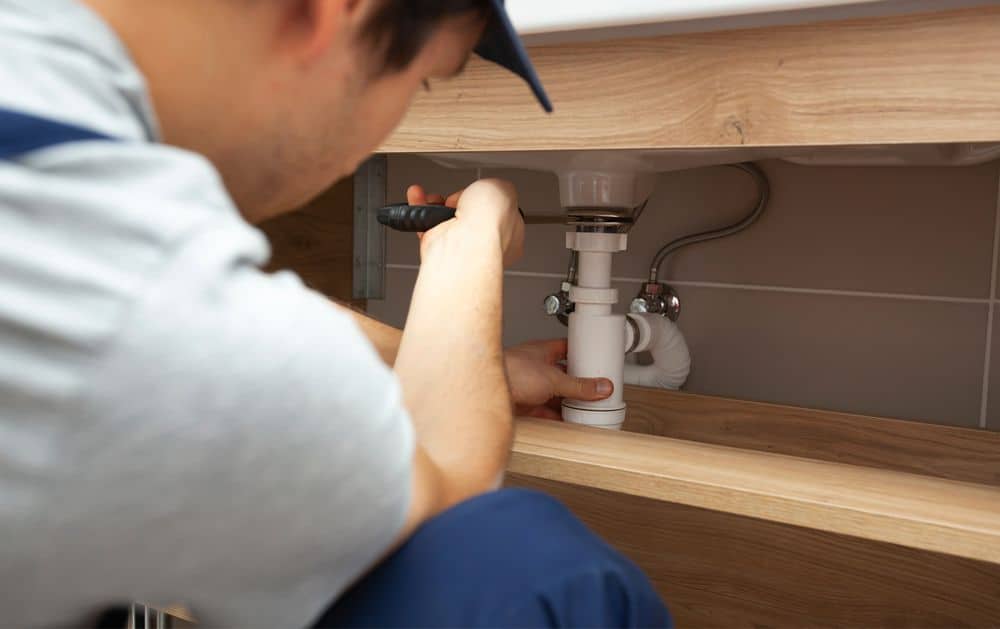
A properly sized disposal — typically 1/2 HP or higher for a household that cooks regularly — handles most soft food scraps well. Cooked vegetables, fruit scraps (without pits), small amounts of leftover food, bread, soft table scraps — these are the kinds of things the appliance was designed for. The key word is soft. If the food can be broken down easily and flushed with water, it’s generally fine.
Citrus peels are often recommended not just because the disposal can handle them, but because they help neutralize odors in the grinding chamber. Small amounts of dish soap and water are also fine and can help keep the chamber clean between uses.
The disposal works best when it’s used in small amounts rather than overloaded all at once. Feeding food waste gradually — a handful at a time — with the water running gives the grind ring time to do its job properly. Dumping a large volume of food in and turning it on is how jams happen, even with food the unit is technically capable of grinding.
One thing worth knowing: the average garbage disposal lasts between 8 and 15 years depending on the model, how it’s used, and how well it’s maintained. If yours is on the older end of that range and starting to give you trouble — grinding inefficiently, leaking, or making noises it didn’t used to make — that’s a signal worth paying attention to. Repair costs average around $250, and full replacement runs $200 to $550 including labor, which makes the repair-versus-replace decision a real one rather than an obvious call.
This is where the local context matters. The things that cause the most damage aren’t exotic — they’re the everyday items people assume are fine because the disposal seems to handle them without complaint.
Grease, oil, and fat are at the top of the list. Whether it’s bacon grease, cooking oil, or the fat that renders off meat, none of it belongs in the disposal. As explained above, it liquefies, travels downstream, and re-solidifies inside your drain line. In a newer home with PVC pipes, this is bad. In a Cook County home with 50-year-old cast iron pipes, it’s a much faster path to a serious clog.
Coffee grounds are another one people get wrong. They feel gritty and seem like they’d rinse away easily, but they clump together like wet sand inside drain lines and form a dense, sludgy layer that accumulates over time. Eggshells create a similar granular waste that builds up rather than flushing through cleanly.
Fibrous vegetables — celery, artichokes, asparagus, corn husks — wrap around the impeller plate rather than grinding down. They’re one of the more common causes of disposal jams. Starchy foods like potato peels, pasta, and rice expand when they absorb water and create a thick paste inside the drain line that’s remarkably effective at blocking flow. Bones and fruit pits are simply too hard for the impeller plate to handle and can damage the unit or the grind ring.
None of this is meant to make you afraid of your disposal. It’s meant to give you a clear picture of what the machine is and isn’t — so you can use it the way it was designed to be used and avoid the drain problems that come from treating it like a catch-all. If you’re already dealing with a slow kitchen drain, recurring backups, or a smell that won’t go away no matter what you pour down the sink, the drain line it feeds into is worth looking at — and that’s something a camera inspection can answer in minutes rather than guesswork.
Some disposal issues are genuinely DIY-friendly. If the unit is completely unresponsive, the reset button on the bottom of the unit is the first thing to check. If it’s humming but not spinning, a 1/4-inch Allen wrench inserted into the port at the bottom can manually free a jam. Those are reasonable first steps before picking up the phone.
But if the drain is backing up repeatedly, if there’s a leak at the connection point, if the unit is making noises it never made before, or if the smell coming from the sink persists even after cleaning — those aren’t reset-button problems. And in a Cook County home with older plumbing, a partial clog that seems minor can escalate quickly.
We’ve been serving Cook County homeowners since 2001, and we offer same-day service, upfront pricing before any work begins, and free quotes — so you know what you’re dealing with before you commit to anything. If your disposal or kitchen drain is giving you trouble, Go-Rooter Emergency Plumbers is available 24 hours a day, every day, including holidays.
Article details:
Share:
Continue learning:
Request a Callback
Want to skip the wait?
Simply enter your contact details, and we’ll call you when a NY Spine Advisor becomes available.