Chicago summers hit hard and fast. Here's what most homeowners miss before the rain comes — and why your outdoor drain matters more than you think.
Share:
Request a Callback
Want to skip the wait?
Simply enter your contact details, and we’ll call you when a Go Rooter Advisor becomes available.
Summary:
If you’ve ever held your breath watching a summer storm roll across Chicago, wondering whether your basement is about to take on water, you’re not alone. It happens every year — and for a lot of homeowners, it keeps happening. The frustrating part is that the cause is often something they never thought to check: the outdoor catch basin. That in-ground drain in your driveway, backyard, or alley is supposed to intercept surface water before it reaches your foundation. When it’s clogged, that water has nowhere to go. Here’s what you need to know before storm season peaks.
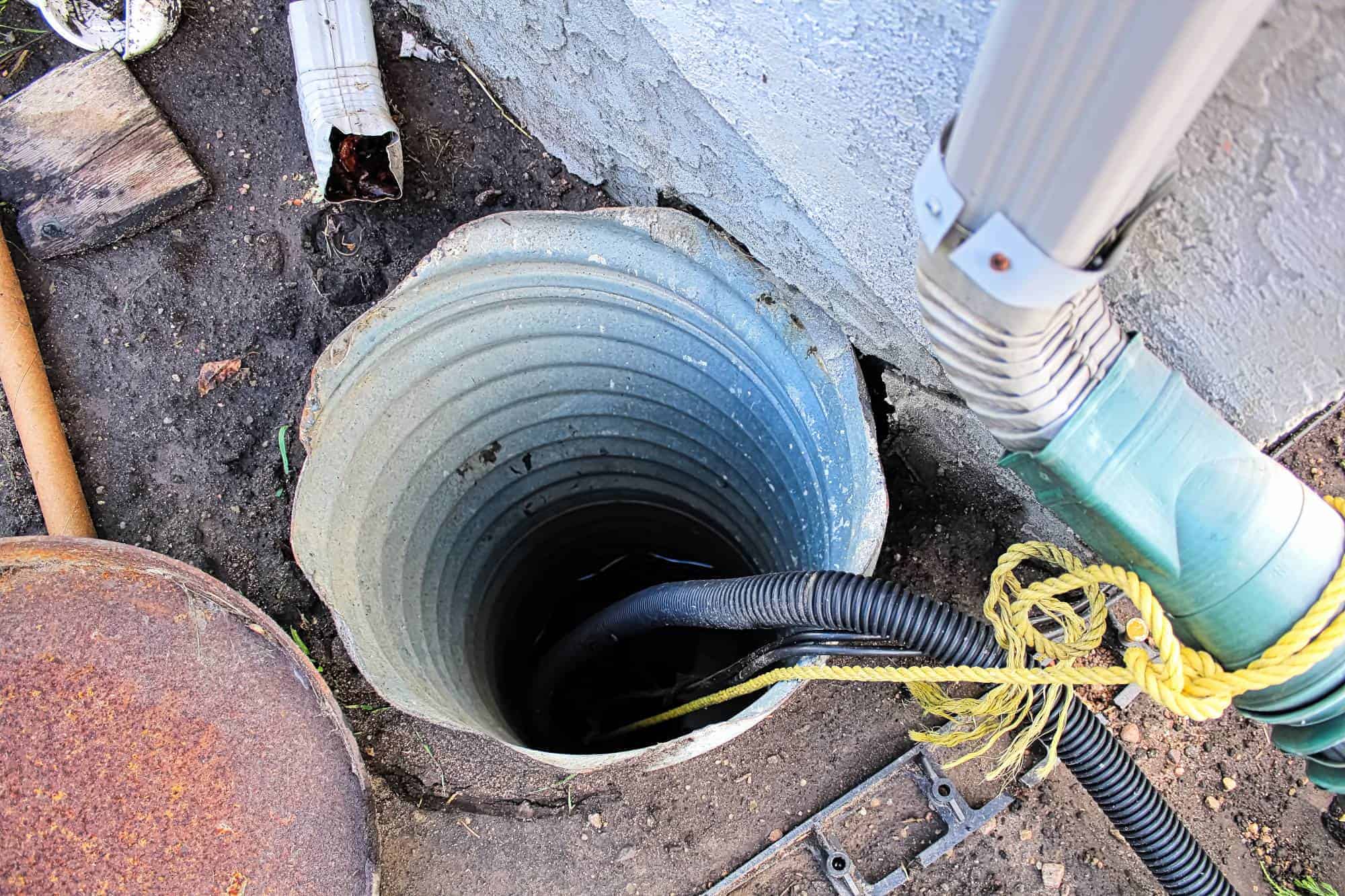
A catch basin is essentially an in-ground drain connected directly to your property’s sewer pipe, which ties into the municipal sewer system. Its job is simple: intercept surface water — from rain, melting snow, or runoff — and route it away from your home before it can pool against your foundation or flood your basement.
In Chicago, that job is harder than it sounds. The city gets over 38 inches of rain annually, with the heaviest storms concentrated between May and August. The soil here is heavy clay, which saturates quickly and holds water for days. When a summer storm drops two, three, or even six inches of rain in a matter of hours — which happens regularly on the South Side, West Side, and neighborhoods near Midway — that water needs somewhere to go fast.
If your catch basin is packed with sediment, gravel, leaves, and grease from a full winter and spring of accumulation, it simply won’t drain fast enough. And when it can’t keep up, the water migrates toward your foundation instead.

Here’s the part most Chicago homeowners don’t connect until it’s too late: a clogged catch basin doesn’t just flood your yard. It puts your entire basement defense system under pressure.
When surface water can’t drain through the catch basin, it saturates the soil around your foundation. That saturated soil increases the hydraulic load on your sump pump — meaning your sump pump is now working harder than it was designed to, trying to compensate for a drainage failure that started outside. One heavy storm, one power flicker, and a sump pump running at capacity is a sump pump that fails. That’s when you end up with inches — or feet — of water in your basement.
Chicago’s combined sewer system makes this worse. In many neighborhoods, stormwater and sewage travel through the same underground pipes. When those pipes get overwhelmed by a heavy storm event, sewage can back up into homes through floor drains and basement fixtures. It’s not just water at that point. Residents in Jefferson Park, Roseland, Clearing near Midway, and communities along the West Side near California Avenue have dealt with exactly this scenario, and local news coverage has documented it repeatedly.
A neglected catch basin also creates problems that compound over time. Sediment builds up gradually — you may not notice anything wrong until the first major storm of the season, when the basin is already too full to function. By then, standing water is breeding mosquitoes, bacteria are thriving in pooled runoff, and you’re looking at potential foundation damage, pavement erosion around the drain, and pest problems on top of the flooding itself.
Under Chicago municipal code, private catch basins are the homeowner’s responsibility to maintain — not the city’s. If a neglected catch basin on your property contributes to environmental contamination or flooding damage, you can be held financially liable. That’s a detail most homeowners find out the hard way.
Timing matters more than most people realize, and the window is specific to Chicago’s seasonal patterns.
The best time to clean your outdoor catch basin is spring — ideally before the heavy storm season kicks in. Through fall and winter, debris accumulates: leaves, gravel, road salt residue, and grease from kitchen-to-catch-basin connections that congeals in the cold. By the time April arrives, many catch basins are significantly restricted without showing any visible signs of trouble. They’ll drain fine under light rain. They’ll fail under a summer downpour.
A second cleaning in early fall — after the summer grease and storm debris has accumulated but before cold temperatures cause it to harden again — is the right maintenance rhythm for most Chicago households. For homes with kitchen drain lines that tie into outdoor catch basins, annual hydro jetting performed alongside catch basin pumping in a single visit is the most efficient approach.
What you can do yourself is limited. You can clear visible debris from the grate and check for standing water after a rain to gauge whether the basin is draining at all. But the actual cleaning — pumping out accumulated sediment, flushing the connected sewer line, and inspecting the pipe for root intrusion or structural damage — requires professional equipment. Hydro jetting uses high-pressure water to fully clear the line, including grease that a standard snake would only punch a hole through without actually removing. A camera inspection after cleaning confirms the line is fully clear and flags any underlying issues before they become expensive repairs.
Avoid chemical drain cleaners in outdoor catch basins. Unlike household drains, storm drainage flows untreated into freshwater bodies. Chemical cleaners cause environmental contamination and are not an appropriate solution for outdoor drainage systems.
Want live answers?
Connect with a Go-Rooter Emergency Plumbers expert for fast, friendly support.
There’s a meaningful difference between a plumber who clears a clog and one who actually solves the problem. For drain cleaning in Chicago — where the infrastructure in many neighborhoods is over 100 years old, where pre-1985 homes commonly have clay tile or cast-iron sewer lines, and where a single summer storm can overwhelm the system — that difference matters.
A thorough drain cleaning service for a Chicago home should include diagnosing the root cause, not just clearing the immediate blockage. That means a camera inspection to see what’s actually happening inside the pipe: root intrusion, pipe collapse, a bellied section that holds water, or simple sediment buildup. It means hydro jetting for lines where grease or heavy debris is the issue. And it means a clear explanation of what was found and what, if anything, needs follow-up.
What it should never include is a surprise invoice. Upfront pricing — agreed upon before work begins — is the baseline expectation for any reputable drain cleaning company in Chicago.

This is one of the most common questions we hear, and the honest answer is: it depends on the problem, but for most Chicago homes dealing with grease buildup or catch basin issues, hydro jetting does a significantly better job.
Snaking — or power rodding — works by driving a rotating cable through the blockage to break it apart. For a simple clog caused by debris or a foreign object, it’s often sufficient. But for grease accumulation, which is extremely common in kitchen drain lines and catch basin connections, snaking typically punches a hole through the grease without removing it. The line flows again temporarily, but the grease remains on the pipe walls and the blockage rebuilds. If you’ve had a drain cleaned and found yourself calling a plumber again two months later, this is usually why.
Hydro jetting uses high-pressure water — typically between 3,000 and 4,000 PSI — to fully flush the line. It removes grease, sediment, mineral buildup, and debris from the pipe walls entirely, not just from the center of the flow path. For catch basins, it’s used alongside vacuum pumping to pull out accumulated sediment from the basin itself. The result is a line that’s actually clear, not just temporarily passable.
For Chicago homes with older clay or cast-iron pipes, there’s one caveat worth knowing: hydro jetting should always be preceded by a camera inspection. High-pressure water in a pipe that’s already cracked, corroded, or structurally compromised can cause additional damage. A camera inspection first ensures the pipe can handle the cleaning method — and surfaces any structural issues that need to be addressed separately. Sewer repair costs in Chicago range from around $200 for straightforward drain cleaning to $8,000 or more for complete sewer line replacement, depending on the severity and method required. Catching a problem early, before a pipe fails completely, is almost always the less expensive path.
**How do I know if my catch basin is clogged?** The most obvious sign is standing water that doesn’t drain within a few hours after rain. You might also notice water pooling near your foundation or driveway after moderate rainfall — storms that wouldn’t normally cause that kind of surface runoff. A foul odor near the drain grate can also indicate that sediment and organic debris have built up inside the basin. If you’re not sure, a visual check after the next rain is a good starting point — but keep in mind that a basin can be significantly restricted without showing obvious signs until a heavy storm tests it.
**Is my outdoor catch basin my responsibility or the city’s?** If the catch basin is on your property, it’s yours to maintain. The City of Chicago is responsible for catch basins in the public right-of-way — typically those located in the street or alley adjacent to the curb. Private catch basins on residential property in Chicago fall to the homeowner. The City of Chicago Private Drain Program exists specifically to help homeowners navigate the maintenance and repair of private drainage systems, and we work within that program directly.
**Can a clogged catch basin damage my sump pump?** Yes — and this connection catches a lot of Chicago homeowners off guard. When outdoor drainage fails, surface water saturates the soil around the foundation and increases the load on the sump pump. A sump pump running at or near capacity during a summer storm is far more likely to fail, especially if it’s already aging or hasn’t been serviced recently. Keeping your outdoor drainage system clear is one of the most effective ways to protect your sump pump from being overwhelmed. If your sump pump has been working harder than usual during storms, it may be worth having both systems checked at the same time.
**What shouldn’t I put in my outdoor catch basin to prevent clogs?** Nothing, ideally — catch basins are passive drainage systems, not treatment systems. Avoid pouring chemical drain cleaners into outdoor drains. Unlike household drain lines, storm drainage flows directly into the environment without treatment, and chemical cleaners can contaminate local waterways. Grease, yard waste, and debris should be disposed of through proper channels, not flushed into storm drains.
The pattern for most Chicago homeowners is reactive: something floods, they call a plumber, they deal with the aftermath. The better approach — and the less expensive one over time — is getting ahead of it. A catch basin cleaning in spring costs a fraction of what basement flood remediation, foundation repair, or sump pump replacement runs. And knowing your outdoor drainage system is clear before the first big storm of the summer is genuinely worth something.
If your basement has flooded before, if you’re not sure when your catch basin was last cleaned, or if your sump pump seems to be working harder than it used to, those are all signals worth acting on now — not after the water is already rising.
We’ve been serving Chicago and Cook County, IL since 2001. We’re available 24 hours a day, offer upfront pricing before any work begins, and use camera inspections and hydro jetting to find and fix the actual problem — not just make it go away temporarily. Give us a call and let’s figure out what your drainage system actually needs before summer storm season does it for you.
Article details:
Share:
Continue learning:
Request a Callback
Want to skip the wait?
Simply enter your contact details, and we’ll call you when a NY Spine Advisor becomes available.