What does drain cleaning actually cost in Cook County, IL? Here's a plain-language breakdown by drain type, method, and what drives the price up or down.
Share:
Request a Callback
Want to skip the wait?
Simply enter your contact details, and we’ll call you when a Go Rooter Advisor becomes available.
Summary:
You searched “drain cleaning cost” because you want a real number — not a range that stretches from $100 to $800 and leaves you no better off than before you looked. That’s fair.
Most cost guides are written for the national average, not for a Cook County homeowner dealing with a 90-year-old clay sewer lateral and a basement that backs up every spring. We work in these conditions every day, and we know what the actual numbers look like.
This page gives you pricing by drain type and cleaning method, explains what drives costs up in Cook County specifically, and helps you figure out whether you need a quick snake or something more thorough. No pressure, no upsell — just the information you need to make a smart call.
The single biggest factor in what you’ll pay is which drain is clogged. A slow kitchen sink and a backed-up main sewer line are completely different jobs — different tools, different time, different price.
In Cook County, where the average drain cleaning runs around $288 (with most jobs between $165 and $414), the spread makes sense once you understand what each type of drain involves.
A bathroom sink or tub drain is typically the most straightforward job — $100 to $200 for a standard clog. Kitchen drains run a little higher, usually $150 to $250, because grease buildup is harder to clear and tends to coat the pipe walls rather than forming a single blockage. Floor drains in basements or laundry rooms fall in a similar range, around $150 to $215.
Main sewer line cleaning is the big one — expect $250 to $900 depending on severity, pipe condition, and access. That range exists because Cook County’s sewer infrastructure is old, and what we find when we camera the line determines what the job actually requires.
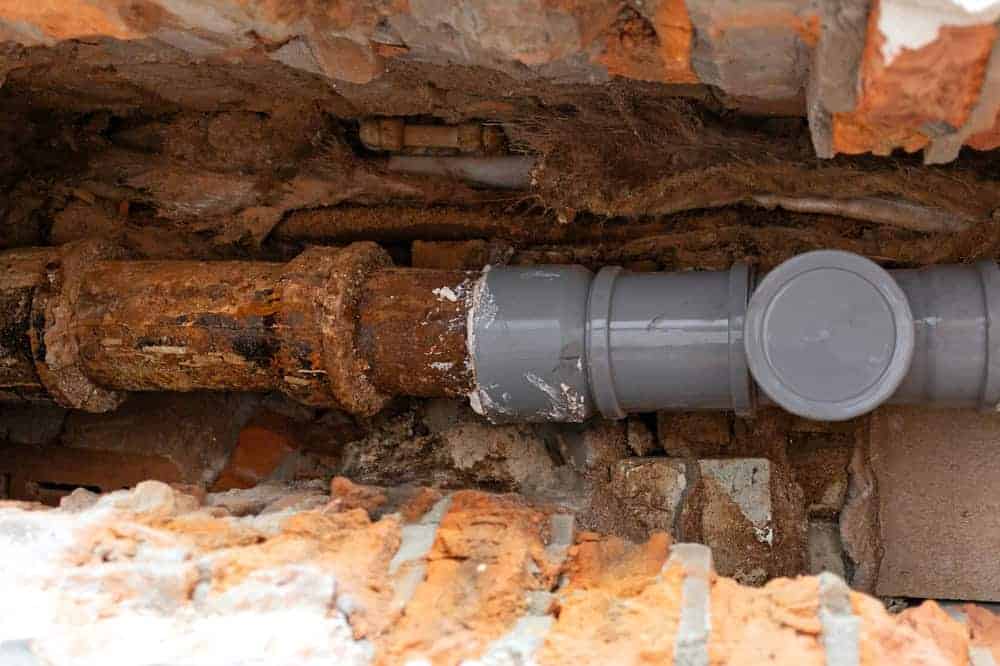
If your home was built before 1970, there’s a real chance your sewer lateral is clay tile and your interior drain lines are cast iron. That’s not a problem in itself — those materials lasted for decades — but they do change what a drain cleaning job involves, and what it costs.
Clay tile pipes have joints that aren’t sealed tight. Over time, tree roots find those joints and grow into the pipe. In established Cook County neighborhoods — think Oak Park, Evanston, Wilmette, or Chicago’s North Side — mature trees are everywhere, and root intrusion into clay laterals is extremely common. Municipal sewer authorities describe it as “a very common maintainable defect,” which sounds reassuring until you realize it means your pipe needs attention on a regular schedule, not just once.
Cast iron drain lines corrode from the inside out. The pipe doesn’t collapse — it just gets narrower as scale and rust build up on the interior walls, reducing flow over years until even a moderate amount of grease or debris causes a backup. A standard snake will clear the immediate blockage, but it won’t touch the buildup lining the pipe walls.
This is why homeowners in historic Cook County neighborhoods with pre-1950s plumbing typically pay 15 to 25 percent more for drain cleaning than someone in a newer suburb. The job takes more care, sometimes requires adjusted equipment pressure, and almost always benefits from a camera inspection first to understand what you’re actually dealing with before any work begins.
Skipping the inspection to save money on a deteriorated clay or cast iron pipe is how a $300 drain cleaning becomes a $5,000 pipe repair.
Beyond pipe age and drain type, a few other variables move the price in one direction or the other. Clog severity matters — a soft grease clog in a kitchen drain is a very different job than a hardened root mass blocking a main sewer line. Pipe access matters too. If your cleanout is easily accessible from outside the home, the job is simpler. If we have to pull a toilet or work through a vent stack, that adds time and cost.
Emergency timing is another factor. If your drain backs up at midnight on a Tuesday in January — which happens more than you’d expect in Cook County winters — some companies charge a premium for after-hours calls. We don’t add hidden emergency surcharges. We provide free estimates even for emergency service, and the price we quote before we start is the price you pay. No “unforeseen complication” charges added after the fact.
One thing that doesn’t drive cost up as much as people fear: calling sooner rather than later. A slow drain that you ignore for six months is almost always a bigger, more expensive job than the same drain addressed when you first noticed the problem. Cook County’s combined sewer system is old — most main lines in the city are approaching 70 years of age — and the infrastructure doesn’t give much warning before it fails completely.
Want live answers?
Connect with a Go-Rooter Emergency Plumbers expert for fast, friendly support.
This is the question we get most often, and the honest answer is: it depends on what’s causing the problem. Rodding — also called snaking or power rodding — uses a flexible cable with a cutting head to punch through a blockage. It’s effective, it’s fast, and for a simple clog, it’s often all you need.
Main line rodding in Cook County typically runs $200 to $500. We currently offer $50 off main line rodding for customers who need it.
Hydro jetting is a different tool for a different problem. Instead of punching through a clog, it uses high-pressure water — up to 4,000 PSI — to scour the pipe walls clean. It removes grease accumulation, scale buildup, and root tendrils that rodding leaves behind. Residential hydro jetting runs $350 to $500, and we offer hydro jetting service starting at $55 for new customers taking advantage of our current promotion.
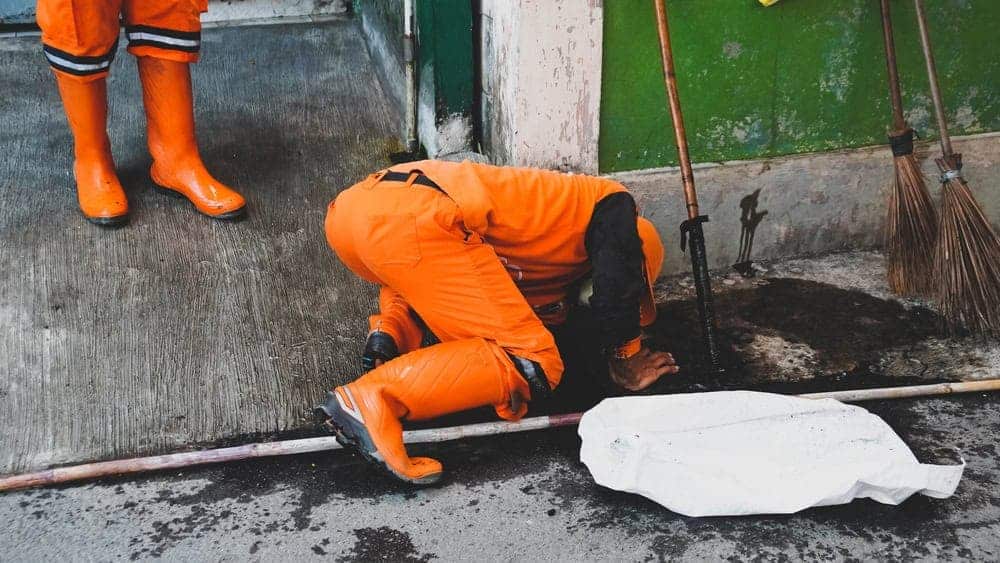
Rodding is the right call when you have a clear, isolated blockage — a wad of hair in a bathroom drain, a chunk of food debris in a kitchen line, or a straightforward soft clog in a secondary drain. It’s fast, it works, and there’s no reason to spend more than necessary.
Hydro jetting makes more sense when you’re dealing with a recurring problem. If you’ve had the same drain rodded two or three times in the past few years and it keeps backing up, rodding is treating the symptom, not the cause. The grease coating the pipe walls is still there. The root tendrils are still there. The scale buildup is still there. Rodding cleared a path, but the pipe isn’t clean — it’s just passable again until the buildup closes it back off.
Here’s where the math becomes important for Cook County homeowners stuck in this cycle. If you’re paying $250 to $500 for main line rodding every year because the same line keeps backing up, you’re spending $500 to $1,000 over two years on a problem that isn’t getting fixed. A single hydro jetting service at $350 to $500 that lasts 18 to 24 months — and actually scours the pipe walls clean — can cost less over the same period and leave your pipe in genuinely better condition.
We always camera the line before hydro jetting. This isn’t an upsell — it’s how responsible drain cleaning works, especially in Cook County where clay and cast iron pipes are common. Knowing the condition of the pipe before applying 4,000 PSI of water pressure is the difference between a clean pipe and a cracked one. We also camera after, so you can see the result for yourself.
Main sewer line cleaning is its own category, and it’s worth understanding separately because the stakes are higher and the cost range is wider. In Cook County, sewer line cleaning typically runs $250 to $900. The Downers Grove Sanitary District — an official municipal source — notes that rodding from the outside for lines under 110 feet in the Chicago suburbs typically runs $250 to $500.
What pushes a sewer cleaning toward the higher end? Root intrusion is the biggest factor in Cook County. When roots have grown significantly into a clay lateral, clearing them requires more than a standard rodding pass — it takes a root-cutting head, more time, and often a follow-up hydro jetting to flush the debris out of the line. If the camera inspection reveals a partially collapsed section or a joint that’s shifted out of alignment, that’s a separate conversation about repair — but at least you know before the situation becomes an emergency.
What keeps costs reasonable is catching the problem at the right stage. A main line that’s 30 percent blocked by root intrusion is a maintenance job. The same line at 80 percent blockage, after a heavy spring rain overwhelms Cook County’s combined sewer system and backs up into your basement, is an emergency — and emergency service, while we keep it fairly priced, is always going to cost more than a scheduled maintenance visit.
Cook County homeowners with pre-1990 clay sewer laterals are generally well-served by a camera inspection every few years, just to know where things stand. It’s a small cost compared to the alternative.
The reason most people search “drain cleaning cost” isn’t because they want a national average — it’s because they want to know what they’re walking into before they call a plumber. That’s a reasonable thing to want, and it’s exactly how we operate.
Before any work begins, you get a clear price that covers labor, materials, cleanup, and our workmanship guarantee. No hidden fees, no surprise charges after the fact, no “unforeseen complication” language on the invoice. If we quote you a number, that’s the number.
We also offer $40 off for new customers, $50 off main line rodding, and hydro jetting service starting at $55 — so there’s a real starting point, not just a range.
If you’re in Cook County and dealing with a slow drain, a recurring backup, or a main line that hasn’t been looked at in years, Go-Rooter Emergency Plumbers is available 24/7, responds within 45 to 60 minutes, and will tell you exactly what the job costs before we start. Call us for a free quote — no commitment, just a straight answer.
Article details:
Share:
Continue learning:
Request a Callback
Want to skip the wait?
Simply enter your contact details, and we’ll call you when a NY Spine Advisor becomes available.