One leak might be bad luck. Two or three? That's your pipes telling you something. Here's how to figure out what they're actually saying.
Share:
Request a Callback
Want to skip the wait?
Simply enter your contact details, and we’ll call you when a Go Rooter Advisor becomes available.
Summary:
You fixed a leak under the kitchen sink last spring. Now there’s something weeping behind the bathroom wall. Same house, same frustration, different spot. At some point, you stop calling it bad luck and start wondering if something bigger is going on.
For a lot of Cook County homeowners — especially those in homes built before 1970 — that instinct is right. The decision between plumbing repair and repiping is one of the most consequential choices you’ll face as a homeowner. Get it wrong in either direction and you’re either throwing money at a system that keeps failing, or paying for a full repipe you didn’t actually need yet.
Here’s how to think through it clearly.
Cook County’s median home was built in 1961. That means the median homeowner is living with pipes that are now over 60 years old — and galvanized steel pipes, which were the standard material through most of that era, have an expected lifespan of 40 to 50 years. The math isn’t encouraging.
Nearly 28% of Cook County homes were built before 1940. If those homes still have their original plumbing, they’re not just aging — they’re well past the point where isolated repairs reliably hold. That’s the context that makes the repair-vs-repipe question so important here, and so different from what a homeowner in a newer suburb faces.
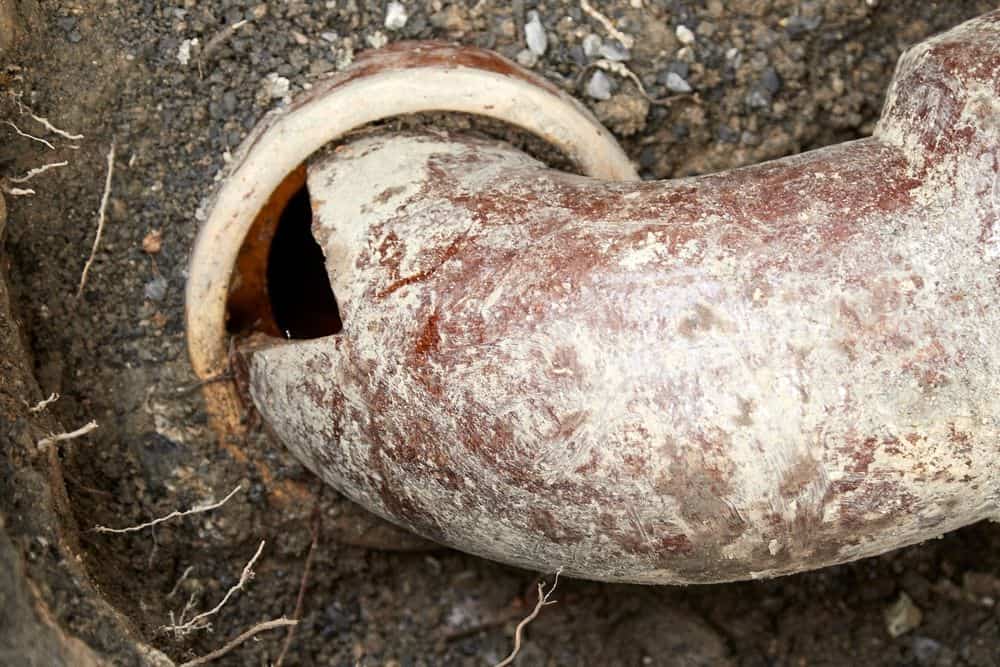
Not every leak signals a failing system. If your home has copper pipes that are under 45 years old and you’re dealing with a first-time pinhole leak in an isolated location, repair is almost certainly the right move. Fix the specific failure, have a plumber assess the surrounding area, and monitor the system going forward. That’s responsible ownership, not avoidance.
The same logic applies to a cracked fitting, a corroded valve, or a joint that gave out after a particularly brutal Chicago winter. Cook County averages around 105 days below freezing annually, and that freeze-thaw cycling puts real stress on pipe connections — especially in exterior walls, crawl spaces, and any uninsulated area of the house. A single failure from cold stress isn’t automatically a sign that the whole system is going.
What you’re really asking when you call for a plumbing repair is this: is this an isolated problem, or is it a symptom? The answer changes everything. An isolated problem in an otherwise sound system is absolutely worth repairing. The mistake is treating a symptom as the whole story — patching the visible failure and walking away without understanding what the rest of the system looks like.
That’s where a camera inspection earns its keep. Before recommending repair or repiping on anything beyond a minor, clearly isolated issue, we run a camera through the line to see the actual condition of the pipe. You watch the footage. You see what we see. Then we talk about what makes sense. That approach isn’t unique to big jobs — it’s just the honest way to make a recommendation you can stand behind.
There’s a pattern that shows up in older Cook County homes, and once you know it, you start recognizing it quickly. The homeowner has a leak repaired. Six months later, there’s another one — different location, same general area of the house. A year after that, a third. Each repair feels like a reasonable response to a specific problem. But the repairs are adding up, and the underlying pipes are still decades old and still corroding.
Here’s the thing about galvanized steel pipe corrosion: it happens from the inside out. A pipe can look completely intact from the outside while the interior is heavily rusted, with a narrowed diameter and walls that are close to failing. You can’t see it without a camera. And when one section fails, it’s not because that section was uniquely unlucky — it’s because the whole system has been degrading at roughly the same rate.
A second pinhole leak in a copper system within 18 months of the first is a meaningful signal. At that point, you’re not dealing with a random failure — you’re dealing with pitting corrosion that’s active throughout the system. The same principle applies to galvanized lines. Once you’re patching the same general plumbing zone for the second or third time, the question stops being “should I fix this leak” and starts being “what will I spend on this system over the next five years if I keep patching?”
That math matters. The cumulative cost of three or four repairs on a failing system over two to three years can approach the cost of repiping the affected area — except at the end of those repairs, you still have aging pipes everywhere else. Repiping, done right, resets the clock. Modern materials like PEX are flexible, corrosion-resistant, and built for the kind of temperature swings Chicago throws at a house every winter.
Other signals worth taking seriously: water that runs orange or rust-colored when you first turn on the tap, noticeably low pressure that’s been getting worse over time, or a banging and whistling in the walls that wasn’t there a few years ago. Those aren’t quirks of an old house. They’re the inside of your pipes talking.
Want live answers?
Connect with a Go-Rooter Emergency Plumbers expert for fast, friendly support.
The honest answer is that you can’t make a fully informed repair-vs-repipe decision without knowing what your pipes actually look like inside. Most Cook County homeowners don’t know what material their pipes are made of, how old they are, or whether they’ve ever been partially replaced. That’s not a knock on anyone — it’s just not information that comes with the house.
What changes the equation is a camera inspection. It’s not an upsell. It’s the only way to give you a real answer instead of a guess. Once you can see the condition of the pipe — the corrosion level, the interior diameter, whether there are multiple points of concern or just one — the repair-vs-repipe decision usually becomes obvious.
Before you agree to any plumbing repair or repiping work, there are a few things worth confirming. First: is the plumber actually licensed and insured in Illinois? This sounds basic, but Illinois IDPH licenses roughly 8,900 plumbers statewide — and not every person who shows up with a truck and a wrench is on that list. Cook County contractor registration also requires a minimum of $1,000,000 in general liability insurance. Ask to see documentation. A legitimate plumber won’t hesitate.
Second: will you get a written quote before any work begins? Upfront, itemized pricing before the job starts is the standard for reputable plumbers. If someone gives you a vague estimate and says they’ll finalize the number once they’re into the walls, that’s a red flag.
Third: has the plumber actually looked at the problem, or are they recommending a solution based on your description over the phone? A camera inspection before any recommendation is the difference between informed advice and a guess dressed up as expertise. You should be able to see the footage, understand what you’re looking at, and agree to the proposed fix before anyone touches a pipe.
Chicago’s plumbing code adds another layer here. The City of Chicago operates under its own municipal plumbing code — separate from and more stringent than the Illinois Plumbing Code — and any work done within city limits needs to meet those specific requirements. If you’re in Chicago proper rather than the suburbs, make sure your plumber knows the difference and has the experience to work to that standard.
**How do I know if my home’s pipes are galvanized steel?** The quickest field test is a magnet. Galvanized steel is magnetic; copper is not. If a magnet sticks to your exposed pipes in the basement or utility room, you’ve got steel. A licensed plumber can confirm the material and give you a realistic read on condition during an inspection.
**My water pressure has been low for years — is that a pipe problem?** Often, yes. As galvanized pipes corrode internally, rust and mineral buildup narrow the pipe’s interior diameter over time. What started as a one-inch pipe can effectively function like a much smaller one. Low pressure that’s been gradually worsening in a pre-1970s Cook County home is a classic sign of this — and it’s worth having assessed, not just accepted as the way old houses are.
**Is repiping a huge disruption?** It depends on the scope and the materials used. Modern PEX piping is flexible enough to route through walls with less opening than older rigid materials required. A full whole-home repipe is a real project, but it’s not always the gut-the-walls operation homeowners picture. The camera inspection is what tells you how much of the system actually needs attention — sometimes it’s a targeted section, not the whole house.
**Does Cook County have any specific programs for lead pipe replacement?** Chicago has more lead water service lines than any other city in the country — an estimated 400,000-plus connecting city water mains to homes. The City of Chicago has announced plans to fund replacement of lead service lines for some homeowners. Any replacement work requires a licensed plumber, and we handle City of Chicago Private Drain Program work specifically. If you’re in Chicago proper and concerned about lead lines, that’s a conversation worth having sooner rather than later.
**What’s a reasonable timeline for plumbing repair vs. repiping?** A straightforward plumbing repair — a single leak, a failed fitting, a cracked joint — can typically be handled same-day. Repiping a section of the house takes longer, depending on scope, access, and the specific materials involved. We’ll give you a clear timeline along with your written quote before anything starts.
The repair-vs-repipe decision doesn’t have to feel like a coin flip. In most cases, a camera inspection answers the question definitively — and it does it without opening a single wall or making any commitments. You see the condition of your pipes, you understand the recommendation, and you decide what makes sense for your home and your budget.
If you’re in a Cook County home built before 1970 and you’ve had more than one plumbing repair in the last couple of years, it’s worth getting a real look at what’s going on inside those pipes. Not because the answer is always repiping — sometimes repair is exactly right — but because making that call without the information is how small problems become expensive ones.
Go-Rooter Emergency Plumbers offers free quotes, upfront pricing with no surprises, and 24/7 availability for Cook County homeowners. New customers save $40, and we have active discounts on sewer repair and main line rodding as well. Call us when you’re ready to get a straight answer.
Article details:
Share:
Continue learning:
Request a Callback
Want to skip the wait?
Simply enter your contact details, and we’ll call you when a NY Spine Advisor becomes available.