The plumbing problems most Cook County homeowners face aren't random — they're predictable. Here's how to stay ahead of them.
Share:
Request a Callback
Want to skip the wait?
Simply enter your contact details, and we’ll call you when a Go Rooter Advisor becomes available.

Summary:
Most plumbing problems don’t announce themselves. They show up as a slightly slower drain, a water bill that crept up $20, or a faint smell you’ve been meaning to look into. By the time something obvious happens — a backup, a burst pipe, a flooded basement — the damage is already done.
If you’ve lived in your Cook County home for years, this guide is for you. We’ll walk through what to check, what to watch for, and where the line is between a Saturday afternoon fix and something that needs a licensed plumber before it gets expensive.
An annual plumbing inspection isn’t about finding problems — it’s about finding them early, before they turn into a $15,400 insurance claim. That’s the actual average cost of a water damage claim in the U.S., and it’s a number most homeowners never expect to see until they’re already dealing with the aftermath.
For homes in Cook County, the case for annual inspections is even more specific. A large portion of the housing stock here — the bungalows, the two-flats, the greystones, the pre-war colonials in neighborhoods like Bridgeport, Pilsen, Avondale, and Berwyn — was built before 1970. Galvanized steel pipes were standard during that era, and they have a lifespan of roughly 40 years. A home built in 1960 has pipes that are over 60 years old. They may look fine from the outside. They rarely are.

There’s a reasonable amount you can do on your own during an annual walkthrough — and knowing the difference between a DIY check and a professional task is genuinely useful.
Start with the visible stuff. Walk through your home and look at every fixture: faucets, toilets, the base of your water heater, under sinks, around the washing machine. You’re looking for drips, moisture rings, discoloration on walls or ceilings, and any sign of standing water that shouldn’t be there. A slow drip from a faucet can waste thousands of gallons of water over the course of a year — and it usually costs very little to fix if you catch it early.
Check your water pressure. If it feels noticeably weaker than it used to — especially at multiple fixtures — that’s a sign worth paying attention to. In older Chicago homes, low water pressure is often caused by mineral buildup inside aging galvanized pipes, which narrows the interior diameter over time. You can’t see it, but you can feel it.
Know where your main shutoff valve is located, and make sure it actually turns. This sounds basic, but a lot of homeowners have never touched theirs. In an emergency — a burst pipe, a failed water heater connection — being able to shut off your water supply in under 30 seconds is the difference between a repair and a gut renovation.
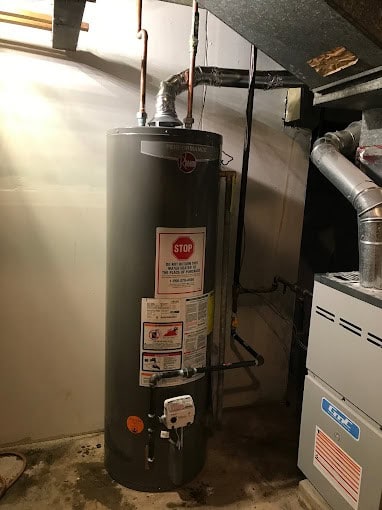
Flush your water heater’s sediment annually if it’s a tank-style unit. Hard water is a real factor in Cook County, and mineral deposits accumulate at the bottom of the tank over time, reducing efficiency and shortening the unit’s life. This is something most homeowners can do themselves with a garden hose and a few minutes.
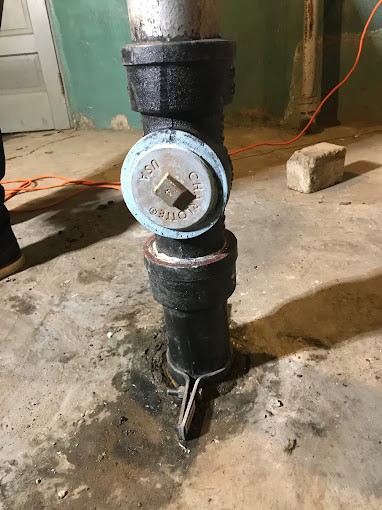
Where you stop and call a professional: anything involving the main sewer line, gas pipes, water heater replacement, pipe replacement, or anything you can’t see. If your drain is slow and a plunger doesn’t fix it, don’t reach for a chemical drain cleaner — especially in an older home. Those products can damage aging cast iron and galvanized pipes, and they rarely solve the underlying problem anyway. That’s a job for a plumber with a power rodder or a hydro jet.
Older homeowners who have lived in the same home for decades often have a good instinct for when something feels off. The challenge is that plumbing problems are designed to hide. The damage happens inside walls, underground, and beneath concrete — and by the time you can see it, it’s been going on for a while.
Discolored water — anything brownish or rust-colored coming from the tap — is one of the clearest indicators that galvanized pipes are corroding from the inside out. It’s not just an aesthetic issue. Corroding pipes restrict water flow, and eventually they fail.
A musty or sulfur-like smell in the basement or near a drain is another warning sign. That odor usually means there’s a sewer gas issue — a dry P-trap, a cracked pipe, or a problem with the main line. It’s the kind of thing that’s easy to attribute to the basement just being the basement, but it’s worth having someone look at it.
An unexplained spike in your water bill — even a modest one — can indicate a slow leak somewhere in the system. If your usage habits haven’t changed but your bill has, that gap is going somewhere. Sometimes it’s a running toilet (which can waste up to 200 gallons of water per day without making any obvious noise). Sometimes it’s a leak in the supply line. Either way, it’s worth tracking down.
For senior homeowners specifically, there’s one more thing worth mentioning: the financial side of deferred maintenance. Putting off a plumbing inspection because of cost is understandable on a fixed income. But the math tends to work against waiting. A slow drain that’s ignored through the summer can become a complete sewer backup in the fall, when Cook County’s combined sewer system is already overwhelmed by storm runoff. The repair cost is almost never lower than it would have been if you’d caught it earlier.
We offer a 10% senior discount on residential plumbing under $2,500, along with free quotes before any work begins — so you know exactly what you’re looking at before you commit to anything.
Want live answers?
Connect with a Go-Rooter Emergency Plumbers expert for fast, friendly support.
Maintenance looks different in a home built in 1955 than it does in a home built in 2005. The pipe materials are different, the sewer connections are different, and the risks are different. What works fine for modern PVC plumbing can cause real damage to the cast iron and galvanized steel that runs through most of Cook County’s older housing stock.
The goal with maintenance in an older home isn’t perfection — it’s awareness. Knowing what you have, knowing what its limits are, and knowing when to get eyes on it before something goes sideways.
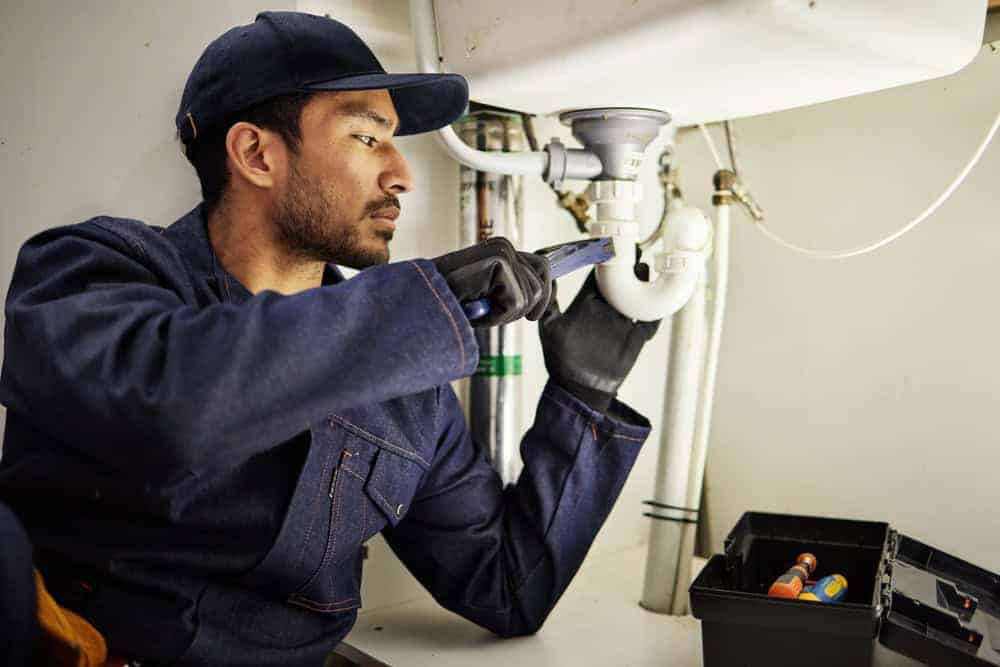
Cook County’s climate is not gentle on plumbing systems. Chicago winters freeze pipes — particularly those running through exterior walls, unheated crawl spaces, and garages. Frozen and burst pipes account for roughly 22% of winter insurance claims nationally, and anyone who lived through the 2019 Polar Vortex — when temperatures dropped to -23°F — knows how fast that kind of damage happens.
The prevention window is narrow. Fall is when it matters. Before the first hard freeze, outdoor spigots should be shut off from inside the house and drained. Any pipes running through unheated spaces should be insulated. If your home has a crawl space, make sure the vents are sealed before temperatures drop. These aren’t complicated tasks, but they’re the kind of thing that gets skipped until it’s too late.
Spring brings a different problem. Cook County’s combined sewer system mixes stormwater with sewage, and about 42% of the county is covered in impervious surfaces — driveways, streets, parking lots — so when a heavy storm rolls through, that water has nowhere to go except into an already overloaded system. Basement flooding and sewer backups aren’t random events here. They’re a predictable consequence of aging infrastructure meeting extreme weather, and they happen in established neighborhoods across the county — from Oak Park and Evanston to Harvey and Calumet City.
A sump pump that’s been sitting idle all winter and hasn’t been tested is a liability in April. Run it manually before the spring storm season starts. If it doesn’t kick on, or if it runs but doesn’t seem to be moving water effectively, that’s worth a service call before you need it at 2 AM during a thunderstorm.
Summer and fall have their own patterns. Tree roots grow aggressively into sewer lines during the warmer months — a particular issue in Chicago’s older neighborhoods where mature trees have had decades to spread underground. If you’ve had a slow drain or a sewer backup in the past, summer is the right time to have a camera inspection done before the problem gets worse. It’s non-invasive, it gives you a clear picture of what’s happening inside the line, and it’s far less expensive than emergency sewer repair.
Some things are clear emergencies. A burst pipe, a sewer backup, no hot water in the middle of a Chicago winter, a gas smell anywhere near your plumbing — those are calls you make immediately, not in the morning. We answer calls 24 hours a day, every day, because those situations don’t wait for business hours.
Other situations are less obvious but still worth acting on sooner rather than later. A drain that’s been slow for weeks and isn’t responding to a plunger. Discolored water that keeps coming back after you run the tap for a minute. A water heater that’s making banging or popping sounds. A basement that smells like sewer gas even when it’s dry outside. None of these are necessarily catastrophic today, but all of them tend to escalate — and the escalation usually happens at the worst possible time.
One thing worth understanding about older Cook County homes specifically: the warning signs often look mild even when the underlying problem is significant. Internal pipe corrosion doesn’t show on the surface. Root intrusion into a clay tile sewer line progresses slowly until it doesn’t. A water heater that’s 15 years old and making noise is telling you something. The visual cues that would be obvious in a newer home with accessible plumbing are often hidden behind plaster walls and under concrete slabs in a 1940s bungalow.
Camera inspection technology has changed this. We can run a video camera through a drain or sewer line and see exactly what’s happening inside — corrosion, root intrusion, pipe deterioration, partial blockages — without opening a single wall. It’s one of the most useful preventative tools available for older homes, and it takes the guesswork out of deciding whether a problem is minor or serious.
For new customers, we offer $40 off your first service, along with free upfront quotes before any work begins. If you’ve been putting off a call because you’re not sure what you’re dealing with, a free quote is a low-stakes way to find out.
The homes that hold up best over time aren’t the ones where nothing ever goes wrong. They’re the ones where problems get caught early, before a slow drain becomes a backed-up basement or a corroding pipe becomes a water damage claim.
For Cook County homeowners — especially those living in homes built before 1970 — the plumbing system deserves more attention than it usually gets. The materials are aging, the infrastructure is stressed, and the weather here is not forgiving. None of that means disaster is inevitable. It means awareness pays off.
If you’ve been meaning to have someone take a look, or if something in this guide sounds familiar, Go-Rooter Emergency Plumbers is here when you’re ready. We’ve been serving Cook County, IL since 2001, we provide upfront pricing before any work begins, and we’re available around the clock — because plumbing doesn’t keep business hours.
Article details:
Share:
Continue learning:
Request a Callback
Want to skip the wait?
Simply enter your contact details, and we’ll call you when a NY Spine Advisor becomes available.