Chicago's frozen pipe problem runs deeper than cold weather. Here's what makes Cook County homes especially vulnerable — and what you can do about it now.
Share:
Request a Callback
Want to skip the wait?
Simply enter your contact details, and we’ll call you when a Go Rooter Advisor becomes available.
Summary:
If your pipes made it through last winter without a problem, it’s tempting to assume you’re in the clear. But that’s exactly the kind of thinking that turns a manageable situation into a $15,000 insurance claim. Cook County’s combination of polar vortex temperatures, aging housing stock, and wind off Lake Michigan creates a frozen pipe risk that most homeowners significantly underestimate — until the morning they turn on the faucet and nothing comes out. Here’s what’s actually going on, why Cook County homes are especially exposed, and what you should know before temperatures drop again.
Cook County averages around 120 freeze days a year, with recorded lows hitting -23°F during polar vortex events. That’s not just cold — that’s the kind of cold that overwhelms heating systems, freezes pipes inside insulated walls, and turns a minor vulnerability into a full emergency within hours.
What makes Cook County different isn’t just the temperature. It’s the combination of extreme cold, Lake Michigan wind chill, and a housing stock where 55 to 60 percent of homes were built before 1970 — before modern insulation standards existed and before anyone was thinking about pipe placement in terms of freeze exposure. That’s a lot of homes with pipes running through unheated crawl spaces, against north-facing exterior walls, and through uninsulated garages. When a polar vortex rolls in, those configurations don’t get a pass just because they’ve survived previous winters.

Here’s the part most people get wrong: the burst usually doesn’t happen while the pipe is frozen. It happens when it thaws.
When water freezes, it expands by about 9 percent. Inside a sealed pipe, that expansion creates enormous internal pressure — pressure that can exceed 40,000 psi in a fully frozen section. The ice itself acts as a temporary plug, holding the water back on both sides. The pipe may crack or split under that pressure, but you won’t see any water yet. Everything looks fine. Then temperatures rise, the ice melts, and suddenly that crack — which might be no larger than one-eighth of an inch — is releasing water at a rate of four to eight gallons per minute, or up to 250 gallons a day.
That’s why the moment of relief, when the temperature finally climbs back above freezing, is actually when you need to be paying the closest attention. If your water pressure drops suddenly, if you hear a hissing or rushing sound inside the walls, or if you notice water staining on ceilings or floors after a cold snap, don’t wait. The damage is already happening, and every hour it continues compounds the cost.
This is also why DIY thawing carries real risk. Using a hair dryer on an accessible pipe in a visible location is one thing. But attempting to thaw a pipe inside a wall, in a crawl space, or in an area where you can’t see the full length of the frozen section is a different situation entirely. If there’s already a crack you can’t see, thawing it yourself without being able to control the process or catch the water can turn a repair job into a restoration project. Mold can begin forming within 24 to 48 hours of a water intrusion event — and once it’s inside a wall cavity, the remediation cost often dwarfs the original plumbing repair.
Not all pipes are equally vulnerable, and in Cook County, the housing stock creates a specific risk profile worth understanding.
Galvanized steel pipes, which were standard in homes built through the 1960s, have a design lifespan of roughly 40 years. A home built in 1962 with its original galvanized plumbing is now more than 20 years past that threshold. These pipes don’t just age — they corrode from the inside out, gradually narrowing the interior diameter and becoming increasingly brittle. That brittleness matters a great deal when freeze-thaw cycles are putting 40,000 psi of pressure on the pipe walls. A pipe that held up fine at age 30 may not hold up the same way at age 60.
Neighborhoods like Logan Square, Lakeview, Norwood Park, and Rogers Park see some of the highest frozen pipe call volumes in Cook County during severe cold events — partly because of housing stock age, partly because of how those homes are oriented and insulated. Two-flats, bungalows, and greystones built in the early to mid-twentieth century often have pipe configurations that made perfect sense at the time and create real exposure now.
There’s another factor that doesn’t get enough attention: Cook County has more active lead service lines than any other county in the country. Lead is a softer metal than galvanized steel, and it responds differently to freeze-expansion pressure. Homes with lead service lines face a compounding risk — freeze vulnerability layered on top of an already aging and fragile material.
The practical takeaway here is that if your home was built before 1970 and you haven’t had a plumber assess your pipe layout and condition, you’re making assumptions about your freeze risk based on incomplete information. The pipe that survived last winter may have done so with micro-cracks you can’t see and won’t discover until the next polar vortex finishes the job.
Want live answers?
Connect with a Go-Rooter Emergency Plumbers expert for fast, friendly support.
Prevention isn’t complicated, but it does require acting before temperatures drop — not during a polar vortex when every plumber in Cook County is already dispatched. The September and October window is genuinely the right time to assess your home’s freeze exposure, insulate vulnerable pipe sections, and know exactly where your main water shut-off is before you need to find it in an emergency.
A few things make a real difference. Pipes in unheated crawl spaces and garages should be insulated with foam pipe insulation or heat tape — this is inexpensive and takes an afternoon. Keeping cabinet doors under kitchen and bathroom sinks open during extreme cold allows warm air to circulate around pipes on exterior walls. Keeping your thermostat set to at least 55°F, even when you’re away, matters more than most people realize. And knowing where your main water shut-off valve is located before a pipe bursts is one of those details that seems minor until it isn’t.
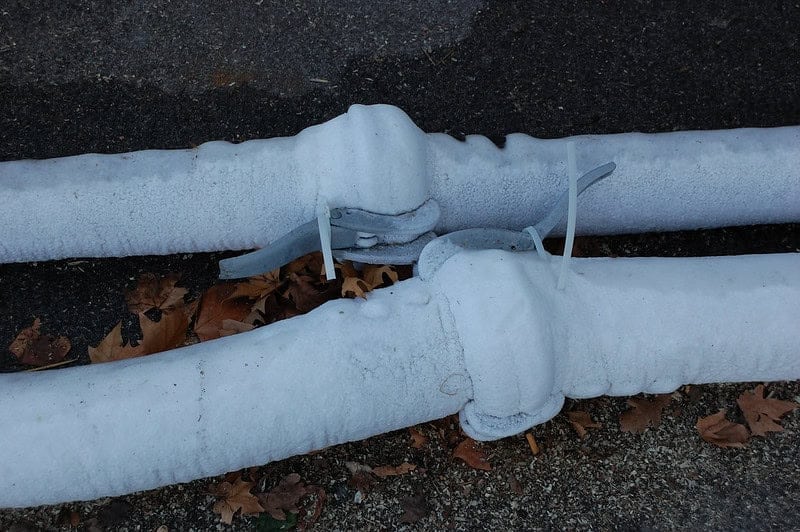
First, don’t panic — but don’t wait, either. If you turn on a faucet and get little to no water flow, that’s your signal. Check for visible frost on exposed pipes, listen for unusual sounds in the walls, and look for any signs of moisture or water staining that weren’t there before.
The first thing to do is locate your main water shut-off valve and know how to close it. If the pipe has already burst — or if you suspect it has — shutting off the water supply immediately limits how much damage occurs. If the pipe is frozen but appears intact, you can try applying gentle heat to accessible sections using a heating pad or hair dryer on a low setting, working from the faucet end back toward the frozen section. Never use an open flame. It’s a fire hazard and it can damage the pipe further.
Here’s the honest truth about when to call a professional: if you don’t know where the frozen section is, if the pipe is inside a wall or in a crawl space, or if you’re not confident the pipe is still intact, call a plumber. The cost of a professional thaw is a fraction of the cost of a burst pipe and the subsequent water damage, drywall repair, mold remediation, and insurance deductible that follows. Emergency plumbing rates do rise during peak winter months — sometimes significantly — which is another reason why addressing known vulnerabilities in the fall makes financial sense.
One recommendation we make after any freeze event, even one that appears to have resolved without a burst, is a camera inspection of the affected pipe section. Micro-cracks and stress fractures from expansion pressure are invisible from the outside. A camera inspection lets us look inside the pipe and confirm whether the integrity is still sound — or catch a problem before the next cold snap turns it into an emergency. It’s a step most homeowners skip, and it’s often the difference between a resolved situation and a repeat call in February.
We get the same questions from Cook County homeowners when temperatures start dropping, so here are honest answers to the ones that come up most often.
**At what temperature do pipes start to freeze?** Pipes can begin to freeze when outdoor temperatures reach 20°F. During a polar vortex — Chicago recorded -23°F in 2019 — an uninsulated pipe in an exterior wall or crawl space can freeze solid in under an hour. Wind chill accelerates this significantly, which is why Lake Michigan’s effect on Cook County’s east- and north-facing walls matters so much.
**Will my homeowners insurance cover frozen pipe damage?** Most standard policies cover sudden and accidental water damage from a burst pipe, but coverage can be denied if the insurer determines the damage resulted from neglect — for example, leaving a home unheated for an extended period. Having a licensed plumber document the repair is important for claim purposes. We’re licensed, bonded, and insured, which means the documentation we provide meets the standard insurers require.
**Can frozen pipes burst without any visible sign of leaking?** Yes, and this is the scenario that catches the most Cook County homeowners off guard. The ice inside the pipe holds back the water pressure until it thaws. The pipe may have already cracked during the freeze, but you won’t see water until the temperature rises. If you’ve had a significant freeze event and your water pressure seems off afterward, that’s worth investigating before you assume everything is fine.
**Do dripping faucets actually prevent frozen pipes?** They help, but they’re not a guarantee. Keeping water moving through the pipe reduces pressure buildup if a freeze does occur, which can limit damage. But during extreme cold — the kind of cold Cook County sees during a polar vortex — even moving water can freeze in a sufficiently exposed pipe section. Dripping faucets are one layer of protection, not a complete solution.
**How do I know which pipes in my home are most at risk?** Generally, pipes in unheated spaces — crawl spaces, garages, exterior walls, and areas near the home’s perimeter — are the highest risk. In older Cook County homes, pipes that were installed before modern insulation standards are often in locations that make freeze exposure essentially guaranteed during severe cold. A pre-winter inspection can identify these sections before they become a problem.
The window between now and the first hard freeze is the most useful time you have. Insulating exposed pipes, locating your shut-off valve, and getting a professional assessment of your home’s most vulnerable sections costs a fraction of what a burst pipe and its aftermath will run you — and that’s before accounting for the disruption of dealing with water damage during a Chicago winter.
If your home was built before 1970, if you have a crawl space or an unheated garage with plumbing running through it, or if you’ve had any freeze events in previous winters that seemed to resolve on their own, those are reasons to take a closer look before temperatures drop. The pipe that held up last year may have done so with damage you can’t see yet.
We’ve been responding to Cook County frozen pipe emergencies since 2001 — through polar vortex events, historic cold snaps, and the full range of what Chicago winters deliver. If you want a free quote or a pre-winter inspection before the season starts, we’re available 24 hours a day and we answer the phone when you call.
Article details:
Share:
Continue learning:
Request a Callback
Want to skip the wait?
Simply enter your contact details, and we’ll call you when a NY Spine Advisor becomes available.