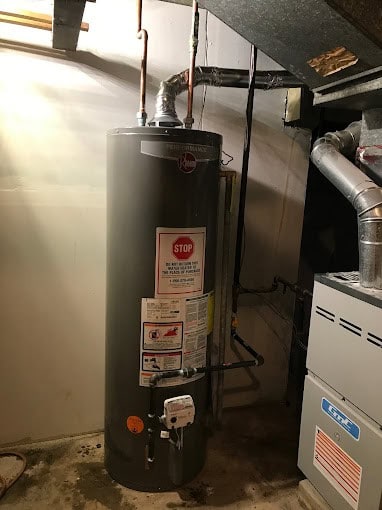
If your property doesn't have natural gas access, a propane tankless water heater might be the most practical upgrade you haven't considered yet.
Share:
Request a Callback
Want to skip the wait?
Simply enter your contact details, and we’ll call you when a Go Rooter Advisor becomes available.
Summary:
If your home is in one of Cook County’s unincorporated townships — Bremen, Orland, Lemont, Maine — there’s a decent chance natural gas never made it to your street. That puts you in a situation a lot of rural Cook County homeowners know well: your options for water heating are either electric or propane, and electric gets expensive fast.
A propane tankless water heater changes the math significantly. Better efficiency, lower annual costs, a much longer lifespan, and no more cold showers when the tank runs dry. Here’s what you need to know before making a decision.
A propane instant water heater doesn’t store hot water — it heats it the moment you turn on the tap. Cold water flows through the unit, a propane burner fires up, and by the time the water reaches your faucet or showerhead, it’s already at the temperature you set. When you turn the tap off, the burner shuts down completely.
That’s the core difference from a conventional tank. A 40-gallon tank heater keeps water hot around the clock whether you’re using it or not, burning fuel constantly to maintain that temperature. A propane on-demand system only runs when you actually need hot water — which is a big part of why the energy savings are real, not just marketing language.

Here’s something most general guides skip over: cold-climate performance depends heavily on how the unit is sized, and Cook County winters make sizing matter more than almost anywhere else.
Groundwater in Cook County can drop to 40–45°F in January and February. That means your propane tankless unit isn’t heating water from a comfortable 60°F — it’s heating it from near-freezing. The temperature rise required to reach 120°F at the tap is roughly 75–80 degrees in the dead of winter, compared to maybe 55–60 degrees in summer. That difference directly affects how many gallons per minute the unit can deliver at your desired temperature.
A unit that handles two showers running simultaneously in July might struggle to keep up in a polar vortex if it wasn’t sized with Cook County inlet temperatures in mind. This is one of the most common installation mistakes we see — units that were sized for average annual conditions instead of worst-case winter demand. The fix isn’t complicated, but it requires someone who actually knows the local climate and runs the BTU math before recommending a unit.
The other cold-weather concern is freeze protection for units installed in garages, outbuildings, or any unheated space. Many propane tankless models include built-in freeze protection down to certain temperatures, but Cook County winters regularly push past those thresholds during polar vortex events. Proper installation — including indoor placement where possible, or freeze protection accessories where it isn’t — is the difference between a system that lasts 20 years and one that cracks a heat exchanger in its second winter.
Chicago averages 105 days below freezing per year. That’s not a footnote — it’s a design requirement.
For homeowners without natural gas access, the actual decision isn’t propane versus natural gas — it’s propane versus electric. And on that comparison, propane wins on both efficiency and annual operating cost.
A gas or propane tankless water heater runs at roughly 85% energy efficiency. Electric tankless units come in around 60%. That gap shows up in your utility bills every month. According to data from the Propane Education and Research Council, in a 2,400-square-foot home, an electric water heater costs approximately $645 per year to operate, while a comparable propane system runs about $290 per year. That’s a difference of roughly $355 annually — and over the 20-year lifespan of a propane tankless unit, that adds up to real money.
Electric tankless systems also have a less-discussed infrastructure problem. Whole-house electric tankless heaters typically draw 100 amps or more, which can consume nearly half of a standard 200-amp residential panel. Many older Cook County homes — particularly those built between 1940 and 1980 — weren’t wired for that kind of load. Panel upgrades add cost that often doesn’t show up in the initial quote.
There’s also the grid reliability question. Cook County residents who’ve lived through a bad polar vortex know that power outages happen exactly when you least want them to. Many propane tankless models can operate without electricity, which means hot water stays on even when ComEd doesn’t. For rural properties that are already managing their own well and septic systems, that kind of independence from the grid isn’t a luxury — it’s practical.
The environmental picture is worth mentioning too. A propane tankless hot water heater produces approximately 70% fewer greenhouse gas emissions than a comparable electric tank heater. That’s not a trivial difference, especially in Illinois, where a significant share of grid electricity still comes from fossil fuel sources.
Want live answers?
Connect with a Go-Rooter Emergency Plumbers expert for fast, friendly support.
Getting the unit right is only half the job. Installation determines whether a propane on demand water heater performs the way it should — and in Cook County, there are regulatory requirements that don’t leave much room for shortcuts.
Under Illinois law (225 ILCS 320), all water heater installations must be performed by a licensed plumber. That applies to straight replacements, and it definitely applies to converting from a tank system to a tankless one. Most tank-to-tankless conversions also require a permit and inspection, and the venting requirements change — existing Type B flue venting typically can’t be reused, and the new unit will need Category III or IV stainless steel venting. Gas line sizing usually needs to go up as well, from a half-inch supply line to three-quarters or one inch, because propane tankless units draw significantly more BTUs than the tank they’re replacing.
A complete installation starts before anyone touches a pipe. We begin by calculating your home’s actual hot water demand — how many fixtures you’re running simultaneously, what your peak usage looks like, and what the coldest realistic inlet water temperature will be in your Cook County location. That last number matters more than it does in most of the country.
From there, we size the gas supply line to match the unit’s BTU input requirements. Most whole-house propane tankless units draw between 120,000 and 199,000 BTUs per hour — significantly more than the 30,000 BTUs a conventional tank heater uses. That almost always means upgrading the gas supply line, and sometimes it means adding a dedicated regulator or adjusting propane tank pressure settings in coordination with your propane delivery company.
Venting has to be done with manufacturer-approved materials. Propane combustion gases are corrosive, and standard B-vent flue pipe isn’t rated for it. Using the wrong venting material is a code violation and a carbon monoxide risk. We also pressure-test the gas line before and after the connection — something that sounds obvious but gets skipped more often than it should in rushed installations.
One detail that pays off over time: bypass valves. Installing isolation valves on the inlet and outlet lines makes annual descaling a straightforward task instead of a plumbing project. It’s a small addition during installation that saves real hassle later.
The permit and inspection process exists for good reason. It protects you legally if you ever sell the property, and it ensures someone other than the installer verified the work was done correctly. Skipping the permit to save a few hundred dollars is a false economy.
One of the common objections to going tankless is the idea that these systems are complicated to maintain. In practice, the opposite is true — a propane tankless hot water heater requires significantly less ongoing attention than a conventional tank.
The main maintenance task is descaling, which means flushing the heat exchanger with a mild acid solution (typically white vinegar) to remove mineral buildup. In Cook County, where water hardness varies by township and some areas pull from private wells with higher mineral content, annual descaling is a reasonable baseline. Homes with particularly hard water might need it every six months. The process takes about 30–45 minutes if the unit was installed with bypass valves, and it protects the heat exchanger from the kind of mineral buildup that shortens unit lifespan and reduces efficiency over time.
Beyond descaling, the inlet filter screen should be checked and cleaned periodically — it catches sediment before it reaches the heat exchanger. Gas pressure should be verified during any service visit, particularly if you’ve recently had your propane tank refilled or switched delivery providers, since pressure variations can affect burner performance.
What you’re not dealing with: anode rod replacement, tank corrosion, sediment accumulation in a storage vessel, or the slow efficiency decline that happens as tank insulation degrades. A well-maintained propane tankless unit can run for up to 20 years. A conventional gas tank heater typically lasts 8–12 years.
The long-term math is straightforward. The upfront cost is higher. The annual operating cost is lower. The lifespan is longer. And for rural Cook County homeowners who are already managing their own propane supply, adding a tankless water heater to that system is a natural fit — one less thing dependent on infrastructure that may never reach your property.
If your home doesn’t have natural gas access, you’re not choosing between propane and the best option — propane tankless is the best option for most rural and unincorporated Cook County properties. Better efficiency than electric, a longer lifespan than a conventional tank, lower annual operating costs, and the kind of reliability that matters when it’s 5°F outside and the power is flickering.
The key is getting the installation right. Proper BTU sizing for Cook County winters, correct venting materials, a licensed plumber who pulls the required permits — these aren’t optional details. They’re what separates a system that performs well for 20 years from one that causes problems in year two.
If you’re weighing your options or dealing with a water heater that’s on its last legs, we serve all of Chicago and Cook County and can walk you through what the right system looks like for your specific home. Upfront pricing, same-day availability, and no surprises — just honest answers about what you actually need.
—
**Frequently Asked Questions**
**What is a propane tankless water heater?** It’s a water heater that heats water on demand instead of storing it in a tank. When you turn on a hot water tap, cold water flows through the unit, a propane burner fires, and the water is heated instantly. When you turn the tap off, the burner shuts down. No standby heat loss, no running out of hot water, no 40-gallon tank sitting in your basement burning fuel around the clock.
**How does a propane instant water heater work differently from a tank heater?** A tank heater maintains a reservoir of hot water at all times — which means it’s burning fuel even when no one’s home and no hot water is being used. A propane instant water heater only activates when there’s demand. That on-demand operation is the primary reason tankless systems are 24–34% more energy efficient than conventional storage tanks, according to the U.S. Department of Energy.
**Are LP tankless water heaters safe for home use?** Yes, when properly installed by a licensed plumber. Propane appliances are governed by strict DOT and NFPA regulations covering fuel storage, delivery, and appliance installation. A correctly installed LP tankless water heater includes pressure regulators, automatic gas shutoffs, and proper venting to the exterior. The risks associated with propane — gas leaks, carbon monoxide — are the same risks present with any gas appliance, and they’re managed the same way: correct installation, proper venting, and a CO detector in the home.
**Do I need a permit to install a propane tankless water heater in Cook County, IL?** Yes. Illinois law under 225 ILCS 320 requires all water heater installations to be performed by a licensed plumber. In most Cook County jurisdictions, converting from a tank to a tankless system also requires a permit and inspection. This isn’t a formality — it protects you legally if you sell the property and ensures the installation meets code. Any plumber who suggests skipping the permit is saving themselves paperwork at your expense.
**Will a propane tankless unit keep up with hot water demand during a Cook County winter?** It will if it’s sized correctly for Cook County conditions. Groundwater temperatures in our area can fall to 40–45°F in winter, which means the unit has to work harder to reach your desired output temperature. A unit sized without accounting for that cold inlet temperature will underperform when you need it most. This is one of the most important reasons to work with a plumber who knows the local climate — not just someone who installs the same unit regardless of geography.
**How long does a propane tankless water heater last?** A well-maintained propane tankless unit typically lasts up to 20 years. Conventional gas tank water heaters last 8–12 years. Over a 20-year period, that lifespan difference alone — before factoring in energy savings — makes the higher upfront cost of a tankless system worth a serious look.
Article details:
Share:
Continue learning:
Request a Callback
Want to skip the wait?
Simply enter your contact details, and we’ll call you when a NY Spine Advisor becomes available.