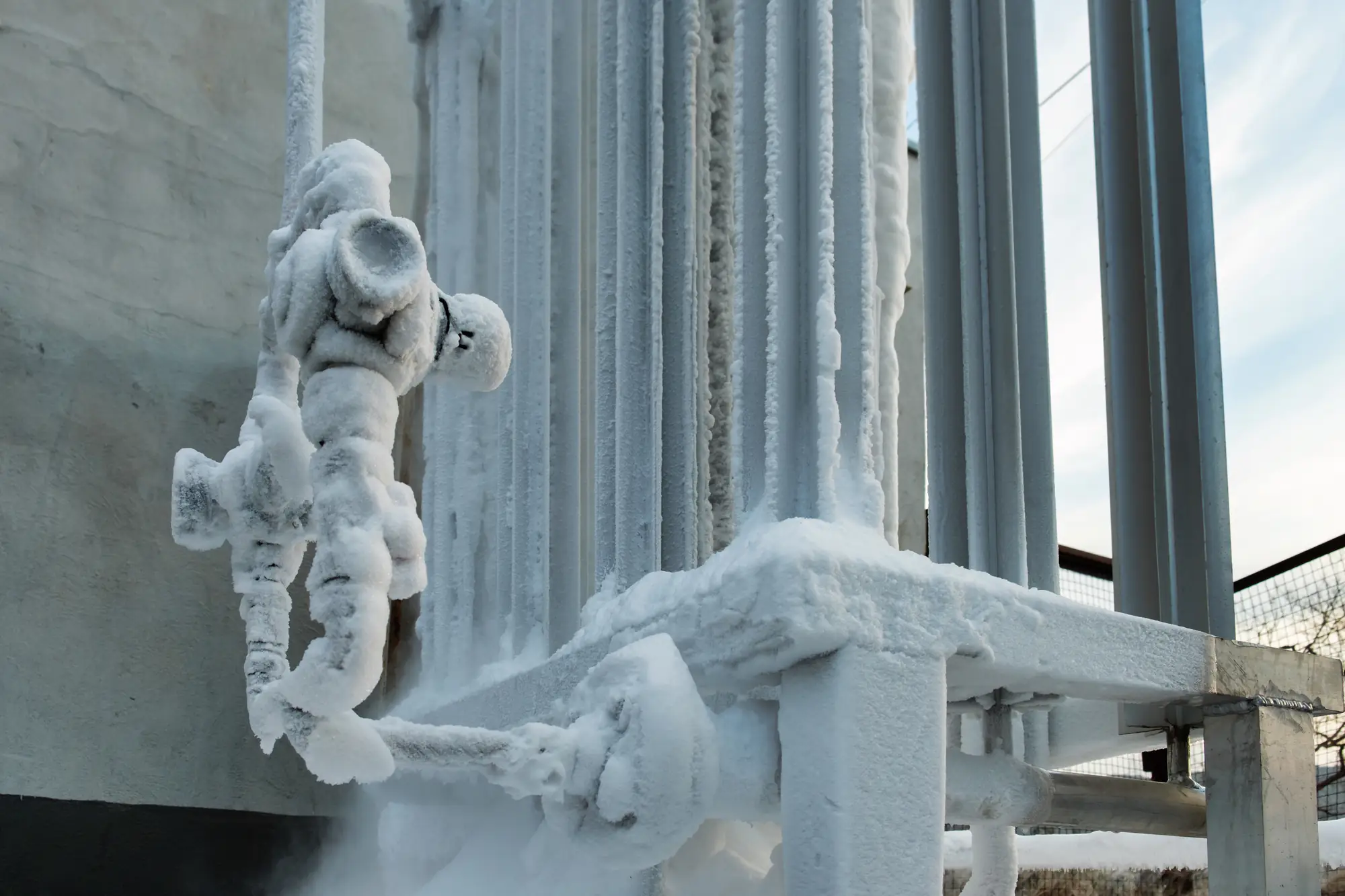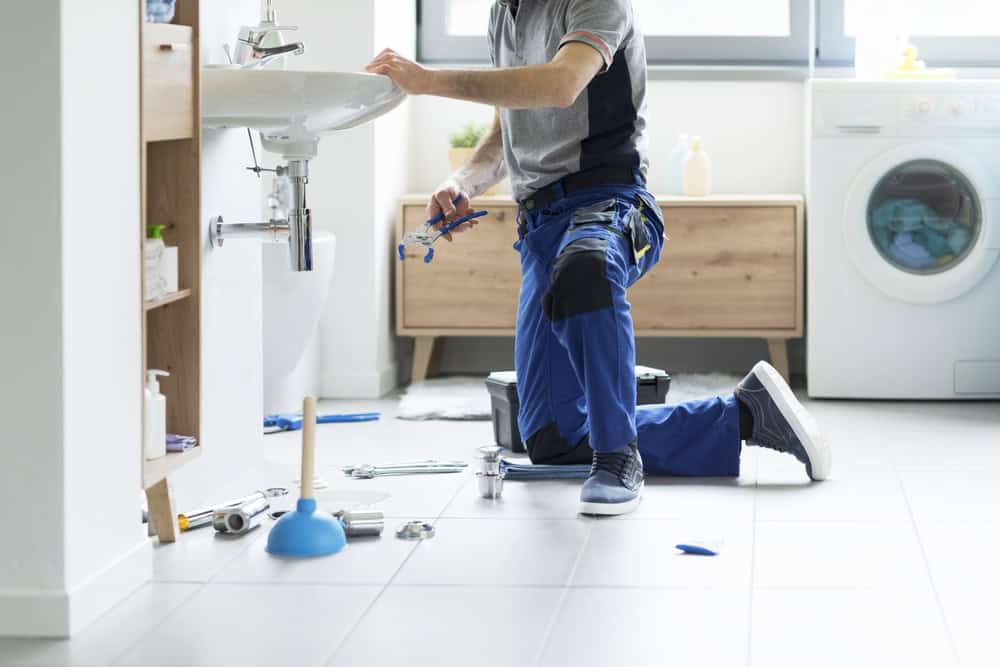
Chicago winters don't give much warning. Here's what Cook County homeowners need to know before the temperature drops below the threshold that actually matters.
Share:
Request a Callback
Want to skip the wait?
Simply enter your contact details, and we’ll call you when a Go Rooter Advisor becomes available.
Summary:
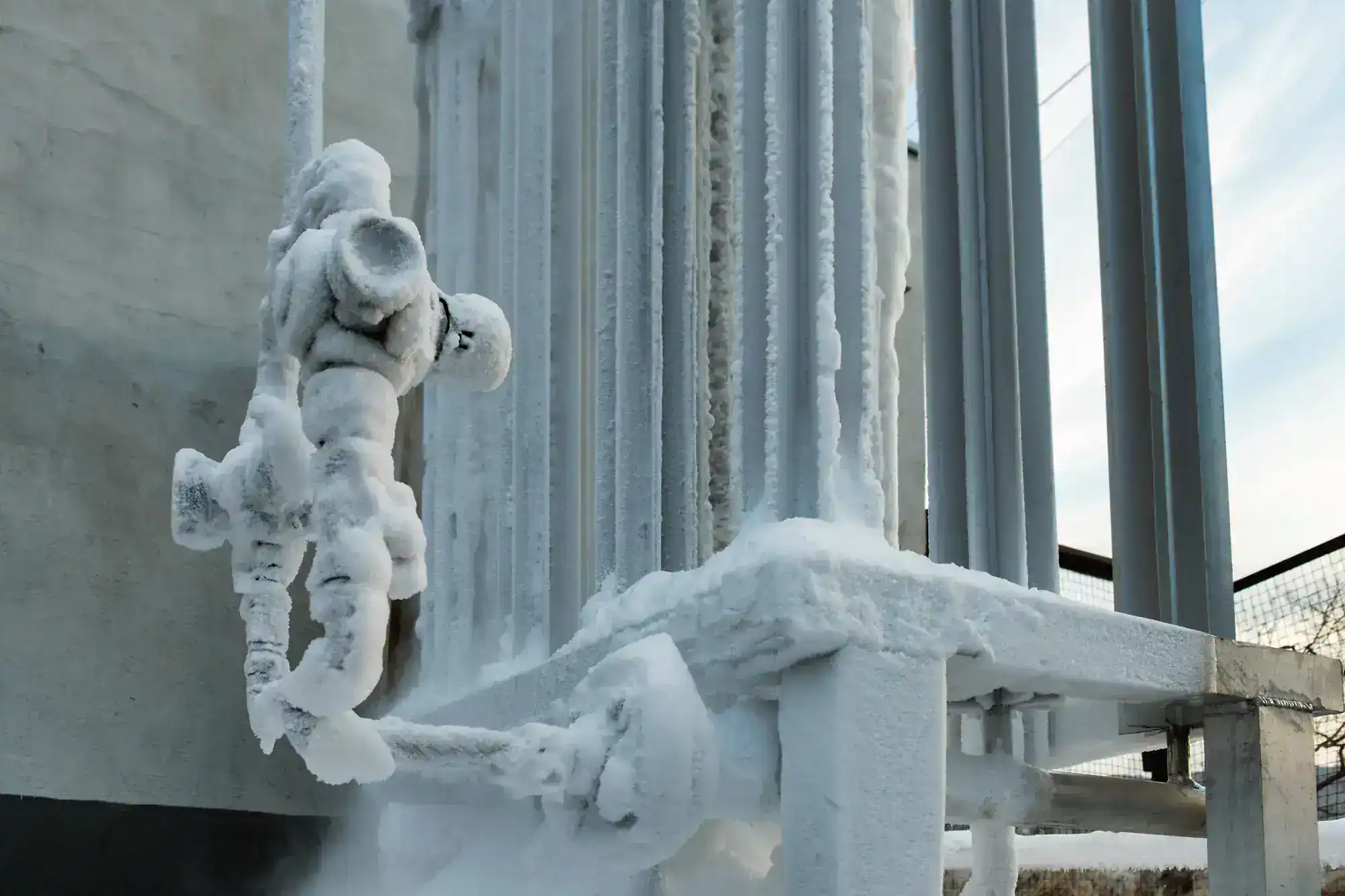
If you’ve lived in Cook County long enough, you know what a polar vortex feels like — and you probably know at least one neighbor who’s dealt with a burst pipe. What most people don’t know is that the danger doesn’t start at 32°F. It starts much earlier. By the time a Cook County winter night bottoms out, the window to protect your pipes may already be closing. This guide covers the temperature that actually matters, the spots in your home that freeze first, and the steps you can take tonight if the forecast looks rough. No filler, no generic advice — just what works for the kind of homes people actually live in around here.
Here’s the misconception that catches a lot of homeowners off guard: 32°F is when water freezes, but that doesn’t mean your pipes are safe until the thermometer hits that mark. Field research from the Building Research Council at the University of Illinois found that uninsulated pipes in unconditioned spaces — like attics, crawl spaces, and exterior walls — begin to freeze when outside temperatures fall to 20°F or below. That’s the number to watch.
Cook County averages 16 nights per year where temperatures drop to 10°F or lower, and about 4 nights per year where it hits 0°F or colder. Wind chill compounds everything. When a polar vortex pushes through the region and the wind chill lands at -20°F or worse, cold air drives through the tiny gaps in exterior walls — around cable lines, dryer vents, or old weatherstripping — and the pipe on the other side doesn’t stand a chance. The thermometer outside might read 18°F and your pipe can still be in serious trouble.

Faster than most people expect. In a poorly insulated Cook County home — and there are a lot of them — pipes can freeze in as little as six to eight hours once temperatures drop below 20°F. That means if tonight’s low is 12°F and you haven’t taken any precautions, you could wake up to no water pressure, or worse, a pipe that’s already split overnight.
Here’s the part that surprises people: pipes don’t burst where the ice forms. The ice creates a blockage, and the pressure builds up in the water column between that blockage and the nearest closed faucet. That’s where the pipe gives out — sometimes several feet away from where the freezing actually happened. So even if you can’t see any ice, a burst can still be in progress.
Cook County’s housing stock makes this worse than average. A huge portion of the county’s residential buildings were constructed between the 1920s and 1950s — Chicago bungalows, two-flats, greystones, and vintage brick buildings throughout neighborhoods like Bridgeport, Avondale, Logan Square, and Irving Park. These homes were not built with modern insulation standards in mind. Plumbing in exterior walls, unheated attached garages, and drafty basement crawl spaces are all standard features of that era. If your home was built before 1980, your pipes are in a meaningfully different risk category than new construction, and the six-to-eight hour window is not a hypothetical — it’s a real deadline on a bad January night.
The other factor worth understanding is duration. A sustained cold snap — three or four days where temperatures never climb above 20°F — is far more dangerous than a single cold night. The longer the freeze, the higher the pressure buildup, and the more likely a pipe is to give. Cook County averages 39 days per year where the thermometer stays below 32°F all day. That’s not one bad week. That’s a season-long exposure window.
Not every pipe in your house carries the same risk. The ones that freeze first are almost always in the same handful of locations, and if you know where to look, you can focus your prevention efforts where they actually matter.
Pipes in exterior walls are the highest-risk category. In older Cook County homes, it’s common for supply lines to run through exterior walls that have little to no insulation between the pipe and the outside air. When wind chill drives cold air through a gap the size of a pencil eraser — where a cable line enters, where a dryer vent sits, where old caulk has cracked — that’s enough to drop the temperature around the pipe below the freezing threshold.
Attached garages are another common failure point. Many Cook County homes, especially in the suburbs, have garages that share a wall with the house. Pipes running through that shared wall or across the garage ceiling are exposed to unheated air every time the temperature drops. A garage that sits at 15°F all night will freeze those pipes reliably.
Under-sink cabinets on exterior walls — in kitchens and bathrooms — are a spot people often overlook. The cabinet doors block warm air from reaching the pipes behind them. On a very cold night, that small difference in air circulation is enough to matter.
Basement crawl spaces, especially in older Chicago two-flats and bungalows, are frequently unheated and poorly sealed. Supply lines running through a crawl space that’s open to outside air are among the first to go. The same applies to pipes near the rim joists — the framing at the top of the foundation wall — where cold air infiltrates readily.
If you’re not sure which of these applies to your home, that’s a reasonable thing to have a plumber check before winter sets in. A camera inspection can identify vulnerable pipe locations without any guesswork or opened walls — which is exactly the kind of proactive step that separates a $150 winterization visit from a $15,000 emergency.
Want live answers?
Connect with a Go-Rooter Emergency Plumbers expert for fast, friendly support.
Prevention is mostly about removing the conditions that allow freezing to happen — cutting off cold air access, keeping water moving, and making sure your heat isn’t working against you. None of the steps below require a plumber. But a few of them are easy to get wrong, and one missed step can undo the rest.
The goal is to act before the forecast drops below 20°F, not after. Lake Michigan’s weather patterns mean Cook County can go from a 40°F afternoon to a 12°F overnight in less than 24 hours. When that happens, the homeowners who prepared the week before are fine. The ones who planned to get to it tomorrow are not.
Disconnecting your garden hose before winter is the step most people know about. But stopping there leaves your outdoor faucet — and the supply line feeding it — still at risk. A connected hose traps water in the spigot and the pipe behind it. When that water freezes, it expands back into the house and can crack the pipe on the interior side of the wall. That’s a repair that requires opening your wall, not just replacing a faucet.
The full outdoor faucet winterization process goes like this: First, disconnect and store the garden hose — don’t leave it attached, even temporarily. Second, go inside and find the shutoff valve for that outdoor faucet. In most Cook County homes, it’s in the basement or utility room, on the supply line that feeds the exterior spigot. Turn it off completely. Third, go back outside and open the outdoor faucet to let the remaining water drain out of the line. Leave it open. That way, if any residual water freezes, it has room to expand without building pressure inside the pipe.
If your home has frost-free hose bibs — a common upgrade in newer construction — they’re more forgiving, but they’re not immune. A connected hose can still prevent the frost-free mechanism from draining properly. The same steps apply.
For homes with in-ground irrigation systems, those lines need to be blown out with compressed air before the first hard freeze. This is a job most irrigation companies handle in October, and skipping it is one of the more expensive mistakes Cook County homeowners make in a cold year.
One thing worth knowing: if you’re not sure where your outdoor faucet shutoff valves are, now is the time to find out — not at 11 p.m. on a January night when the forecast just dropped to 5°F. Walk your basement now, trace the supply lines, and label the valves if you need to. It takes fifteen minutes and it matters.
Once the outdoor lines are handled, there are a few interior steps that make a real difference on the coldest nights. None of them are complicated, but they work — and they’re worth doing before you go to bed when a hard freeze is in the forecast.
The trickle faucet strategy is one people have heard of but often misunderstand. Running a thin stream of cold water — not hot — from faucets on exterior walls keeps water moving through the pipe. Moving water requires a significantly lower temperature to freeze than standing water does. It doesn’t have to be much — a slow, steady drip from the faucet farthest from your main shutoff valve is enough. The small amount of water wasted overnight is nothing compared to the cost of a burst pipe.
Opening cabinet doors under kitchen and bathroom sinks on exterior walls lets warm air from the room circulate around the pipes behind them. It sounds almost too simple, but it’s effective. On a night where the wind chill is pushing -15°F and cold air is seeping through the exterior wall, that circulation makes a measurable difference. If you have children or pets and keep cleaning products in those cabinets, move them somewhere safe first.
The thermostat question comes up a lot, especially for homeowners who travel or try to cut heating costs in winter. The guidance is consistent across every credible source: keep your thermostat at a minimum of 55°F, even when you’re away. Dropping below that — or turning the heat off entirely — is the single most reliable way to come home to a burst pipe. The cost of maintaining 55°F for a week is trivial compared to what a flooded basement costs to remediate.
For pipes in particularly vulnerable spots — an exterior wall that’s always been cold, a crawl space that drafts badly, a garage with supply lines — pipe insulation sleeves are inexpensive and available at any hardware store. Foam pipe sleeves can be cut to length and snapped into place without tools. Heat tape, which is a thermostatically controlled electric cable that wraps around the pipe and activates when temperatures drop, is a better solution for the most exposed locations. Both options are worth the investment if you have a spot that’s given you trouble before.
What doesn’t work: open flames. A blowtorch, a propane torch, or any open heat source near a pipe is dangerous and illegal to use in this context. Chicago sees structure fires every winter from homeowners trying to thaw pipes with open flames. If a pipe is already frozen and you can’t safely access it with an electric heating pad or a hair dryer, that’s the point where you call a plumber.
Most of the prevention steps above are genuinely DIY-friendly. But there are situations where calling a professional is the right move — and recognizing them early is what separates a manageable repair from a significant one.
If you turn on a faucet and get no water, that’s a frozen pipe. If you can locate it and safely apply gentle heat — a hair dryer, an electric heating pad — and the water returns, you may be fine. But if you can’t find where it’s frozen, if the pipe is in a wall or a crawl space, or if the water doesn’t return after thawing, stop and call. A pipe that’s already cracked will release water the moment it thaws, and the damage from that happens fast.
If you’re heading out of town for more than a day or two during the winter, a professional winterization check before you leave is worth considering. And if your home is older — a bungalow, a two-flat, a building with original plumbing in exterior walls — a camera inspection before winter is one of the more useful things you can do. It finds the vulnerable spots without any guesswork, and it’s a lot cheaper than finding them the hard way at 2 a.m. in February.
We at Go-Rooter Emergency Plumbers are available 24 hours a day, every day, including during the polar vortex events that Cook County gets hit with every few years. If you need help before winter or in the middle of one, we’re the call to make.
Article details:
Share:
Continue learning:
Request a Callback
Want to skip the wait?
Simply enter your contact details, and we’ll call you when a NY Spine Advisor becomes available.