Not every slow drain needs a plumber. But some really do. Here's how to tell the difference before a small clog turns into a costly problem.
Share:
Request a Callback
Want to skip the wait?
Simply enter your contact details, and we’ll call you when a Go Rooter Advisor becomes available.
Summary:
You tried the plunger. Maybe you poured in some Drano and waited. The drain cleared — sort of — and then two weeks later, you’re standing in the same spot watching the same slow swirl. Sound familiar?
Most Cook County, IL homeowners have been there. And the question is always the same: do I keep trying to handle this myself, or do I call a plumber? The honest answer is that it depends — and it depends on factors that most generic advice online completely ignores, including the age of your home, the time of year, and what’s actually causing the problem in the first place.
Chemical drain cleaners like Drano and Liquid-Plumr work by triggering an intense chemical reaction inside your pipe. That reaction generates heat — enough to break down organic material like hair and grease. For a fresh, minor clog close to the drain opening, that can work. But the heat doesn’t disappear once the clog does.
The problem is what happens with repeated use. That same exothermic reaction that clears your drain also softens PVC over time, corrodes older metal pipes, and can warp fittings and joints that were already under stress. Use it once in a newer home with modern plumbing and you’re probably fine. Use it three or four times in a 1940s Chicago bungalow with original cast iron pipes, and you’re quietly accelerating a much bigger problem.
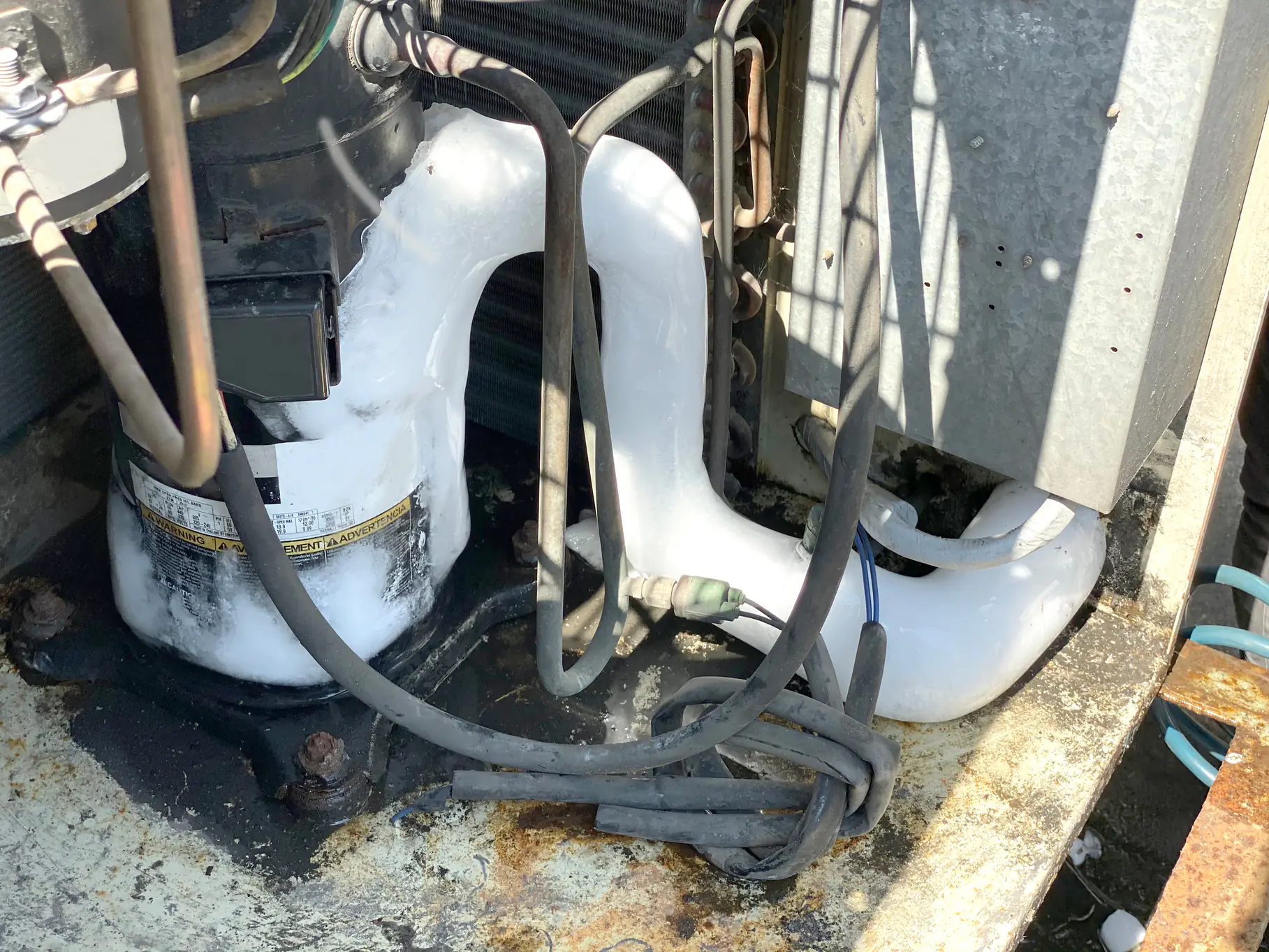
Cook County, IL’s housing stock is older than most people realize. A significant portion of the homes in Chicago and the surrounding municipalities — Oak Park, Evanston, Berwyn, Beverly, Hyde Park — were built before 1970. Many are still running on their original plumbing: galvanized steel supply lines, cast iron drain stacks, and clay sewer laterals that have been underground for 50 to 100 years.
These materials are not built for the kind of chemical stress that modern drain cleaners deliver. Galvanized steel is already prone to internal corrosion and mineral buildup. Cast iron, while durable, develops micro-fractures over decades. Clay sewer lines crack, shift, and separate as the ground moves through Cook County’s freeze-thaw cycles every winter. When you pour a chemical cleaner into an aging system like this, you’re not just clearing a clog — you’re adding heat and caustic chemistry to infrastructure that’s already working hard to hold itself together.
There’s also a practical limitation that doesn’t get talked about enough: chemical cleaners only work on organic material within reach of the solution. They can’t dissolve a tree root that’s grown into a clay lateral under your front yard. They can’t clear a grease blockage that’s 40 feet down the main line. They can’t tell you that your pipe has a belly — a low spot where water and debris pool — because of ground settling. They clear what they can reach and leave everything else exactly as it was.
The result is a drain that seems better for a few days, then slows again, then clogs completely. By the time you call a plumber, the repeated chemical treatments have done their quiet damage to the pipe walls along the way. What started as a $9 fix has set the stage for a repair that costs considerably more.
Understanding what’s actually slowing your drain changes how you respond to it. Not every slow drain has the same cause, and the cause determines whether DIY is reasonable or whether you’re wasting time and money on the wrong approach.
Grease and cooking oil buildup is one of the most common culprits in Cook County kitchens — and it’s worse here than in warmer markets. When temperatures drop in January and February, the grease that goes down your drain solidifies faster inside cold pipes. What flows easily in summer hardens into a dense, waxy coating in winter. Over time, that coating narrows the pipe’s interior diameter until water can barely pass.
A plunger won’t touch it. Chemical cleaners may soften the surface layer temporarily, but they rarely clear the full buildup. Professional hydro jetting — which uses high-pressure water to scour the pipe walls clean — is typically the only method that fully resolves this kind of blockage.
Hair and soap scum is the most common culprit in bathroom drains, and it’s one of the few situations where a basic drain snake or even a hair-catching drain cover can genuinely help. If your bathroom sink or tub is draining slowly and you haven’t had the problem before, this is a reasonable place to start with DIY.
Tree root intrusion is a different story entirely. Older Cook County neighborhoods are full of mature trees — oaks, elms, maples with root systems that extend well beyond the canopy. Clay sewer lines, which are common in pre-1960 homes throughout Chicago and the inner suburbs, are particularly vulnerable because the joints between pipe sections aren’t sealed. Roots find the moisture and grow in. Once they’re in, no amount of chemical cleaner will remove them. You need a camera inspection to confirm the problem and professional rodding or hydro jetting to clear it.
Mineral buildup from hard water, foreign objects that shouldn’t have gone down the drain, and pipe damage from settling or freeze-thaw movement round out the most common causes. Each one requires a different response — and most of them aren’t visible without a camera.
Want live answers?
Connect with a Go-Rooter Emergency Plumbers expert for fast, friendly support.
There’s a version of this problem that’s genuinely minor. One slow drain, no history of issues, a bathroom sink that’s probably got a hair clog near the surface. Try a drain snake or a drain cover cleaning first. That’s a reasonable starting point.
But there are situations where calling a plumber isn’t just a good idea — it’s the move that prevents a much more expensive outcome. Knowing the difference between those two situations is what this section is about.
The clearest signal that a clog has moved beyond DIY territory is when more than one drain is affected at the same time. If your kitchen sink is slow and your basement floor drain is backing up, that’s not two separate problems — that’s one problem in your main sewer line expressing itself in multiple places. No plunger or chemical cleaner addresses a main line blockage. You need a professional with the right equipment.
Gurgling sounds coming from a drain or toilet when you run water elsewhere in the house are another red flag. That sound is air being displaced by water that can’t move freely — a sign that something is restricting flow deeper in the system. Sewage odors coming up through your drains are in the same category. Both indicate that the issue is past the point where surface-level DIY will help.
Recurring clogs are worth paying attention to, too. If you’re clearing the same drain every few weeks, you’re not fixing the problem — you’re managing a symptom. The underlying cause is still there, and it’s usually getting worse. A camera inspection is the only way to find out what’s actually happening inside the pipe.
For Cook County, IL homeowners specifically, there’s one more situation to watch for: multiple drains backing up during or after heavy rain. Chicago’s combined sewer system — which handles both stormwater runoff and sewage in the same underground pipes — is over 100 years old in many neighborhoods. During major rain events, that system can become overwhelmed, and the result is sewage backing up into basements and lower-level drains. That’s not a household clog. That’s a system-level event, and DIY attempts in that situation can make things significantly worse.
One of the biggest reasons people keep reaching for the Drano is that they assume calling a plumber means an expensive, unpredictable bill. That assumption is worth examining, because the math doesn’t always work out the way people expect.
Professional drain cleaning — whether that’s power rodding to break up a blockage or hydro jetting to clear the full pipe — addresses the actual problem rather than the surface symptom. We use camera inspections as part of our diagnostic process, which means we can see exactly what’s causing the issue before we start work. That matters because a grease blockage, a root intrusion, and a collapsed pipe section all look the same from the outside — a slow drain — but they require completely different responses.
At Go-Rooter Emergency Plumbers, we offer hydro jetting starting at $55. We also offer $50 off main line rodding, $40 off for new customers, and free quotes before any work begins. You’ll know exactly what you’re paying before we touch anything — including on nights, weekends, and holidays. That’s not a policy we bend on.
For context, a homeowner who buys three bottles of chemical drain cleaner over two months and then calls a plumber anyway has already spent money on something that didn’t solve the problem and may have stressed their pipes in the process. The professional option isn’t always more expensive when you account for the full picture — especially in an older Cook County, IL home where the risk of DIY-caused pipe damage is real.
We’ve been serving Chicago and Cook County since 2001. We’re licensed, bonded, and insured, and every technician who shows up at your door meets both Illinois IDPH and City of Chicago licensing requirements. We also participate in the City of Chicago Private Drain Program, which matters for homeowners dealing with drain issues connected to Chicago’s municipal infrastructure. When you call, a real plumber answers — not an answering service that schedules you for next Tuesday.
Here’s the short version: DIY drain cleaning has a place. A hair clog near a bathroom drain opening, a plunger that clears a toilet on the first try — those are reasonable starting points. But chemical drain cleaners used repeatedly on older pipes, a drain that keeps coming back, multiple fixtures backing up at once, or any situation involving your main sewer line — those are plumber calls, not hardware store runs.
Cook County, IL’s older housing stock, its brutal winters, and its aging combined sewer infrastructure make the stakes higher here than in most markets. A slow drain in a 1950s greystone is a different situation than a slow drain in a new construction home in the suburbs, and it deserves a different response.
If you’re not sure which situation you’re in, that’s exactly what we’re here for. Go-Rooter Emergency Plumbers offers free quotes, upfront pricing, and same-day service throughout Cook County — and someone answers the phone at 3 AM if that’s when you need us.
Article details:
Share:
Continue learning:
Request a Callback
Want to skip the wait?
Simply enter your contact details, and we’ll call you when a NY Spine Advisor becomes available.