When a pipe bursts or your basement floods at midnight, you need answers fast. Here's what to do — and who to call — in Cook County.
Share:
Request a Callback
Want to skip the wait?
Simply enter your contact details, and we’ll call you when a Go Rooter Advisor becomes available.
Summary:
It’s 2 AM. Water is coming up through your basement drain. Or a pipe just let go inside your wall and you can hear it. You search for an emergency plumber, call the first number you find, and get a voicemail — or worse, an answering service that tells you someone will call you back in the morning.
That’s not an emergency service. That’s a business that uses the word “emergency” in its marketing.
If you’re in Cook County and you’re dealing with a real plumbing crisis right now, this page is for you. We’ll cover what to do in the first few minutes, what to expect from a legitimate emergency plumber, and why the decisions you make tonight can be the difference between a manageable repair and a five-figure disaster.
A burst pipe doesn’t just leak — it unloads. Depending on the pipe size and water pressure, you can lose dozens of gallons per minute into your walls, subfloor, or basement. One inch of standing water in a typical home can cause up to $25,000 in damage. That number climbs fast once drywall, insulation, flooring, and personal belongings are involved.
The instinct to wait until morning — to avoid the cost of an after-hours plumber call — almost always makes things more expensive, not less. Mold begins growing within 24 to 48 hours of water exposure. Structural materials that could have been dried and saved become materials that need to be torn out and replaced. The plumbing bill is rarely the biggest number on the final invoice.
Before you call anyone, find your main water shut-off valve and turn it off. In most Cook County homes, that valve is located near the front foundation wall in the basement, typically within a few feet of where the water main enters the house. In older Chicago-area two-flats and greystone buildings, it may be in a utility closet or a shared mechanical room. Turn it clockwise until it stops.
If the valve is corroded, stuck, or you simply can’t find it, the next option is the exterior curb stop — the shutoff at the street — which requires a special key tool. Most homeowners don’t have one, but your water utility can send someone, or we’ll bring one when we arrive.
Once the water is off, the damage stops getting worse. That’s the goal of those first two minutes. After that, move anything valuable off the floor, take photos for your insurance claim, and call a licensed emergency plumber. Don’t try to assess the pipe yourself — what looks like a small crack from the outside is often a longer failure that isn’t visible until the wall is opened.
Cook County’s housing stock is old. A significant portion of homes in neighborhoods like Bridgeport, Pilsen, Berwyn, and Cicero have galvanized steel pipes that have been corroding from the inside for decades. When they finally fail, they don’t just spring a pinhole leak — sections of pipe can rupture. A camera inspection after the repair will tell you whether the rest of the line is in similar shape, so you’re not back in the same situation six months from now.
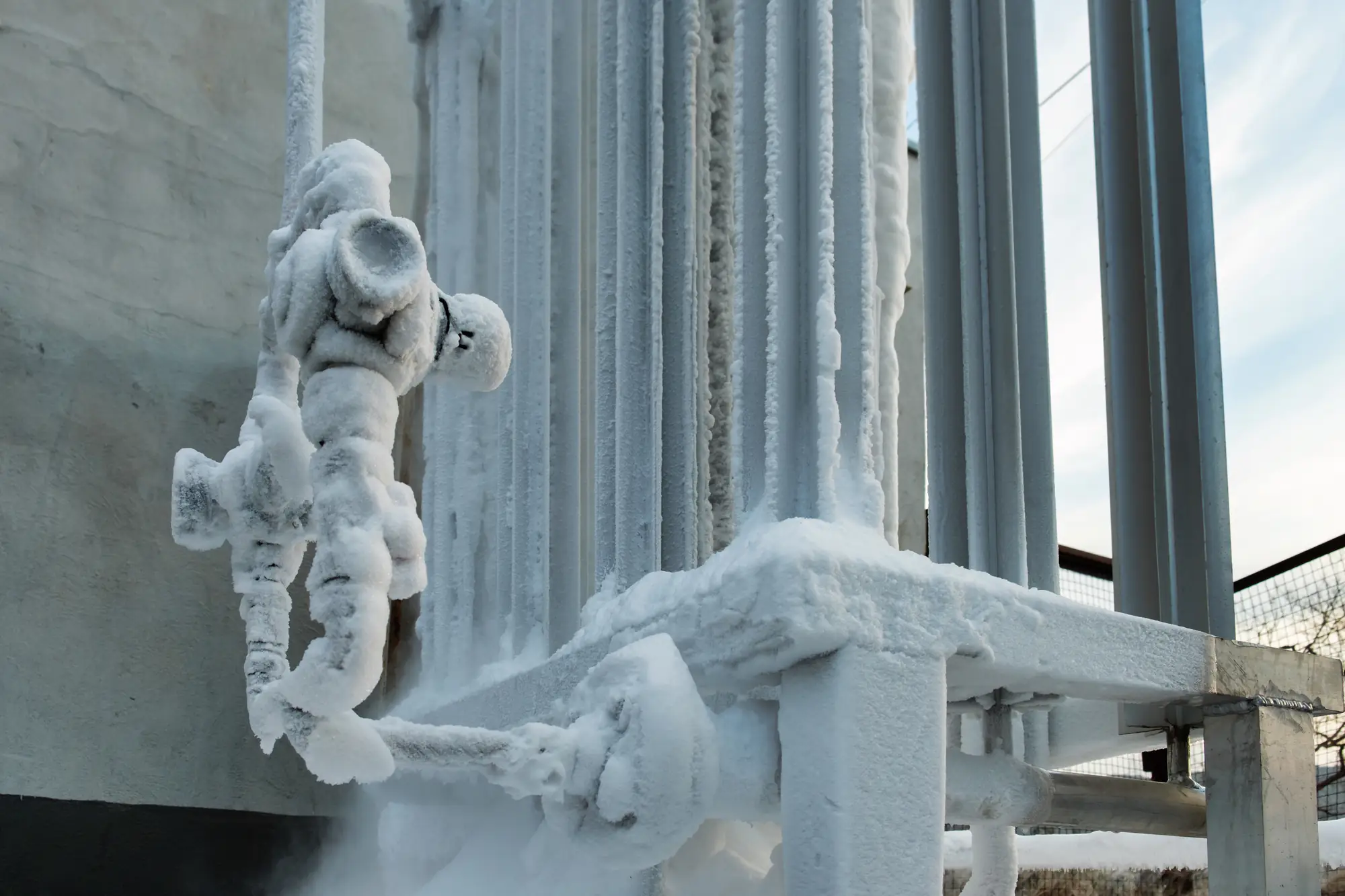
Chicago averages 105 days below freezing every year. That’s not a statistic most people think about until a pipe freezes solid and bursts during a polar vortex event — and then it becomes very personal, very fast.
Frozen pipes tend to fail in predictable places: exterior walls with inadequate insulation, pipes running through unheated crawl spaces, and supply lines in older homes where the building envelope was never designed for modern energy efficiency standards. In Cook County’s older housing stock, these vulnerabilities are everywhere. A home built in 1920 in Evanston or Harvey wasn’t designed with modern insulation standards in mind, and the pipes in those walls are often exactly where cold air can reach them.
The warning signs of a freezing pipe are worth knowing. If you turn on a faucet and get little to no water flow during a cold snap, the pipe is likely frozen. Don’t use a torch or open flame to thaw it — that’s a fire hazard. A heat gun or hair dryer applied carefully to the affected section can work, but only if you can actually access the pipe. If it’s inside a wall, you need a professional.
The more important issue is what happens when the pipe thaws. Water expands approximately 9% when it freezes, which generates enough internal pressure to crack or burst even copper pipe. The freeze itself may not cause the leak — but the thaw will. That’s why frozen pipe calls spike the day after a polar vortex breaks, not during it. The pipe held while frozen and let go the moment it warmed up.
If you’ve had a frozen pipe thaw and burst, shut off the water immediately, get the area as dry as possible, and call us. The repair is rarely just the pipe — you’ll often need to address why it froze in the first place, or you’ll be making the same call next January.
Want live answers?
Connect with a Go-Rooter Emergency Plumbers expert for fast, friendly support.
Basement flooding after heavy rain is one of the most common emergency calls we handle across Cook County — and it’s getting more common, not less. Chicago’s sewer system was built to handle roughly 2 inches of rain before it starts to overflow. Storms now regularly dump more than 8 inches in a 24-hour period. The infrastructure hasn’t kept pace with the weather.
What most homeowners don’t immediately realize is that Chicago operates a combined sewer system — meaning stormwater and sewage run through the same pipes. When that system backs up into your basement, you’re not dealing with rainwater. You’re dealing with raw sewage. That changes the cleanup calculus entirely, and it’s why a flooded basement is a health hazard, not just a property damage event.
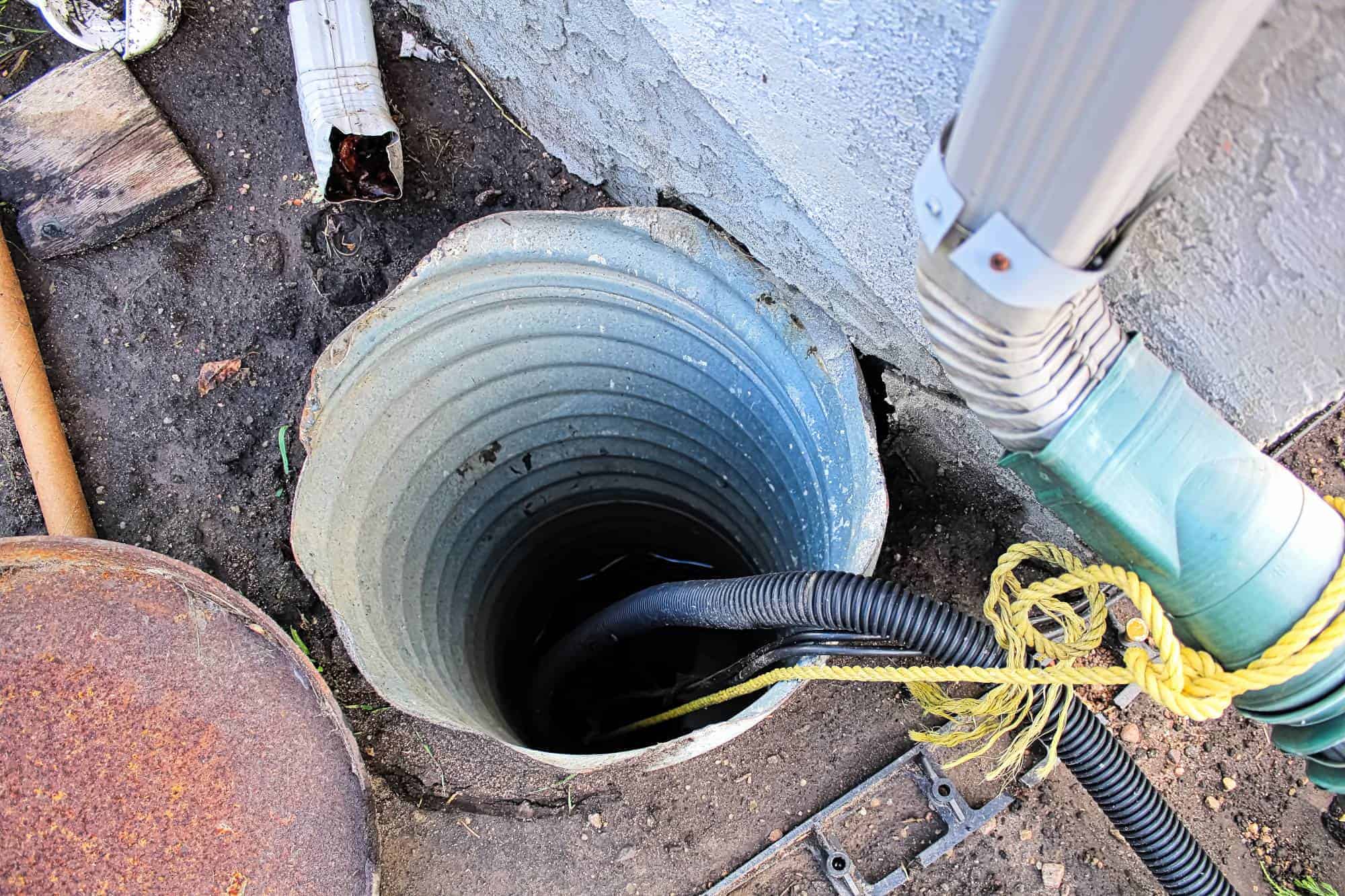
The first call after a basement flood should not be to a cleaning crew. It should be to a licensed emergency plumber who can assess where the water came from and stop it from coming back. There’s a meaningful difference between a sump pump failure, a floor drain backup, and an active sewer line collapse — and the fix for each one is completely different.
If the water is still rising, don’t go into the basement until you’ve confirmed the electrical panel is dry and the power is off to that area. Standing water and live electricity are a lethal combination. Once it’s safe to enter, document everything with photos before you move anything — your homeowner’s insurance will want evidence.
Cook County homeowners in flood-prone areas — particularly on the South and West Sides of Chicago, and in lower-lying suburbs — deal with this repeatedly. If your basement floods every time there’s a significant storm, that’s not bad luck. That’s a drainage problem that has a permanent solution. A flood control system, properly installed with a backwater valve and sump pump, can stop sewer backups from entering your home even when the city’s system is overwhelmed. The Metropolitan Water Reclamation District’s Deep Tunnel system — 110 miles of underground tunnels built to hold overflow — does a lot of work, but it doesn’t reach into your basement drain. That part is on you.
The City of Chicago also offers a Private Drain Program to help homeowners address drainage issues. It’s worth knowing this program exists, because qualifying work can offset some of the cost of a proper flood control installation.
Once the source of the flooding is identified and stopped, the next priority is water removal. Standing water needs to come out fast — every additional hour increases the likelihood of mold, structural damage to the subfloor, and damage to the foundation walls. Professional-grade pumps and drying equipment work significantly faster than a shop vac and a few fans, and they reach moisture that’s already wicked into concrete and framing.
After the water is out and the space is drying, the structural assessment begins. Basement flooding repair isn’t just about what you can see — it’s about what the water reached inside the walls and under the floor. Drywall that absorbed sewage-contaminated water can’t be dried and saved; it has to come out. Insulation that got wet becomes a mold incubator within days if it isn’t removed.
This is where the distinction between a quick fix and a real fix matters most. A plumber who pumps out your basement, hands you a bill, and leaves without diagnosing the cause has done half a job. The question that needs an answer is: why did this happen, and what prevents it from happening again? For some Cook County homeowners, the answer is a failed sump pump. For others, it’s a cracked sewer lateral that’s been slowly collapsing for years. A camera inspection of the sewer line after a flood will tell you which one you’re dealing with — and that information is worth having before you spend money on cosmetic repairs.
If you’ve had recurring basement flooding and you’re in an older Cook County neighborhood, it’s also worth asking about your sewer lateral’s material. Many homes built before 1960 have clay tile sewer lines. Clay cracks, shifts, and collapses over time — and once tree roots find the joints, the deterioration accelerates. Replacing a failing clay lateral isn’t cheap, but it’s far less expensive than the cumulative cost of flooding season after season.
When you’re searching for an emergency plumber at midnight, you don’t have time to vet five companies. What you need is one that actually answers, tells you the price before starting work, and shows up when they say they will — without charging you double because it’s a Sunday.
That’s what we’ve built at Go-Rooter Emergency Plumbers over more than two decades in Cook County. We answer calls around the clock with real plumbers, not answering services. We give you an upfront price before we touch anything, and that price doesn’t change because it’s 3 AM or a holiday. We carry the licensing, bonding, and insurance that Cook County requires, and we use camera inspection technology to find the actual problem — not just the visible symptom.
If you’re dealing with something right now, call us. If you’re reading this as preparation for the next Chicago winter or the next bad storm season, we’re still worth a call. The best emergency is the one that never happens.
—
**Frequently Asked Questions**
**How much does an emergency plumber cost in Cook County?** Most emergency plumbers charge between $100 and $500 per hour, and many add a separate trip fee of $100 to $350 just to show up — on top of overtime rates that can run time-and-a-half or double for nights and weekends. In Cook County, where a lot of homes have aging infrastructure that requires more diagnostic work, costs can add up quickly if the problem isn’t identified correctly the first time. We charge a straightforward rate with no overtime surcharges — the price is the same whether we’re there at noon on a Tuesday or 2 AM on a holiday weekend. You’ll know the full cost before we start.
**Does Go-Rooter provide plumbing service on Sundays?** Yes — every day of the year, including Sundays and holidays. A lot of companies list themselves as 24/7 but route Sunday calls to an answering service that schedules you for Monday. We have real plumbers available and dispatching across Cook County on Sundays, and the pricing is the same as any other day.
**Why does my basement flood every time it rains hard?** In Cook County, this is almost always a drainage capacity problem — either your sump pump can’t keep up, your floor drain is backing up from the city sewer, or your sewer lateral has a defect that lets water in. Chicago’s combined sewer system carries both stormwater and sewage in the same pipes, so when it gets overwhelmed during a heavy storm, it can push back through your basement drain. That’s not just water — it’s a sewage backup, which is a health hazard. A camera inspection of your sewer line will show exactly what’s happening underground, and a properly installed flood control system with a backwater valve can stop it from happening again even when the city’s system is at capacity.
**Does Go-Rooter charge more for after-hours or overnight plumbing?** No. Our pricing doesn’t include overtime surcharges for nights, weekends, or holidays. The industry standard is to charge time-and-a-half or double after hours — we don’t. You’ll get an upfront price before any work starts, and that price reflects the job, not the time of day you called.
Article details:
Share:
Continue learning:
Request a Callback
Want to skip the wait?
Simply enter your contact details, and we’ll call you when a NY Spine Advisor becomes available.