Chicago has roughly 400,000 lead service lines. Here's how to check yours in the basement and figure out which City program, if any, will pay for the fix.
Share:
Request a Callback
Want to skip the wait?
Simply enter your contact details, and we’ll call you when a Go Rooter Advisor becomes available.
Summary:
You’ve seen the headlines about Chicago’s lead pipes, and now you’re wondering what’s behind your own basement wall. Maybe a City notice showed up, maybe you’re buying an older bungalow or two-flat, or maybe there’s a baby on the way. The answers are scattered across City pages, news stories, and contractor sites that don’t always agree with each other. We’re Go-Rooter Emergency Plumbers, and we spend our days in Chicago basements. This page walks you through how to check your own line, which City program might cover it, and what to do if the pipe fails before anyone gets to your block.
Chicago’s own plumbing code required lead service lines until 1986. If your home was plumbed before then, this isn’t something you or a previous owner did wrong. The City has about 400,000 of these lines, more than any other city in the country, serving roughly 2.7 million people according to NPR and Undark.
The service line is the pipe that carries water from the main under the street into your house. The City says its drinking water meets federal, state, and industry standards, but an old lead line can still add lead on the way to your tap. Chicago.gov notes these lines are mostly in single-family homes and two-flats built before the code changed.
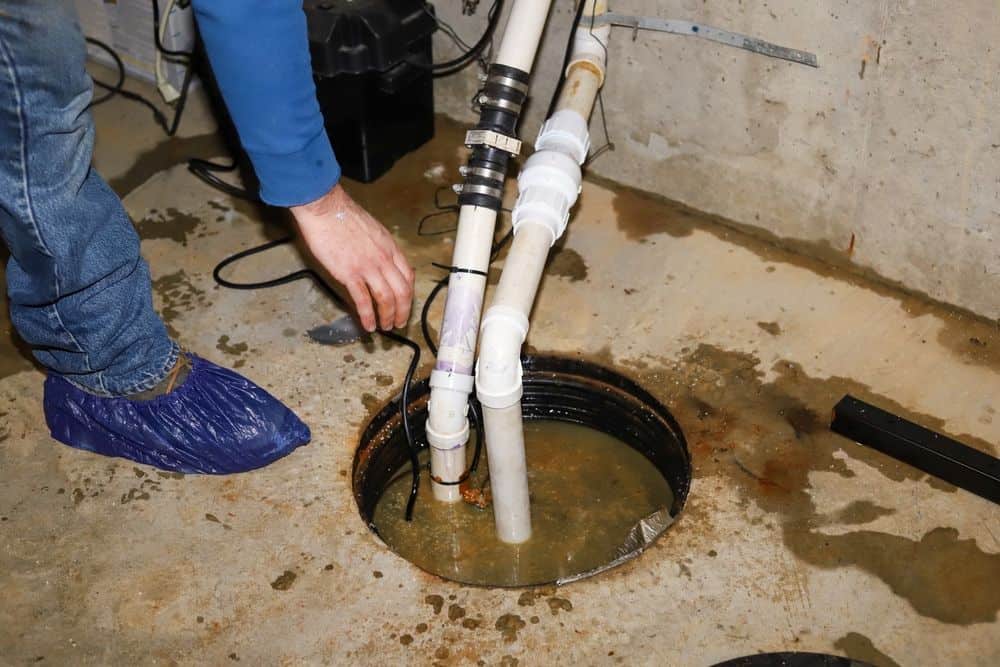
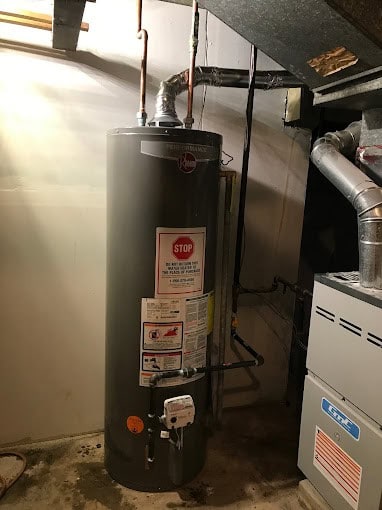
Head to the basement and find the spot where the water line comes in through the wall or floor. It’s usually right by the meter and the main shutoff. The pipe you care about is the one running from the wall to the meter, that’s the service line. Pipes after the meter are your interior plumbing, which is a separate question.
Lead is dull gray and looks soft. Scratch a small spot with a key or coin, and if the surface turns shiny silver, you’re probably looking at lead. Copper scratches to an obvious copper color, and galvanized steel stays hard and gray.
Next, hold a magnet against the pipe. It sticks to galvanized steel but not to lead or copper. A light tap with a coin gives lead a dull thud rather than a ring. Those are the same simple tests county health agencies in Illinois publish, and none of them take more than five minutes.
Don’t lean on paperwork alone. The City keeps an inventory of lines, but records can be wrong. NRDC suggests asking for written proof if someone tells you your pipe isn’t lead, and then checking with your own eyes anyway. If the pipe is boxed in behind a finished wall, or you can’t tell what you’re looking at, that’s a fair time to have a plumber take a look. Snap a photo of the pipe and the meter first. It helps whoever you call, and it gives you a record if you apply for a City program later.
Call 311 to request a free water test from the City of Chicago. Rules change, so confirm that when you call. It’s worth doing even if your scratch test came back ambiguous, because a test tells you what’s coming out of your tap, not just what the pipe is made of.
A 2018 Chicago Tribune analysis of nearly 2,800 homes tested over two years found lead in the water in about 70% of them. Children under 6 are at the highest risk, and a Johns Hopkins estimate cited by NPR put the share of Chicago kids at risk of exposure to lead-contaminated water at around 68%. If you have little ones or someone pregnant at home, that’s the reason to test sooner rather than later.
The service line isn’t the only possible source. Indoor pipes and faucet fixtures can contribute too. That’s one place we can help. When we’re already in your Chicago basement, we can look over the interior plumbing and spot potential issues.
If work happens on your street or on your own line, follow the City’s flushing instructions from LeadSafe Chicago afterward. Water main upgrades can disturb lead pipes, and flushing protects your family while the dust settles.
Want live answers?
Connect with a Go-Rooter Emergency Plumbers expert for fast, friendly support.
There isn’t one Chicago program. LeadSafe Chicago describes several, and which one fits depends on your income, if you own and live in the building, and if your line has already failed. The big ones are the Equity Program, the Homeowner-Initiated Program, Leaks and Breaks, and the Block-Long Program, with a separate one for licensed daycares.
Illinois also requires full replacement of a lead service line. Partial replacements have been banned under a state law that took effect in January 2023. That matters because the City moves slowly. The Illinois Environmental Council counted just 3,777 lines replaced as of December 2023, and Inside Climate News reports the City doesn’t expect to finish until 2076. If your block isn’t next, it helps to know which door to knock on.
The Equity Program is the free one. It replaces the line from the water main into your home and adds a free water meter. Contractor guides value that work at $16,000 to $30,000, though that’s their figure, not one the City publishes. To qualify you generally need to earn under 80% of the area median income, own the home and live in it, and have a single-family home, two-flat, or three-flat. You apply online. Funds are limited, so expect a wait.
That own-and-live-there rule leaves landlords out. If you rent out a unit in a three-flat you own but live elsewhere, don’t assume you’re covered. Check with the City before counting on it.
If you don’t qualify, the Homeowner-Initiated Program is the other route. You hire your own contractor, and the City waives the permit fees and connects the new line to the main. It also provides a free meter if you don’t have one. LeadSafe Chicago says the waiver is worth up to $3,100. Go with the City’s number and confirm it at leadsafechicago.org. You still pay the contractor, and the cost depends on your street, the depth of the line, and how much needs restoring. Ask for an itemized written quote and ask who pulls the permit.
Picture the 3 a.m. version. It’s January, there’s been a hard freeze, and water is running where it shouldn’t. The first question is where. If the leak is out on the street side, call 311. Under the Leaks and Breaks Program, the City replaces both the public and private sides of the line at no cost to you. Confirm the details with the City when you call.
If the water’s inside your house (a burst pipe, a flooded basement, or no water at all) call us. We answer the phone around the clock, we offer same-day service, and during an emergency we’ll stop the damage first. Then we’ll plan the permanent repair rather than leaving you with a patch. If it’s a mystery which side of the property line the problem is on, call us anyway. We’ll look at it and tell you honestly if it belongs with the City.
Our approach to pricing matters most here. You’ll hear an honest price you agree to before we start, with no surprises afterward. If a lead line is involved, we’ll explain what we’re seeing and what your choices are, including waiting on the City. Illinois bans partial replacements, so a quick fix on a lead line isn’t a long-term answer, and we’ll say so.
Start with the basement check. Find the line by the meter, scratch it, try the magnet, and take a photo. Then call 311 about free water testing and read through LeadSafe Chicago’s programs to see which one fits your household. Rules shift, so confirm current details on their site before you plan around anything.
If you’re not sure what you found, or you’ve got an old fixture you want looked at, or water is somewhere it shouldn’t be, call Go-Rooter Emergency Plumbers today at 773-661-4800 to schedule your fast dispatch and expert plumbing inspection.
Article details:
Share:
Continue learning:
Request a Callback
Want to skip the wait?
Simply enter your contact details, and we’ll call you when a NY Spine Advisor becomes available.