One weak shower, everything else fine? We walk through the five-minute checks, the usual culprits, and what Chicago fixes really cost, toilets included.
Share:
Request a Callback
Want to skip the wait?
Simply enter your contact details, and we’ll call you when a Go Rooter Advisor becomes available.
Summary:
One shower barely trickles. The kitchen tap, the bathroom sink, and the tub down the hall all run like normal. That mismatch is maddening, but it’s also good news, a single weak fixture almost always has a local cause. Some fixes cost you nothing but ten minutes. Others edge toward the numbers in a Chicago toilet installation cost guide, and it helps to know which rung you’re standing on before anyone comes to your door. At Go-Rooter Emergency Plumbers, we sort this out for Chicago homeowners constantly, so let’s start with the one question that narrows it down fastest.
Turn on the weak shower, then run a few other taps. If the rest of the house is strong, the problem sits at that fixture or on the line feeding it. If everything is weak, you’re looking at something bigger: the main shutoff, a failing pressure regulator, or sediment built up in the pipes.
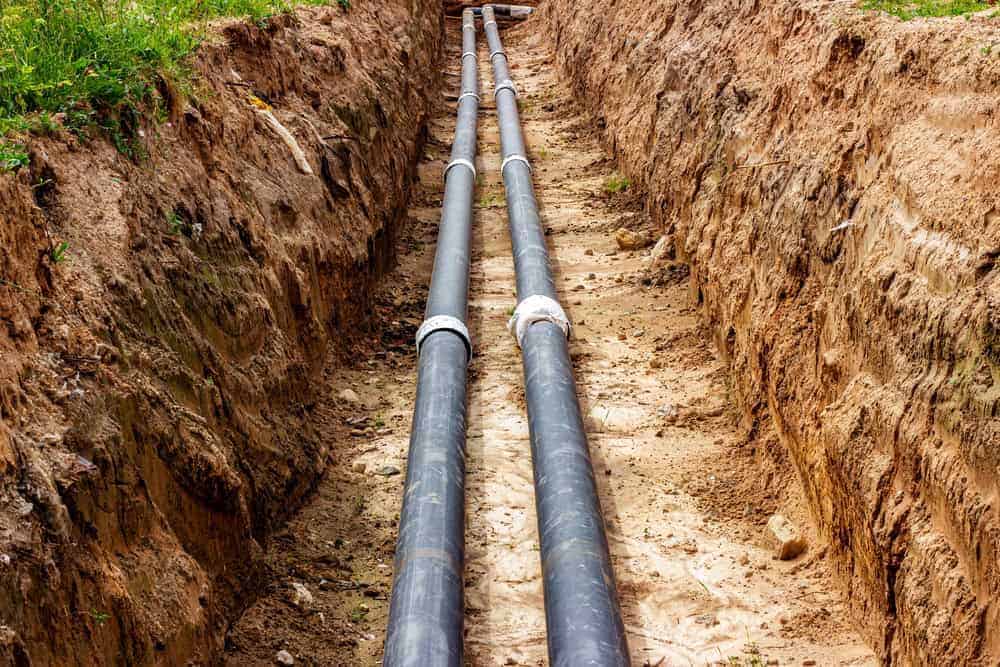
That split matters in Chicago. Pre-1950 bungalows, two-flats, and greystones commonly have galvanized steel supply pipes, which last roughly 40 to 70 years. The city still has more than 400,000 lead service lines in use. Neither fact means your weak shower is a crisis, but it’s a reason to take house-wide weakness seriously and to ask a plumber about your supply lines if your home predates 1986.
One weak fixture on its own, though, is usually a local fix.
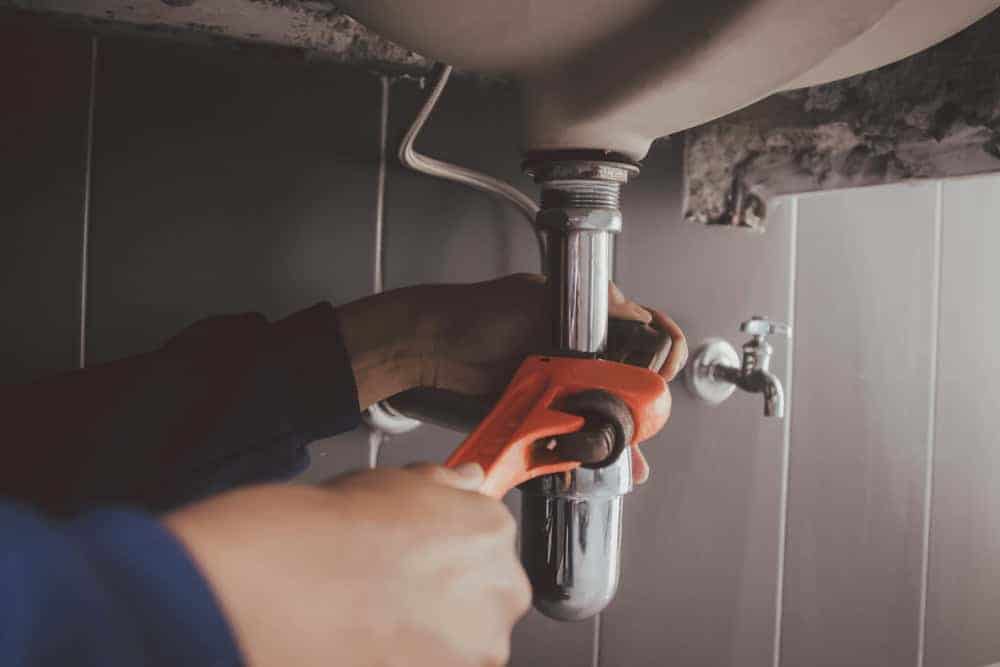
Start with the showerhead, because it’s the most common culprit and the cheapest to rule out. Mineral scale clogs the tiny nozzles, and many heads have a flow restrictor tucked inside. Unscrew it, look at the screen, and soak it in vinegar if it’s crusty.
Keep in mind that federal rules cap showerheads at 2.5 gallons per minute, so a newer head is built to feel gentler than the one you grew up with. Softer isn’t the same as broken.
If the head is clean and the flow is still weak, the shower valve is next. Most modern showers use a pressure-balancing cartridge, and when it wears out or fills with scale, it chokes the flow even though the pipes are fine. Swapping it is a standard repair, and we’d tell you the price before picking up a wrench.
Here’s the check most people skip. Run the shower on full hot, then full cold, and notice which side is weak. Near the valve, each supply often has a small shutoff called an angle stop. If only the hot side is weak, that stop may be partly closed or corroded. A common story in Chicago is a past repair where someone closed it and never fully reopened it. Our freeze-and-thaw cycles are hard on old valves, so a corroded stop isn’t unusual here.
None of this needs special tools, though a simple pressure gauge will tell you if the house itself is the issue.
Faucets follow the same logic as showers, just with smaller parts. The aerator, that little screen on the tip of the spout, collects grit and mineral scale and slowly strangles the flow. Unscrew it, rinse it, soak it if it’s crusty, and put it back. Kitchen and bathroom faucets are capped at 2.2 gallons per minute under federal rules, so don’t expect a fire hose. You should get a steady stream, though.
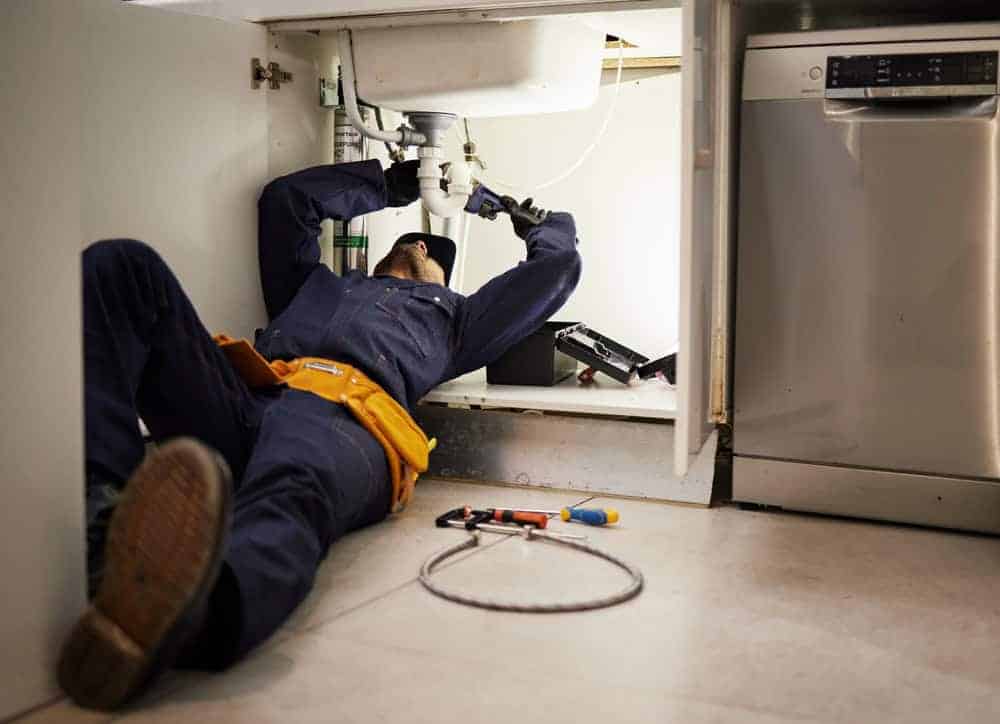
If the aerator is clean, look under the sink. Each faucet has its own shutoff valve, and it can be partly closed, corroded, or feeding a supply line that’s kinked or crusty inside. Open the valve all the way, slowly.
Here’s the honest caveat: in an older Chicago home, a stiff valve that hasn’t moved in decades can leak or snap when you force it, and that turns a free fix into a mess. If it resists, stop there. That’s the point where a phone call beats a bigger wrench.
The last suspect is the faucet itself. A worn cartridge or valve inside the body can restrict flow, especially when only the hot side is weak. Replace it with the right part and the problem usually disappears.
If you’ve gone through all of this and two or three fixtures are now acting up, treat it as a house question. A weak faucet in a vintage Chicago home can be the first sign of a supply problem, and we’d rather you find that out in October than during a January cold snap.
Want live answers?
Connect with a Go-Rooter Emergency Plumbers expert for fast, friendly support.
A toilet is a fixture too. It has its own supply line, its own shutoff valve, and a fill valve, so a toilet that takes forever to refill is the same kind of problem as a trickling shower: weak supply at one fixture. Sometimes the answer is a small part. Sometimes the toilet is cracked, rocking, or simply past its years, and then the question shifts to toilet installation cost.
Published Chicago estimates put a typical toilet installation at $361 to $685, with an average of $511. That’s a wide window, and it gets wider once you see what moves the number.
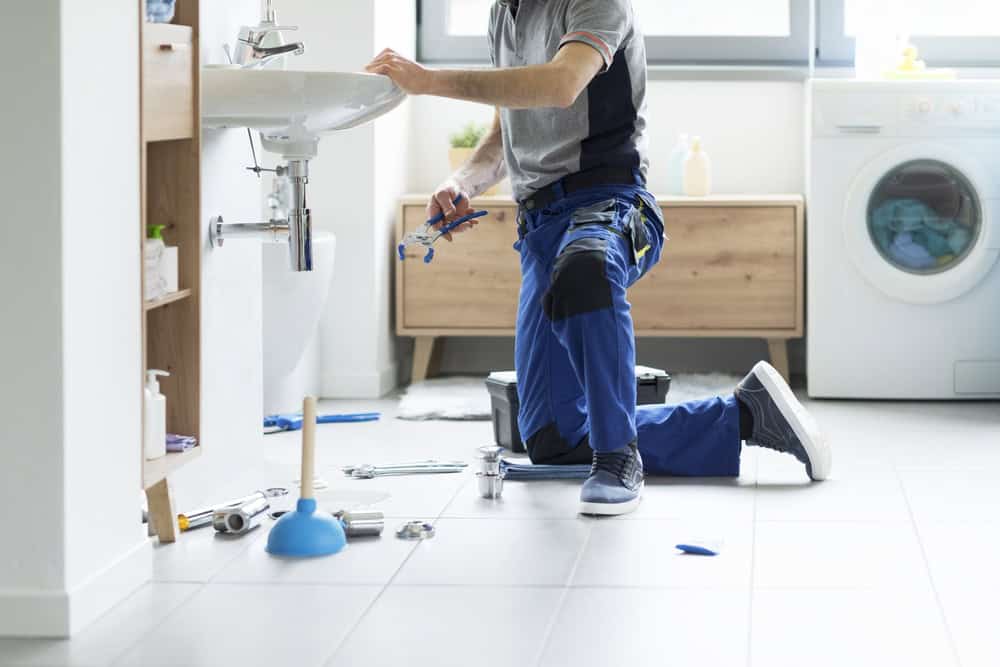
Start with the published numbers, and remember they’re estimates from national sources, not our quotes. Angi’s Chicago figure averages $511, with most homeowners paying between $361 and $685. The national average is $374. HomeBlue’s Chicago range runs $350 to $940 for a standard toilet including the purchase, and Airtasker lands around $500 for the city. If you want a working planning range for a standard replacement, roughly $350 to $700 covers most of what those sources show.
The toilet itself swings the total. Angi puts a two-piece toilet in Chicago at about $390 and a one-piece at about $830, with wall-mounted or in-wall tank models around $730. Same bathroom, very different bill.
Then there are the repairs that might save you from replacing anything. In HomeBlue’s Chicago figures, a fill valve replacement runs $150 to $180 and a shutoff valve replacement $190 to $270. Angi puts a wax ring replacement at $55 to $210. If your toilet’s only problem is a slow refill or a weak flush from a worn part, one of those can be the whole job.
We don’t post a price sheet, because the real number depends on what’s under your old toilet. What we do is tell you the price before we start, and you agree to it first. That’s something you’re entitled to ask of any plumber.
Two quotes for the same toilet can differ by hundreds of dollars because of what we find after the old one comes up. A worn wax ring or damaged flange, a corroded shutoff valve, or a soft section of floor all add to the bill. Angi lists toilet removal at $50 to $200 and flooring repair at $8 to $24 per square foot when leaks have damaged the floor.
Chicago’s older homes also tend to have unusual bathroom layouts, which can mean extra work to get a new toilet to sit right. That’s why a quote that only shows up once the plumber is on your bathroom floor deserves caution. So does one that’s suspiciously low and says nothing about removal and haul-away.
Ask what’s included: taking out the old toilet, a new wax ring and supply line, and a leak and flush test before anyone leaves.
Permits are where Chicago differs from most places. The city requires a licensed, bonded plumbing contractor for most plumbing work, and a plumber working in Chicago needs a City of Chicago plumbing contractor license on top of the state license. The rules differ between a like-for-like swap and moving a toilet or altering plumbing, which calls for a permit, so we confirm what your specific job needs before we start. Ask any plumber you’re considering to confirm their City of Chicago license. It takes ten seconds and tells you a lot.
Here’s the short version. One weak shower or faucet is usually a local problem you can narrow down in minutes: check the head or aerator, test hot and cold separately, and look at the shutoff. If the whole house is weak, or a stiff valve won’t budge, that’s your cue to call.
If the fixture in question is a toilet, published Chicago estimates put installation between $361 and $685, with repairs like a fill valve or wax ring often costing less.
Call Go-Rooter Emergency Plumbers today at 773-661-4800 to schedule your fast dispatch and expert plumbing diagnosis.
Article details:
Share:
Continue learning:
Request a Callback
Want to skip the wait?
Simply enter your contact details, and we’ll call you when a NY Spine Advisor becomes available.