What Chicago homeowners don't realize until it's too late: the storm that floods your basement is the same one that kills your sump pump.
Share:
Request a Callback
Want to skip the wait?
Simply enter your contact details, and we’ll call you when a Go Rooter Advisor becomes available.
Summary:
If your basement has ever taken on water, you already know the feeling — that sick drop in your stomach when you hit the bottom step and hear the splash. If it hasn’t happened to you yet, you probably know someone it’s happened to. In Chicago, basement flooding isn’t a freak event. It’s a recurring reality, and summer storm season is when it hits hardest.
The good news is that most of it is preventable. Not all of it — but most. What follows is a practical guide to getting your sump pump system ready before the storms arrive, written for Cook County homeowners who’d rather spend an afternoon on prep than a week dealing with the aftermath.
Chicago doesn’t get gentle, rolling rainstorms. It gets fast, violent systems that drop several inches of rain in a matter of hours, knock out power across entire neighborhoods, and move on before anyone has time to react.
A storm on July 2 dumped more than 8 inches of rain on parts of Cook County — including Austin, Berwyn, and Cicero — in a single event that CMAP classified as somewhere between a 100-year and 500-year flood. In 2023, summer storms dropped up to 9 inches in parts of the Chicago area and flooded roughly 70,000 homes.
That’s not a worst-case scenario. That’s recent history. According to CMAP, more intense flash flood events are expected going forward — which means the homes that survive storm season are the ones that prepared for it.

Here’s the part that catches most homeowners off guard. The same storm that fills your sump pit also knocks out the power that runs your pump. Chicago-area severe storms regularly produce wind gusts of 60 to 70 miles per hour or more — enough to bring down trees and power lines across whole sections of the city. When ComEd goes out, a standard sump pump goes with it. Completely useless, right when you need it most.
This isn’t hypothetical. Research shows that 60% of basement floods in homes that have a sump pit happen because of power failures during storms. Another 30% happen because of mechanical pump failure — age, wear, a stuck float switch. Add those together and you’re looking at 90% of basement floods that a properly maintained system with a battery backup could have prevented.
A battery backup sump pump runs on a charged battery and can operate for up to 72 hours without grid power — typically more than enough time for power to be restored after even a major storm. There are a few different configurations: battery-only backups that kick in when the primary pump loses power, dual-power systems that can run on either AC or DC, and dual-pump setups that add a second full pump as a failsafe.
Which one makes sense for your home depends on how often your basement is at risk, how frequently your neighborhood loses power, and whether you travel during storm season. The point is that a sump pump without a battery backup is a system with a known, predictable failure mode — one that activates at exactly the worst moment. If you don’t have a backup installed, that’s the single highest-priority item on your pre-storm checklist. And if you’re already planning to have your primary pump replaced or inspected, bundling the battery backup installation at the same time saves you a separate service call.
This is probably the most common false sense of security we see in Chicago homes. The pump runs when you pour water in the pit. The motor sounds fine. So everything must be okay. Except there’s more to a functioning system than a motor that turns on.
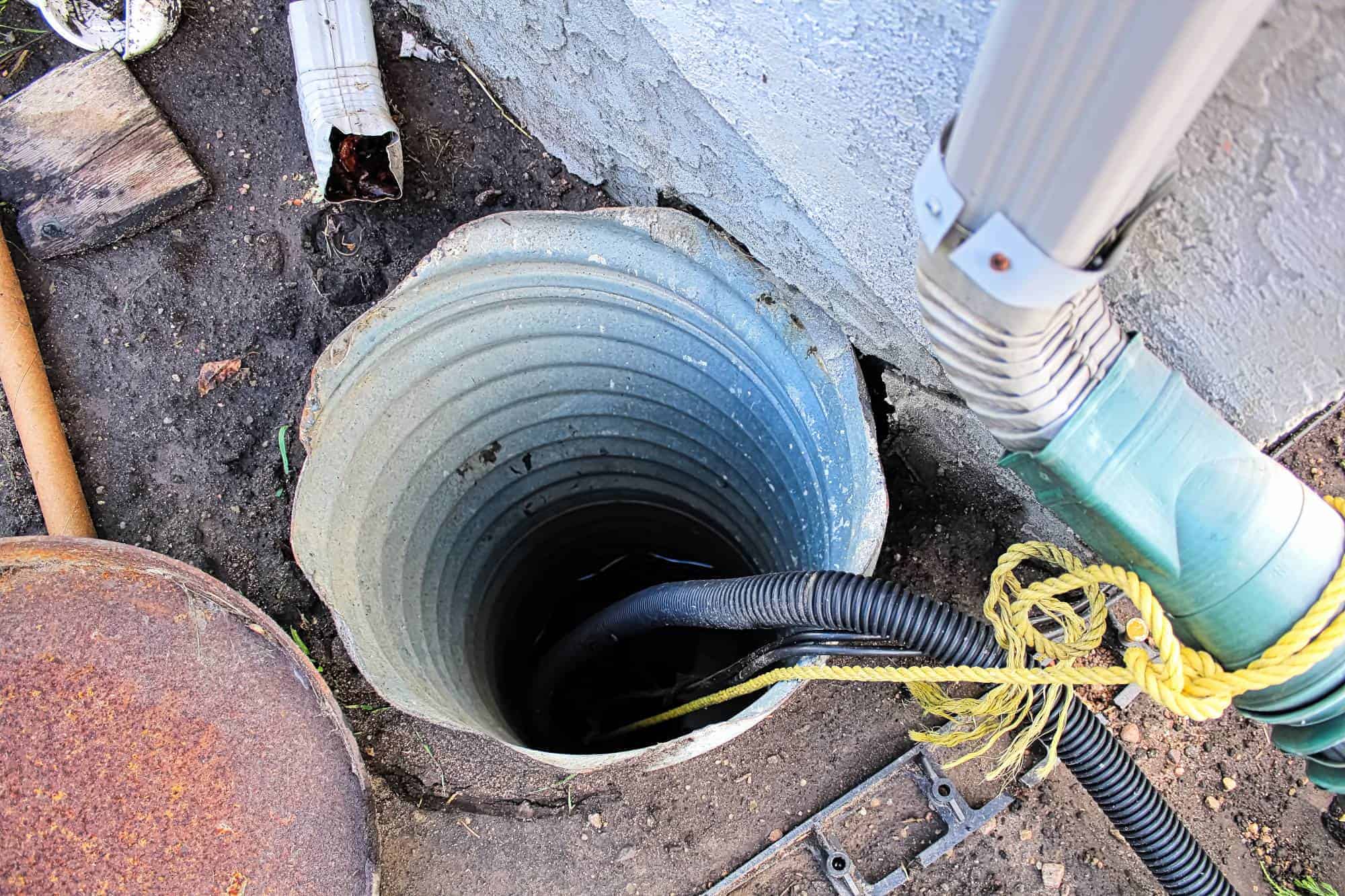
The float switch — the mechanism that triggers the pump when water rises — can stick, corrode, or get tangled. If it fails, the pump never activates, even with the motor in perfect condition. The check valve prevents water from flowing back into the pit after the pump runs; a failed check valve means the pump cycles constantly, burns out faster, and never fully empties the pit. The discharge pipe — the line that carries water away from your home — can develop blockages, especially if it hasn’t been inspected in a while. A clogged discharge line means the pump is running but the water has nowhere to go.
And then there’s age. The average sump pump lasts 7 to 10 years. If yours is pushing 8 or 9, it may still be technically operational while running on borrowed time. High-use environments — and Cook County qualifies, given the water table in low-lying and river-adjacent areas and the frequency of heavy rain events — can shorten that lifespan further.
A proper pre-season inspection isn’t just “does the pump turn on.” It’s a full check of the float switch, the check valve, the discharge line, the pit itself, and the backup system. We use camera inspections as part of our diagnostic process specifically because the problems that cause the worst flooding are often the ones you can’t see from the surface. A camera tells you what’s happening inside the drain lines before a storm reveals it the hard way.
Drain cleaning is also worth considering as part of storm prep. If your discharge line or the surrounding drain system has any buildup or partial blockage, a heavy rain event will expose it. Clearing those lines before the season starts is a straightforward step that most homeowners skip — and that most plumbers don’t mention unless you ask.
Want live answers?
Connect with a Go-Rooter Emergency Plumbers expert for fast, friendly support.
These are the questions we hear most often from Chicago-area homeowners — some before a problem, some after. If you’ve been wondering about any of them, you’re not alone.
Age is the first thing to look at. If your pump is 7 years old or older, it deserves a close inspection regardless of whether it seems to be working. Beyond age, there are a few warning signs worth paying attention to.
Unusual noise — grinding, rattling, or a motor that sounds like it’s straining — often signals worn bearings or a damaged impeller. A pump that runs continuously, even when there hasn’t been significant rain, may be fighting a high water table or dealing with a failed check valve. Visible rust or corrosion on the unit is another flag.
In Chicago specifically, homes in neighborhoods like Irving Park, Albany Park, and the Austin corridor have documented histories of repeated basement flooding — and in those areas, the water table and drainage conditions put more stress on sump systems than the average installation. If your home is in a flood-prone Chicago neighborhood and your pump is on the older side, the math on replacement versus repair shifts pretty quickly.
A proactive replacement runs between $400 and $1,200 depending on the system. A single flood damage claim averages $11,000 to $15,000. The cost comparison isn’t close. If you’re not sure where your pump stands, an inspection is the right starting point. We can tell you what you’re actually working with — not just whether the motor runs, but whether the full system is storm-ready.
This one surprises a lot of people. Standard homeowners insurance in Illinois typically does not cover water damage caused by sump pump failure or basement flooding. It’s not a default coverage — it’s an add-on, usually called a sewer backup or water backup endorsement, and even those policies come with coverage limits that may not cover the full cost of a serious flood event.
That’s worth knowing before storm season, not after. If you’re not sure what your policy covers, it’s worth a quick call to your insurance agent. But more importantly, it means that prevention is genuinely your best financial protection here — not insurance. The cost of an annual inspection, which typically runs $150 to $300 in the Chicago market, is a fraction of what you’d spend dealing with water damage that your policy won’t cover.
Chicago’s combined sewer system adds another layer of risk that’s specific to this market. Because stormwater and wastewater share the same pipes here, an overwhelmed system during a heavy storm can push sewage back up through floor drains and into basements. The city’s Deep Tunnel system — the Tunnel and Reservoir Plan, or TARP — is designed to handle exactly this, but it has been pushed to near capacity during recent storm seasons. In July 2026, the Deep Tunnel was reported as nearly full after days of heavy rain, with sewer overflows occurring into the Chicago River over multiple consecutive days.
That’s not a system failure — it’s a system being asked to handle more than it was built for. The City of Chicago Private Drain Program exists in part to help homeowners address their portion of this risk — and it’s a program we’re authorized to service. If you’ve heard about it but aren’t sure whether your property qualifies or what it covers, that’s a conversation worth having before the season starts.
The window between now and the first major storm of summer is the right time to do this — not after. By the time a major system rolls through and emergency lines are full, your options narrow fast.
A pre-season inspection, a battery backup installation if you don’t already have one, and a drain cleaning to clear any buildup in your discharge line are the three things that make the biggest difference. If your pump is approaching the end of its lifespan, replacement before storm season is almost always the smarter call than waiting. And if you’ve never had a camera inspection done on your drainage system, it’s worth doing at least once — especially if your home is older or you’ve had any water intrusion in the past.
Go-Rooter Emergency Plumbers has been working in Chicagoland since 2001. We’re available 24 hours a day, every day, and we give you a clear price before any work begins. If you want to know where your system actually stands before summer arrives, reach out — we’ll tell you straight.
Article details:
Share:
Continue learning:
Request a Callback
Want to skip the wait?
Simply enter your contact details, and we’ll call you when a NY Spine Advisor becomes available.