A running toilet can quietly cost you twice on a Chicago water bill. Here are the four usual culprits, how to spot yours, and what to do next.
Share:
Request a Callback
Want to skip the wait?
Simply enter your contact details, and we’ll call you when a Go Rooter Advisor becomes available.

Summary:
It’s late, the house is quiet, and your toilet is still going. Maybe it hisses. Maybe it kicks on by itself every ten minutes, like a ghost is flushing it. You jiggled the handle, it stopped for a minute, and then it started again.
Take a breath. A toilet that keeps running almost always traces back to one of four causes, and most are cheap parts you can swap yourself. What stings is the Chicago water bill, because every gallon slipping through that tank gets charged twice. Let’s work out which problem you have and what to do about it.
A toilet is a simple machine. When you flush, the flapper at the bottom of the tank lifts, the water drops into the bowl, the flapper settles back down, and the fill valve tops the tank up until the float tells it to quit. A toilet that keeps running means one piece of that loop isn’t finishing its job.
Here’s why it’s worth ten minutes of your evening. The EPA says a leaking toilet can waste about 200 gallons a day. As of June 1, 2026, the City of Chicago charges about $4.98 per 1,000 gallons of water and bills sewer at 100 percent of the water charge, so you pay roughly double that. In a worst case, 200 gallons a day works out to around $60 a month, or about $727 a year. Most leaks are smaller, but that’s the ceiling. Cook County suburbs set their own rates, and an unmetered home may not see the difference.
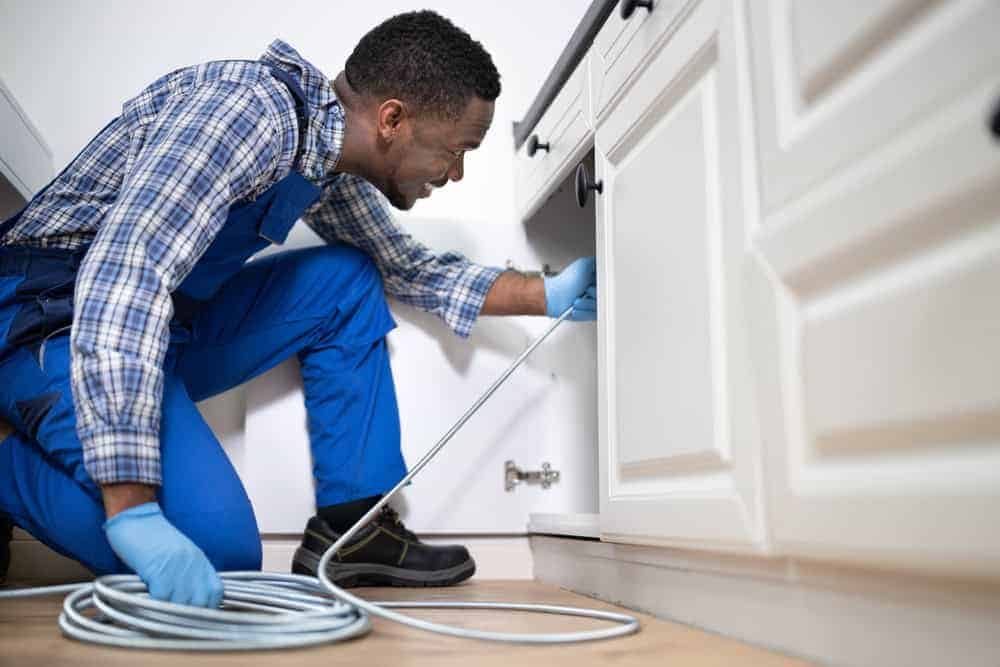
Before you grab a wrench, spend two minutes listening and looking. Take the lid off the tank and set it on a towel somewhere safe. What you see and hear tells you most of what you need.
If water hisses constantly into the tank and trickles into the open pipe in the middle (the overflow tube), the problem is up top. Either the float is set too high, so the water never reaches the point where the fill valve shuts off, or the fill valve itself is worn out. The water should sit about an inch below the top of that overflow tube. If it’s right at the rim, you’ve got your answer.
If the water level looks fine but the toilet refills on its own every so often, with nobody near it, you’re dealing with the so-called ghost flush. It’s rarely a haunting. Usually the flapper no longer seals, so tank water seeps into the bowl a little at a time until the fill valve kicks in to top it back up. Here’s a quick way to prove it: add a few drops of food coloring to the tank, don’t flush, and wait about ten minutes. If color shows up in the bowl, the flapper is leaking. Flush afterward so the dye doesn’t stain.
Two more things are worth checking. If you have to hold the handle down for a full flush, or the toilet stops running only when you jiggle it, look at the chain. It may be tangled, too short, or caught under the flapper. And if the little refill tube is jammed down inside the overflow pipe, it can siphon water nonstop. In an older Chicago two-flat or bungalow, where tank parts may be as old as the building, a worn flapper is the first suspect. Minerals in the water can also crust over the flapper seat and keep it from closing.
Start by shutting off the water at the valve on the wall behind the toilet. Turn it clockwise, then flush to empty the tank. From there, the fix depends on what you found.
For a leaking flapper, the most common culprit, pull the old one off its hooks and take it to the hardware store so you can match it to your toilet. The part usually costs about $5 to $20, and snapping on a new one takes a few minutes. If the old flapper feels slimy or looks warped, that’s a good sign you found the problem. While you’re at it, skip the bleach or chlorine tablets some people drop in the tank to keep it clean. Fluidmaster warns they can warp flappers and wear out other parts.
If the float is too high, adjust the screw or clip on the float arm until the water stops about an inch below the top of the overflow tube. The chain should have about half an inch of slack, enough for the flapper to close fully but not so much that it gets caught underneath. If the refill tube was jammed into the overflow pipe, clip it so it sits just above the opening.
If the hissing continues after all that, the fill valve is likely worn or cracked and needs replacing. Plan on 20 to 40 minutes if it’s your first time. One caution: if you have a pressure-assist or flushometer toilet, which you can usually spot by the loud whoosh when it flushes, the standard flapper advice doesn’t apply. Those use different parts, and that’s a good moment to call someone rather than guess.
Want live answers?
Connect with a Go-Rooter Emergency Plumbers expert for fast, friendly support.
Sometimes you do everything right and the toilet still runs. That usually means the cheap part wasn’t the whole story. A brand-new flapper can’t seal against a flush valve seat that’s rough or corroded. An overflow tube can crack. An old toilet can have several worn pieces working against each other, and sometimes the toilet isn’t the only fixture leaking.
This is where we earn the call, and where honesty matters. When you reach Go-Rooter Emergency Plumbers, we look for the root cause first, explain what we found in plain terms, and give you the price before any work starts. If the fix turns out to be something simple, we’ll tell you.
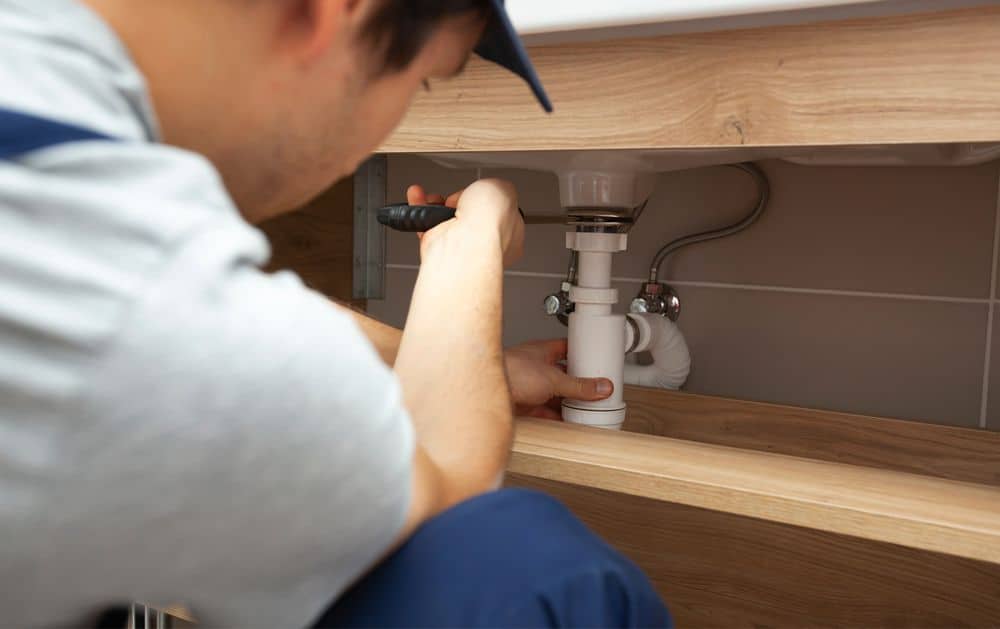
Usually, yes. A running toilet is annoying and it costs you money, but it’s not a burst pipe, and you don’t need to panic at midnight. The simplest stopgap is that same shutoff valve behind the toilet. Turn it clockwise until it stops, and the tank quits refilling. The hissing stops, the water stops going down the drain, and your Chicago water and sewer charges stop climbing. If you need to flush overnight, pour a bucket of water into the bowl, then deal with the real fix in daylight.
Some situations shouldn’t wait. If there’s water on the floor, if the tank or bowl is cracked, if the valve won’t turn or drips when you touch it, or if other fixtures are leaking too, call right away. We answer the phone 24 hours a day, and same-day service is how we work. If the valve is old and stiff, which can happen in older Chicago buildings, don’t force it. A valve that snaps off in your hand turns a small problem into a big one.
If you live in a condo building, the picture is a little different. Check with your management before hiring anyone, since some buildings have their own plumber and some leave it to you. Renters should tell their landlord first. Either way, closing the valve tonight keeps the problem from getting more expensive while you sort out who’s calling whom.
It depends on the specific problem, which is why we don’t quote a flat number for a toilet we haven’t looked at. Here’s what we can tell you. The part itself is cheap, and a flapper usually runs about $5 to $20. One Chicago repair directory lists professional flapper repairs at $55 to $130 and fill valve replacements at $65 to $165. Those are another company’s figures, not ours, but they give you a sense of what you’ll hear around town.
Our approach is simple. You get the price before we start, and nothing gets added once we’re under the tank lid. A free quote is part of how we work, and if you’d rather not sit on hold, you can ask us to call you back. Reviewers have described us as honest, with no surprises, and we hold ourselves to that on a toilet part as much as on a big job. If you’re a senior, ask about our 10 percent discount on residential plumbing under $2,500.
One more thing. If your toilet keeps running and you also have slow drains or odd noises elsewhere, the toilet may be pointing to something bigger. We do camera inspections on drains and sewer lines, so we can look instead of guessing. And if a high Chicago water bill has you wondering if the toilet is to blame, the dye test above takes ten minutes. It’s worth doing before you call anyone, including us.
To recap, a toilet that keeps running is almost always the flapper, the float, the fill valve, or the chain and refill tube. A two-minute look and a ten-minute dye test will usually tell you which, and the fix is often a $5 to $20 part. If you can’t get to it tonight, close the valve behind the toilet and the bill stops climbing. That matters when Chicago charges you for the water and the sewer both.
Call Go-Rooter Emergency Plumbers today at 773-661-4800 to schedule your fast dispatch and expert plumbing repair if you’ve tried the easy fixes and the toilet still runs.
Article details:
Share:
Continue learning:
Request a Callback
Want to skip the wait?
Simply enter your contact details, and we’ll call you when a NY Spine Advisor becomes available.