Chicago's first freeze arrives sooner than most homeowners expect. Here's exactly what to check — room by room — before it does.
Share:
Request a Callback
Want to skip the wait?
Simply enter your contact details, and we’ll call you when a Go Rooter Advisor becomes available.
Summary:
Most people don’t think about their plumbing until something goes wrong. That’s understandable — it’s invisible infrastructure, quietly doing its job until one January morning it isn’t. But in Cook County, where the first freeze typically arrives around October 19 and the region averages roughly 105 days below freezing each year, “wait and see” is a genuinely expensive strategy. A burst pipe doesn’t just cost you the repair — the average insurance claim for water damage and freezing runs over $15,000, and that’s before you factor in the disruption. This guide gives you a room-by-room look at what to check before the cold sets in, and where the line is between a DIY task and a call to a licensed plumber.
The window between Labor Day and mid-October is genuinely the best time to address your plumbing — not because of some arbitrary seasonal calendar, but because of real Cook County conditions. Plumber schedules fill fast once the first cold snap hits. Parts are easier to source. And if a camera inspection turns up a problem, you have time to fix it before the ground freezes and access gets harder.
Cook County’s freeze-thaw cycle is also more relentless than most homeowners realize. It’s not one cold stretch — it’s months of temperatures swinging above and below freezing, which puts constant stress on pipe joints, fittings, and the aging infrastructure that runs under and through a huge share of the region’s housing stock. Getting ahead of that cycle is the whole point.

If your home was built before 1970 — and a large share of Cook County’s housing stock was — your plumbing situation is meaningfully different from a newer build. Homes of that era were typically constructed with galvanized steel supply lines, the pipes that carry pressurized water to your faucets, showers, and appliances. Galvanized steel corrodes from the inside out. Over decades, that corrosion narrows the pipe’s interior, reduces water pressure, and creates weak points that are far more susceptible to the pressure spikes that happen when water freezes and expands.
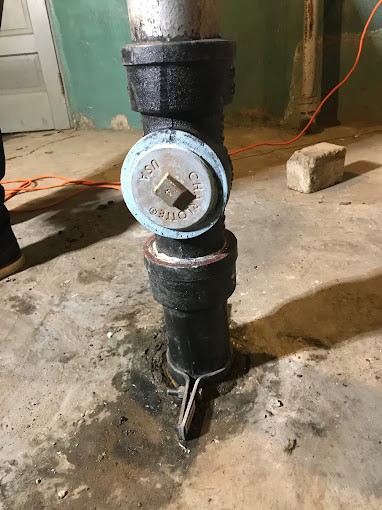
A pipe that “seems fine” may have significant internal deterioration you simply can’t see from the outside. Drain lines in these Cook County homes are a separate concern. Cast iron was the standard for drain and sewer lines in Chicago construction before the 1970s, which means those pipes are now 50 to 70-plus years old. Cast iron corrodes, cracks, and in some cases collapses — particularly in homes where tree roots have had decades to find their way into joints. Clay sewer pipes, also common in older Cook County neighborhoods, are similarly vulnerable. They’re rigid, they shift with the freeze-thaw cycle, and root intrusion in clay lines is one of the most common reasons for slow drains and sewer backups in this area.
None of this means your home is on the verge of catastrophe. It means that the standard advice — “check for drips and call it done” — isn’t really built for a 1950s Chicago bungalow or a pre-war two-flat in an inner-ring suburb. The stakes are higher, the materials are older, and the risk profile is different. That’s worth knowing before winter arrives.
Starting outside is the right move, because outdoor plumbing is the most immediately vulnerable. Disconnect all garden hoses from your hose bibs before the first freeze — a hose left connected traps water in the line and dramatically increases the risk of a frozen, cracked faucet. If your outdoor faucets aren’t frost-free models, consider adding insulated faucet covers, which are inexpensive and widely available. If you have an interior shutoff valve for your outdoor water supply, close it now and drain the line.
Moving into the basement, this is where most of the real risk lives in a Cook County home. Check any exposed pipes running along exterior walls or in unheated sections of the basement — these are your highest freeze risk during a polar vortex event. Foam pipe insulation sleeves are a straightforward DIY fix for exposed supply lines. While you’re down there, look at your floor drains. Pour a bucket of water into each one to make sure the trap is full — a dry trap lets sewer gases into the house, which is both unpleasant and a health concern.
Your sump pump deserves more than a glance. Pour water into the sump pit and watch the pump cycle — it should activate quickly, discharge cleanly, and shut off without running continuously. If it hesitates, makes unusual noise, or doesn’t activate at all, fall is the time to address it. A failed sump pump discovered during a January storm is an emergency; one discovered in October is a scheduled repair.
In the kitchen and bathrooms, check under sinks for any slow drips at supply lines or shutoff valves. These tend to worsen in cold weather as materials contract. If you have a garbage disposal, run it with cold water to clear any buildup before it sits through the holidays. And in any bathroom that shares an exterior wall — particularly in older Cook County homes where insulation may be minimal — know where your main water shutoff is located in case you need it fast.
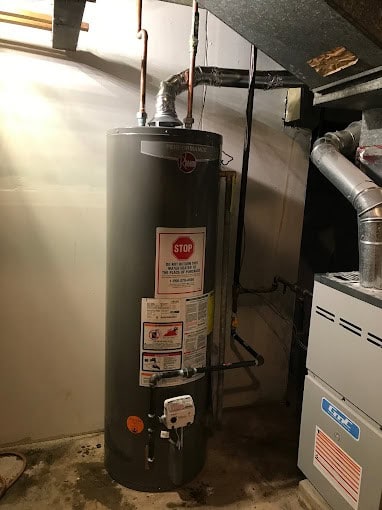
The water heater is often the most overlooked item on a fall checklist. Water heaters work harder in winter to deliver hot water at the same temperature, and sediment buildup at the bottom of the tank reduces efficiency and accelerates wear. Flushing the tank annually extends its life and keeps it running efficiently. The average conventional water heater lasts about 11 years — if yours is approaching or past that mark, fall is the right time to evaluate it, not February.
Want live answers?
Connect with a Go-Rooter Emergency Plumbers expert for fast, friendly support.
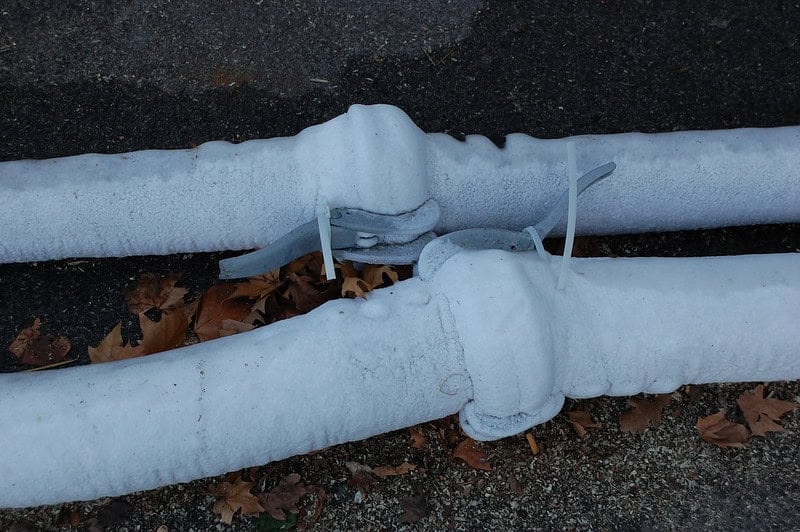
Foam pipe insulation is one of the most cost-effective things a Cook County homeowner can do before winter. It’s available at any hardware store, it installs in minutes, and it meaningfully reduces freeze risk on exposed supply lines in basements, crawl spaces, and garages. For pipes that run through particularly cold areas, heat tape — an electric heating cable that wraps around the pipe — provides an additional layer of protection during extreme cold snaps.
That said, pipe insulation only protects what you can see and reach. It does nothing for a corroded interior, a hairline crack forming inside a wall, or a sewer line that’s quietly filling with roots 10 feet underground. That’s the gap between DIY prep and a professional inspection — and it’s a significant one in an area with Cook County’s infrastructure age.
A plumbing camera inspection involves running a flexible camera through your drain and sewer lines to see exactly what’s happening inside — corrosion, cracks, root intrusion, blockages, and sections of pipe that are close to failure. It’s the diagnostic equivalent of an X-ray: the point isn’t to find a problem that’s already causing symptoms, it’s to find the problem before it does.
For Cook County homeowners with older homes, this is particularly valuable. Galvanized steel supply lines corrode from the inside in ways that aren’t visible from the outside. Cast iron sewer lines crack and collapse. Clay pipes shift and crack along joint lines, and tree roots find those joints reliably. None of these issues announce themselves before they fail — a drain that runs slowly one week can back up completely the next, or worse, a pipe that holds pressure fine in October can split under the expansion stress of a January freeze.
We use camera inspection technology specifically as a preventative tool, not just a diagnostic one for active emergencies. When we run a camera through your lines in the fall, we’re looking for the vulnerable areas — the spots that are likely to cause problems this winter — so you can address them now, on your terms, rather than at 2 AM in January when the options are limited and the stress is high. It’s a straightforward service, and it gives you real information about the actual condition of your plumbing rather than a best guess.
Homes in Cook County that have never had a camera inspection — particularly those built before 1970 — are the ones we most commonly see with preventable winter emergencies. That’s a pattern we’ve watched repeat itself for over 20 years of working in this area.
Disconnecting hoses, adding pipe insulation, testing your sump pump, flushing your water heater, and checking under sinks for drips — all of that is well within reach for most homeowners. None of it requires special tools or a license, and doing it yourself is completely appropriate.
Where you need a licensed plumber is anywhere the problem is hidden, structural, or involves your main sewer line, gas lines, or supply line connections at the wall. A slow drain that doesn’t respond to a plunger isn’t a clog — it’s a symptom of something further down the line, and rodding or hydro jetting it yourself isn’t an option. A water heater that’s making new noises or producing inconsistent hot water needs a professional evaluation, not a YouTube tutorial. Any time you’re dealing with a pipe inside a wall, under a concrete slab, or in a crawl space you can’t safely access, stop and call.
In Cook County, there’s also the permit question. Any plumbing work that involves replacing supply lines, sewer lines, or major fixtures requires a permit, and permits require a licensed, registered contractor. Cook County requires plumbing contractors to carry a minimum of $1,000,000 in general liability insurance and hold an active Illinois plumbing contractor’s registration. Work done without permits isn’t just technically non-compliant — it can affect your homeowner’s insurance coverage if something goes wrong.
We offer free quotes, and for new customers, $40 off your first service. If you’re not sure whether something you’ve found during your fall walkthrough warrants a call, that’s exactly the kind of question we’re happy to answer before you commit to anything.
Chicago’s first freeze doesn’t wait for you to feel ready. The average first freeze date for the city is October 19 — and in inland Cook County suburbs, it can arrive as early as October 11. That gives most homeowners roughly six weeks from early September to get their plumbing in order, schedule any professional work, and avoid the emergency calendar that fills up fast once the cold sets in.
The room-by-room checklist in this guide covers what you can do yourself. But if your home was built before 1970, or if you’ve never had a camera inspection done on your sewer lines, fall is the right time to find out what’s actually going on inside those pipes — not after the ground freezes and a repair becomes exponentially more complicated.
Go-Rooter Emergency Plumbers has been serving Chicago and Cook County since 2001. We’re available 24/7, we don’t charge extra for nights or weekends, and we give you an upfront price before we start any work. If you want to get ahead of this winter instead of reacting to it, reach out to us and let’s take a look before the freeze does.
Article details:
Share:
Continue learning:
Request a Callback
Want to skip the wait?
Simply enter your contact details, and we’ll call you when a NY Spine Advisor becomes available.