November's freeze-thaw cycles are harder on sump pumps than January's deep cold. Here's what Cook County homeowners need to check before the first freeze.
Share:
Request a Callback
Want to skip the wait?
Simply enter your contact details, and we’ll call you when a Go Rooter Advisor becomes available.
Summary:
Here’s the thing about sump pumps — they’re easy to forget about until you can’t. You don’t think about yours when the basement is dry. But once the water is already coming in, it’s too late to find out the float was stuck, the discharge pipe was partially blocked, or the battery backup you never installed would have saved you $6,000 in restoration costs.
Cook County’s winters don’t give much warning. If your pump has been sitting quiet since late summer, this sump pump maintenance checklist will tell you exactly what to look at, what to listen for, and what a passing test actually looks like — before the first hard freeze makes the question irrelevant.
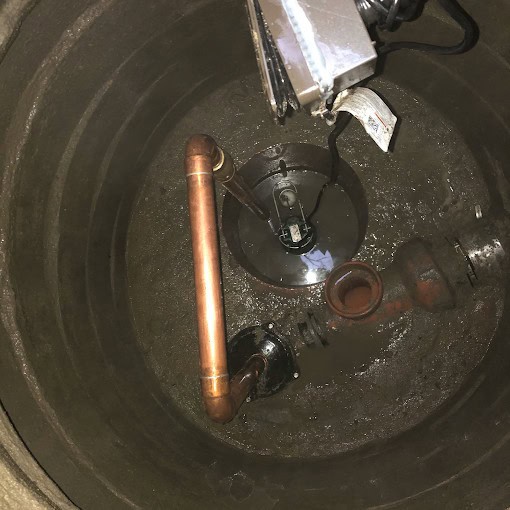
The standard method is called the bucket test, and it’s exactly what it sounds like. Fill a five-gallon bucket with water and pour it slowly into the sump pit. Watch the float rise. Your pump should kick on promptly, move the water out quickly, and shut off cleanly once the pit is clear. The whole cycle should take less than a minute for a healthy pump in a standard residential pit.
What you’re listening for matters as much as what you see. A healthy pump sounds like a steady, low hum — consistent in tone, without grinding, rattling, or any kind of labored sound. If it hesitates before starting, runs longer than it should, or makes noise that wasn’t there last spring, those are signals worth paying attention to before the ground freezes.

The tricky part about sump pump failure is that it’s often quiet. The pump isn’t necessarily making a loud noise or running constantly — it may just be slightly off in ways that are easy to miss if you’re not looking for them.
A float switch that’s sticking is one of the most common culprits. The float is what tells the pump to turn on when water rises in the pit. If it’s corroded, tangled, or partially frozen in position, the pump either won’t activate when it should or won’t shut off when it should — both of which are problems. During the bucket test, watch the float rise freely as you pour. It should move without resistance and trigger the pump smoothly.
Visible rust or sediment buildup in or around the pit is another sign the system is aging faster than it should. Sump pumps typically last seven to ten years, but Cook County’s clay-heavy soil and the constant hydrostatic pressure it creates during rain and snowmelt can shorten that window. If your pump is past the seven-year mark, it’s worth having us assess whether it’s still operating at full capacity — not just whether it turns on.
One failure mode that rarely announces itself is a compromised check valve. The check valve is a small component on the discharge line that prevents water from flowing back into the pit after the pump shuts off. When it fails, the pump has to work twice as hard on every cycle because it’s fighting water that keeps returning. A failed check valve — a $25 to $40 part — can burn out a new pump in as little as eight months. It won’t make a dramatic noise. It’ll just quietly shorten your pump’s life until one day it doesn’t start.
After you’ve run the bucket test, walk the discharge line. Follow it from the pit to wherever it exits the house. Make sure the outlet is clear, that water isn’t pooling near the foundation on the exterior, and that nothing is obstructing the pipe’s path. In older Cook County homes — especially the bungalows and two-flats that make up so much of the county’s housing stock — discharge pipes are sometimes routed in ways that made sense decades ago but create problems now.
Most people assume the worst time for their sump pump is the dead of winter. January, February — the coldest months. But in Cook County, IL, the more dangerous window is actually November, and understanding why matters for when you act.
In January, the ground is frozen solid. Water movement is minimal. Your pump may barely run for weeks at a time. But in November, Chicago’s temperatures swing above and below freezing repeatedly — sometimes multiple times in a single week. Each time the temperature rises above 32°F, trapped moisture releases and pushes toward the foundation. Each time it drops back below freezing, that same moisture can lock a discharge pipe or freeze a float mechanism in place.
The pump is being asked to work during these thaw cycles while simultaneously being subjected to conditions that stress its components. It’s not the sustained cold that causes failures — it’s the oscillation. A discharge pipe that’s poorly routed or partially blocked might drain fine in October. By mid-November, after a few freeze-thaw cycles, it can be effectively sealed shut. When the pump activates and has nowhere to send the water, you have a problem.
FEMA specifically documented Cook County flooding events on July 2 and September 17, 2023 — and those were summer storms. The county’s infrastructure is genuinely stressed by precipitation events in ways that many homeowners don’t fully appreciate. Cook County has approximately 42% impervious surface coverage, meaning nearly half the land area can’t absorb rainfall at all. Combined with a combined sewer system that’s roughly 100 years old — where stormwater and sanitary sewage share the same pipes — even a moderate storm can push water toward your foundation from multiple directions simultaneously.
That’s the environment your sump pump is operating in. Late September through October is the window to verify it’s ready. Waiting until spring means going through the entire winter — including every freeze-thaw cycle between now and March — with an unverified system.
Want live answers?
Connect with a Go-Rooter Emergency Plumbers expert for fast, friendly support.
A battery backup system is not an optional upgrade for most Cook County homeowners. It’s the component that determines whether your maintained sump pump actually protects you when it matters most.
Here’s the pattern that plays out repeatedly during Chicago’s worst flooding events: the storm arrives, the pump is needed, and the power goes out. Of the 2,095 basement flooding reports recorded in Cook County in July 2025 alone, 76% occurred during or immediately after a power outage. Your primary pump — no matter how well-maintained — is useless without electricity. A battery backup system activates automatically the moment power is lost, keeping the pump running through the event.
Not all battery backup systems perform equally, and the differences matter more in Cook County’s climate than they would in a milder market.
The battery type is the first consideration. Standard lead-acid batteries are common and inexpensive, but they require periodic maintenance and their performance degrades meaningfully in cold temperatures. If your basement is unheated — which is the case in many older Cook County homes — a lead-acid battery can lose up to half its rated capacity during a cold snap. That’s the worst possible time to discover your backup system won’t run long enough to get through the event.
AGM batteries, which stands for absorbed glass mat, are a better fit for Chicago conditions. They’re maintenance-free, charge faster, and hold their capacity better in the cold. They cost more upfront, but in a county where the flooding events that demand backup power also tend to involve sustained cold and extended outages, the performance difference is real.
The second consideration is capacity matching. A backup pump that moves 1,000 gallons per hour isn’t adequate protection if your primary pump moves 3,000. The backup system needs to be sized relative to the actual water volume your pit handles during a heavy event — not just any volume. An undersized backup gives you a false sense of security.
Battery backup systems should be tested at least twice a year. Disconnect the primary power source and confirm the backup activates automatically. Run it briefly under load. Check the battery’s charge indicator. The battery itself should be replaced every two to three years regardless of how it appears, because battery capacity degrades gradually and invisibly — you won’t know it’s insufficient until it fails mid-flood.
One more detail specific to Cook County: if your backup battery is stored in an unheated space, test it in late fall specifically. Cold-temperature performance is the variable most homeowners don’t account for, and it’s the one that matters most during a November or December storm event.
The sump pump is the last line of defense, not the only one. Basement flooding prevention in Cook County involves understanding the full path water takes to reach your foundation — and addressing as many points along that path as possible.
The check valve we mentioned earlier is one piece. The discharge pipe routing is another. But there are a few other things worth looking at during your pre-winter inspection that don’t require professional tools to assess.
Walk the perimeter of your home and look at how the ground slopes near the foundation. Ideally, the grade should direct water away from the house, not toward it. In older Cook County neighborhoods — Bridgeport, Clearing, Gage Park, Beverly — homes have sometimes settled or had landscaping changes over the decades that have reversed that slope. Water that pools against the foundation after a rain is water your sump pump has to handle, and it adds up.
Check your window wells if you have them. Debris-filled window wells can trap water and direct it toward basement windows. A quick cleaning before winter removes one more potential entry point.
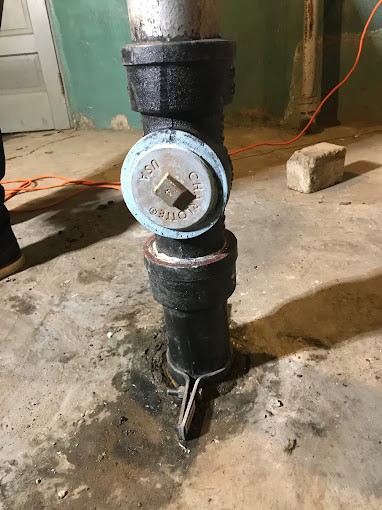
Inside the basement, look at where your floor drain is located relative to the sump pit. In Cook County’s combined sewer system, floor drains can become a pathway for sewer backup during heavy rains when the system reaches capacity. A properly installed backflow preventer addresses this — it’s a separate concern from your sump pump, but it’s part of the same conversation about keeping your basement dry.
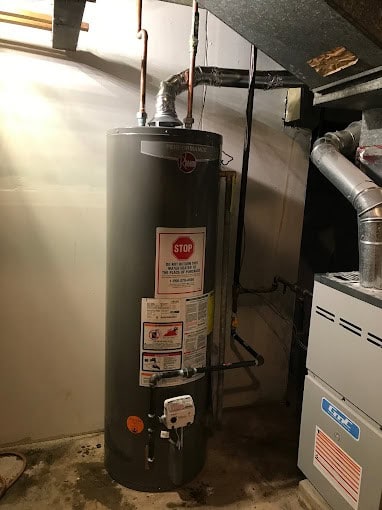
If your home has a finished basement, a home office, or critical mechanical equipment like a furnace, water heater, or electrical panel below grade, the stakes of a flood event are significantly higher. The average home water damage insurance claim runs $6,965. Flood restoration for a finished basement can reach $12,000 or more. A professional inspection that catches a failing check valve, a poorly routed discharge pipe, or an undersized battery backup before the season starts is a fraction of that cost — and it’s the kind of visit that tends to prevent the call you don’t want to make at 2 AM in November.
We also use camera inspection technology to look inside discharge lines and assess components that a bucket test simply can’t reach. It’s the difference between confirming your pump turns on and knowing why it might fail next month.
The bucket test is a legitimate starting point, and running through this checklist before the first freeze is genuinely useful. But there’s a limit to what any homeowner can assess without professional equipment — and that limit matters in a county where the conditions that stress sump pumps are as demanding as they are here.
If your pump is more than seven years old, makes any sound it didn’t make last year, cycles more than two or three times a day without obvious cause, or if you simply haven’t had it professionally inspected in the last twelve months, late September is the right time to schedule that visit. Not because something is necessarily wrong, but because finding out before the freeze costs far less than finding out during one.
We at Go-Rooter Emergency Plumbers serve Cook County with 24/7 availability, same-day service, and free quotes. If you want a second set of eyes on your system before winter arrives, we’re a phone call away.
Article details:
Share:
Continue learning:
Request a Callback
Want to skip the wait?
Simply enter your contact details, and we’ll call you when a NY Spine Advisor becomes available.