A Saturday plumbing problem doesn't have to become a Sunday disaster. Here's how to know when to call — and what to expect when you do.
Share:
Request a Callback
Want to skip the wait?
Simply enter your contact details, and we’ll call you when a Go Rooter Advisor becomes available.
Summary:
It’s Saturday night. Something’s wrong with a pipe, a drain, or a toilet — and you’re not sure if it’s bad enough to call someone right now or if it can wait until Monday when rates might be lower and options are easier. That moment of uncertainty is exactly where most water damage starts. Not from the leak itself, but from the delay. This guide is for Cook County homeowners who want a straight answer: what counts as a real plumbing emergency, what you should do while you wait for help, and how to tell the difference between a company that actually works weekends and one that just says it does.
Some plumbing problems are genuinely urgent. Others feel urgent at midnight but can realistically hold for 48 hours without making things worse. Knowing which is which is the first useful thing anyone can tell you.
The situations that require an immediate call are the ones where waiting turns a repair into a restoration project. A burst pipe, an active sewage backup, a frozen pipe that hasn’t failed yet but is under pressure, a sump pump that’s out during a heavy rain — these aren’t problems you sleep on. Water damage compounds fast, and in Cook County’s older housing stock, where cast iron drains and clay sewer lines are still common, a slow problem can become a structural one overnight.
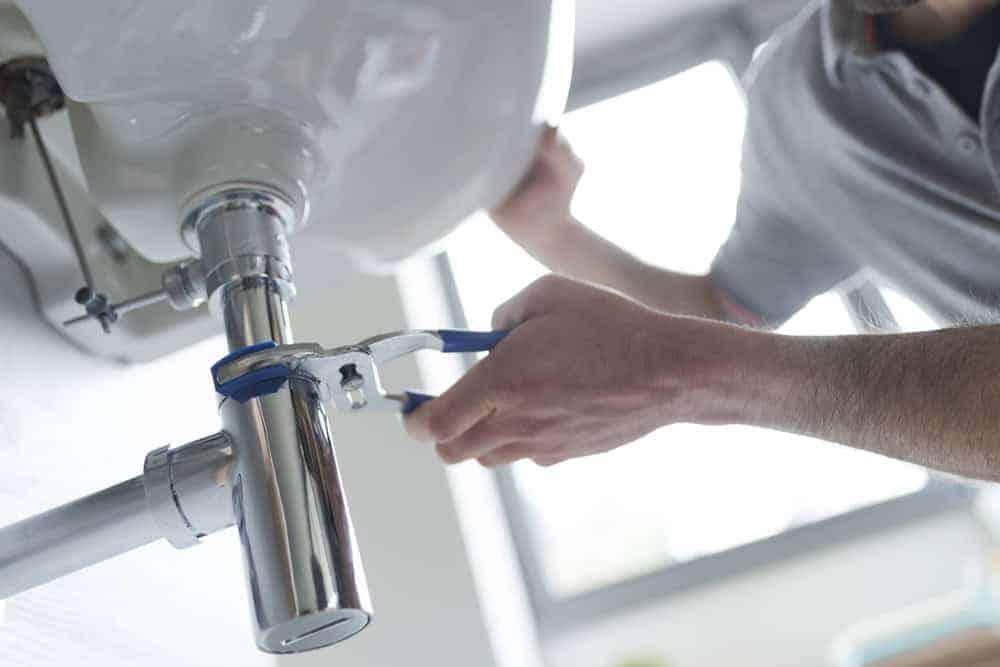
The honest triage test isn’t complicated. Ask yourself one question: is water going somewhere it shouldn’t be, and can I stop it?
If a pipe has burst or a fitting has failed, your first move is the main water shut-off — not a search engine. Get the water off, then make the call. If you don’t know where your shut-off is, that’s worth finding out right now, before something goes wrong. In most Cook County homes, it’s in the basement near the front foundation wall or in a utility closet. In older homes in neighborhoods like Logan Square, Pilsen, or Rogers Park, it may be in a less obvious spot — sometimes behind drywall or in a crawl space.
A sewage backup is another situation that doesn’t wait. When wastewater is coming up through a floor drain or backing up into a tub, you’re dealing with a sewer line blockage — and in Cook County, where many neighborhoods are served by a combined sewer system that handles both stormwater and sewage, a heavy rain event can make that backup worse by the hour. That’s not a Monday morning call.
Frozen pipes are a different kind of emergency. If you’ve lost water pressure during a cold snap and suspect a pipe has frozen — especially in an exterior wall, unheated garage, or crawl space — the danger isn’t the freeze itself. It’s the thaw. A frozen pipe that bursts while you’re asleep or at work can flood a basement in under an hour. Cook County averages around 105 days below freezing annually, and polar vortex events can push temperatures low enough to freeze pipes even in insulated spaces. If you suspect a freeze, call before it thaws on its own.
Problems that can realistically wait: a slow-draining sink that’s been slow for weeks, a running toilet, a dripping faucet. Annoying, yes. Emergencies, no. If there’s no active water flow going somewhere it shouldn’t, and no risk of that changing overnight, you can schedule a regular appointment and come out ahead.
Once you’ve made the call, there are a few things worth doing before the technician arrives — not to fix the problem yourself, but to limit the damage and give the plumber better information when they get there.
If water is actively flowing somewhere it shouldn’t, shut off the main supply. If the problem is isolated to one fixture — a toilet, a sink, a washing machine — there’s usually a local shut-off valve behind or beneath the unit. Use that first if you can find it, so the rest of the house keeps water pressure.
Move anything valuable out of the affected area. Cardboard boxes, stored items, furniture — water doesn’t care what’s in its path. If there’s standing water in a basement, don’t walk through it if there’s any chance it’s in contact with an electrical panel or outlet. That’s a serious safety issue, not just a plumbing one.
Take photos before you start cleaning anything up. If you end up filing a homeowner’s insurance claim, documentation of the original damage matters. A quick video walkthrough on your phone takes two minutes and can save significant paperwork later.
One thing worth skipping: DIY repair attempts on anything beyond shutting off the water. Attempting to patch a pipe, clear a sewer line, or thaw a frozen pipe yourself can void your insurance claim, make the underlying problem worse, or create a code violation that costs more to fix than the original issue. Cook County requires licensed plumbers for a reason — the licensing requirements in Illinois include years of apprenticeship and a state exam, and the work reflects that. Let the professional handle it when they arrive; your job in the meantime is containment, not repair.
Want live answers?
Connect with a Go-Rooter Emergency Plumbers expert for fast, friendly support.
Here’s something most homeowners don’t find out until they’re already in a bad situation: a lot of companies that advertise 24/7 emergency service don’t actually dispatch a licensed plumber after hours. They route your call to an answering service, take your information, and schedule you for the next available slot — which might be Monday morning.
That’s not 24/7 service. That’s a voicemail with a callback promise. And if your basement is taking on water at 10 PM on a Saturday, the difference matters enormously.
Real same-day emergency service means a licensed plumber answers the phone, gets your address, and gives you an actual arrival window — not a vague “someone will be in touch.” It means a fully equipped truck shows up, not a technician who needs to come back tomorrow with the right parts.
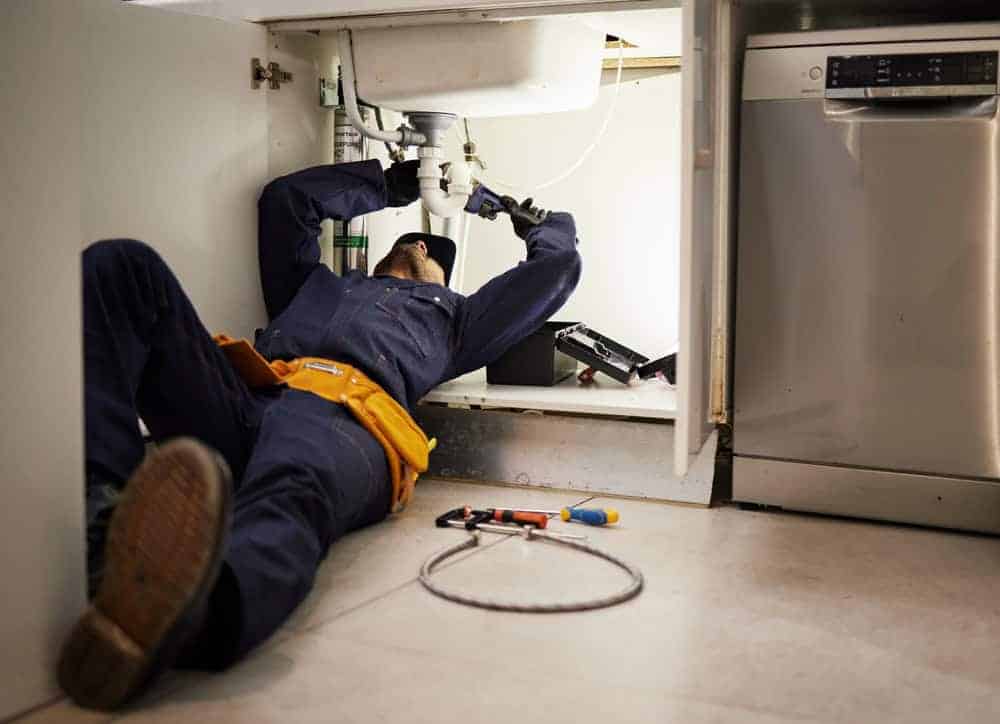
When you’re calling around at midnight, it’s easy to just go with whoever answers. But 60 seconds of questions can tell you a lot about whether you’re getting genuine emergency response or a scheduled callback dressed up as emergency service.
Ask directly: “Will a licensed plumber arrive tonight?” Not “is someone available” — that’s too vague. You want to know if an actual, licensed technician will be at your door, not whether someone is technically on call somewhere.
Ask for an ETA. A company with real emergency capacity can give you a window. If the answer is “we’ll call you back with a time,” that’s an answering service situation. A real emergency dispatch can tell you something like 60 to 90 minutes, because we know where our technicians are.
Ask about weekend pricing. The industry standard is a 25 to 50 percent surcharge for after-hours calls — some Cook County companies double or even triple their rates on weekends and holidays. That’s not a rumor; it’s common practice. Some companies charge a trip fee of around $225 just to show up before any work begins. We don’t charge overtime rates for weekend or after-hours calls, but you should ask every company upfront. Knowing the cost before the work starts is the clearest sign you’re dealing with a company that operates honestly.
Ask whether the technicians are the company’s own employees or subcontractors. After-hours calls are sometimes handed off to third-party contractors who may not carry the same licensing, insurance, or accountability as the primary company. In Cook County, plumbing contractors are required to register with the county and carry significant liability coverage. That requirement exists for your protection — make sure whoever shows up actually meets it.
Cook County isn’t a new-construction market. The median construction year for homes in the county is 1961, which means the average home is over 60 years old — and a significant portion of the housing stock in Chicago’s established neighborhoods is considerably older than that. Homes in Wicker Park, Humboldt Park, Bridgeport, and Rogers Park routinely have plumbing systems that predate the Korean War.
That matters because older homes use older materials. Cast iron drain pipes corrode and crack over decades. Clay sewer lines deteriorate and collapse under ground movement. Galvanized steel water supply pipes rust from the inside out, slowly restricting flow until they fail. Lead service lines, still present in parts of Cook County, are subject to their own set of concerns. None of these systems fail on a schedule, and none of them give much warning before they do.
Add Chicago’s climate to that equation and the risk picture gets clearer. Cook County averages around 105 days below freezing each year. Polar vortex events — the kind that drop temperatures to -20°F or colder — can freeze pipes in spaces that would normally be fine in a typical winter. The freeze-thaw cycle puts repeated stress on pipe joints and fittings. And when spring arrives, snowmelt and heavy rain combine to overwhelm sump pumps and flood basements across the county.
Tree root intrusion is another issue that’s more common in Cook County than in newer suburban markets. In mature neighborhoods, large oaks, elms, and maples have had 50 to 80 years to grow their root systems toward whatever water source is nearby — and sewer lines are a reliable one. Root intrusion is a slow-developing problem that often presents as a sudden weekend backup, because the blockage builds gradually until it doesn’t.
The point isn’t to alarm you. It’s to explain why plumbing problems in Cook County aren’t random bad luck — they’re the predictable result of aging infrastructure in a demanding climate. Knowing that makes it easier to take a problem seriously when it shows up on a Saturday night, rather than hoping it holds until Monday.
The short version: if water is actively going somewhere it shouldn’t, or if you’re dealing with a sewage backup, a frozen pipe under pressure, or a sump pump failure during a rainstorm, call now. Don’t wait to see if it gets better. It usually doesn’t.
When you do call, ask the questions that matter — whether a licensed plumber will actually arrive tonight, what the ETA is, and whether the price you’re quoted is the price you’ll pay. Those three questions will tell you more about a company than any advertisement will.
Go-Rooter Emergency Plumbers has been serving Cook County since 2001. We answer calls around the clock — not an answering service, not a voicemail — and we don’t charge overtime rates for weekend or after-hours calls. If you’re staring at a problem right now and trying to decide whether it’s worth a call, it probably is. Reach us at 773-661-4800.
Article details:
Share:
Continue learning:
Request a Callback
Want to skip the wait?
Simply enter your contact details, and we’ll call you when a NY Spine Advisor becomes available.