Buying a home in Chicago? Here's what a standard inspection covers, what it doesn't, and which local companies Cook County buyers trust.
Share:
Request a Callback
Want to skip the wait?
Simply enter your contact details, and we’ll call you when a Go Rooter Advisor becomes available.
Summary:
You’ve found a house you like. The offer was accepted. Now comes the inspection — and suddenly you’re trying to figure out who to hire, what they’ll actually look at, and whether any of it will hold up when it counts.
In a market where Chicago’s median home price sits around $380,000 and older homes dominate neighborhoods from Bridgeport to Beverly, a home inspection isn’t a formality. It’s one of the few chances you have to know what you’re actually buying. This guide covers what to look for in a licensed home inspector, which Cook County companies consistently earn strong reviews, and — critically — what even the best inspection won’t catch.
Illinois regulates home inspectors through the IDFPR, and every inspector you hire should be able to hand you a license number you can verify. Beyond that baseline, credentials matter more than most buyers realize.
InterNACHI’s Certified Professional Inspector designation and ASHI membership both require passing standardized exams, maintaining continuing education, and adhering to published standards of practice — they’re not just logos on a website. What separates a good inspector from a great one is usually communication. The best inspectors in Cook County will walk you through the house as they go, explain what they’re seeing in plain language, and deliver a detailed, photo-rich report within 24 hours.
Illinois also requires inspectors to carry errors and omissions insurance with at least $300,000 in coverage — that’s worth confirming before you book.
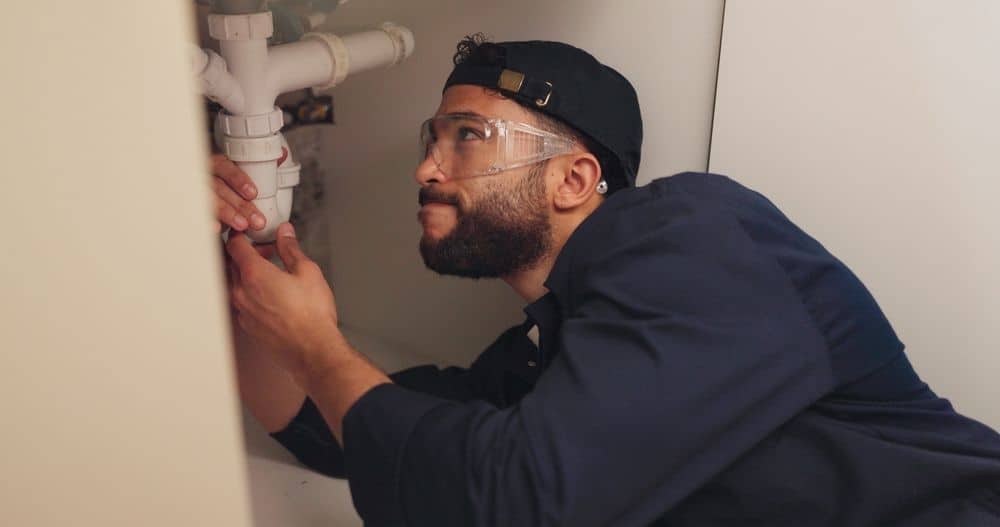
Cook County spans 96 cities and over 2.2 million housing units, so “Chicago home inspector” can mean someone who primarily works the North Side, someone who covers the western suburbs, or someone who does both. Here’s a look at well-regarded companies that serve buyers across the county.
**Chicagoland Home Inspectors Inc.** has been working the Chicago market for years and has a strong reputation for detailed sewer lateral education — they’re one of the few inspection companies that explicitly walks buyers through why the underground pipe from your foundation to the city main is your financial responsibility, not the city’s.
**Home Inspection Geeks** covers Cook, Lake, and DuPage counties and offers radon testing and sewer scope inspections as add-ons to their standard service. Their reviews consistently mention non-alarmist communication and color-coded digital reports that make it easy to prioritize what actually needs attention.
**Chicago Building Inspections** publishes transparent pricing — single-family homes start around $795, with sewer scope inspections starting at $395. That kind of upfront clarity is worth something when you’re already juggling closing costs.
**Sparrow Inspections** offers single-family home inspections starting at $395, with radon testing available for an additional $215 and sewer scope for $375. They serve buyers throughout the Chicago metro area.
**WIN Home Inspection** operates a Chicago-area franchise and specifically calls out Cook County’s naturally occurring radon levels and the moisture concerns that come with Chicago’s older basement-heavy housing stock and proximity to Lake Michigan. Their 24-hour report turnaround is one of the faster ones in the market.
**Chicago Metro Home Inspections** has built out suburb-specific service pages for communities like Oak Lawn, Palos Heights, and Palos Park — a sign they’re genuinely familiar with the southern Cook County market rather than treating the whole county as one territory.
**Spotlight Inspection Services** works out of Niles and Northfield and covers the northern Cook County suburbs, including areas where mature tree canopies and older clay tile sewer lines make underground pipe inspection especially relevant.
**The BrickKicker** is a nationally recognized franchise with a Chicago-area presence and a long track record. They’re a reasonable choice for buyers who want a structured, documented process and a well-known name behind the report.
**Prestige Home Inspections**, **Domicile Consulting**, **First Choice Inspectors**, and **Attentive Home Inspection** round out the Cook County market with solid reviews across Yelp and Google. Each serves different pockets of the county — it’s worth confirming service area and availability before booking, particularly if you’re on a tight contingency timeline.
For any inspector on this list, ask to see a sample report before you commit. A good report tells a story — not just a checklist.
Pricing in the Chicago market varies by home size, inspector, and what you add on. For a standard inspection, expect to pay somewhere between $250 and $350 for homes under 1,500 square feet, $350 to $450 for homes in the 1,500–2,500 square foot range, and $400 to $600 or more for larger properties. Some companies — particularly those serving higher-end neighborhoods or offering premium reporting — start their single-family rates closer to $795.
Add-ons are where the cost climbs, and in Cook County, they’re often worth it. Radon testing typically runs $100 to $200 and is worth taking seriously in Cook County, where radon is a documented concern. A sewer scope inspection — a separate service that uses a camera to inspect the underground drain line — generally runs $100 to $395 depending on the provider.
That sewer scope line item is the one most buyers skip and later regret. In a city where a significant share of the housing stock predates 1960, clay tile and cast iron sewer laterals are the norm in neighborhoods like Pilsen, Hyde Park, Bridgeport, and Logan Square. These pipes age. Tree roots find them. And when they fail, sewer line repairs in the Chicago area typically run $3,000 to $8,000 — sometimes more depending on depth and access.
The inspection fee feels significant in the moment. The repair bill afterward is what actually hurts.
Want live answers?
Connect with a Go-Rooter Emergency Plumbers expert for fast, friendly support.
A home inspection is a visual, non-invasive assessment. The inspector walks the accessible areas of the property, looks at what they can see, and documents it. What they cannot do — and are not required to do under InterNACHI’s standards of practice — is inspect underground sewer lines.
That’s not a limitation of the inspector. It’s how the scope is defined. The sewer lateral, the pipe that runs from your home’s foundation to the city main, sits three to six feet underground. It’s yours from the moment you close. And in Cook County’s older housing stock, it’s one of the most common sources of expensive post-purchase surprises.
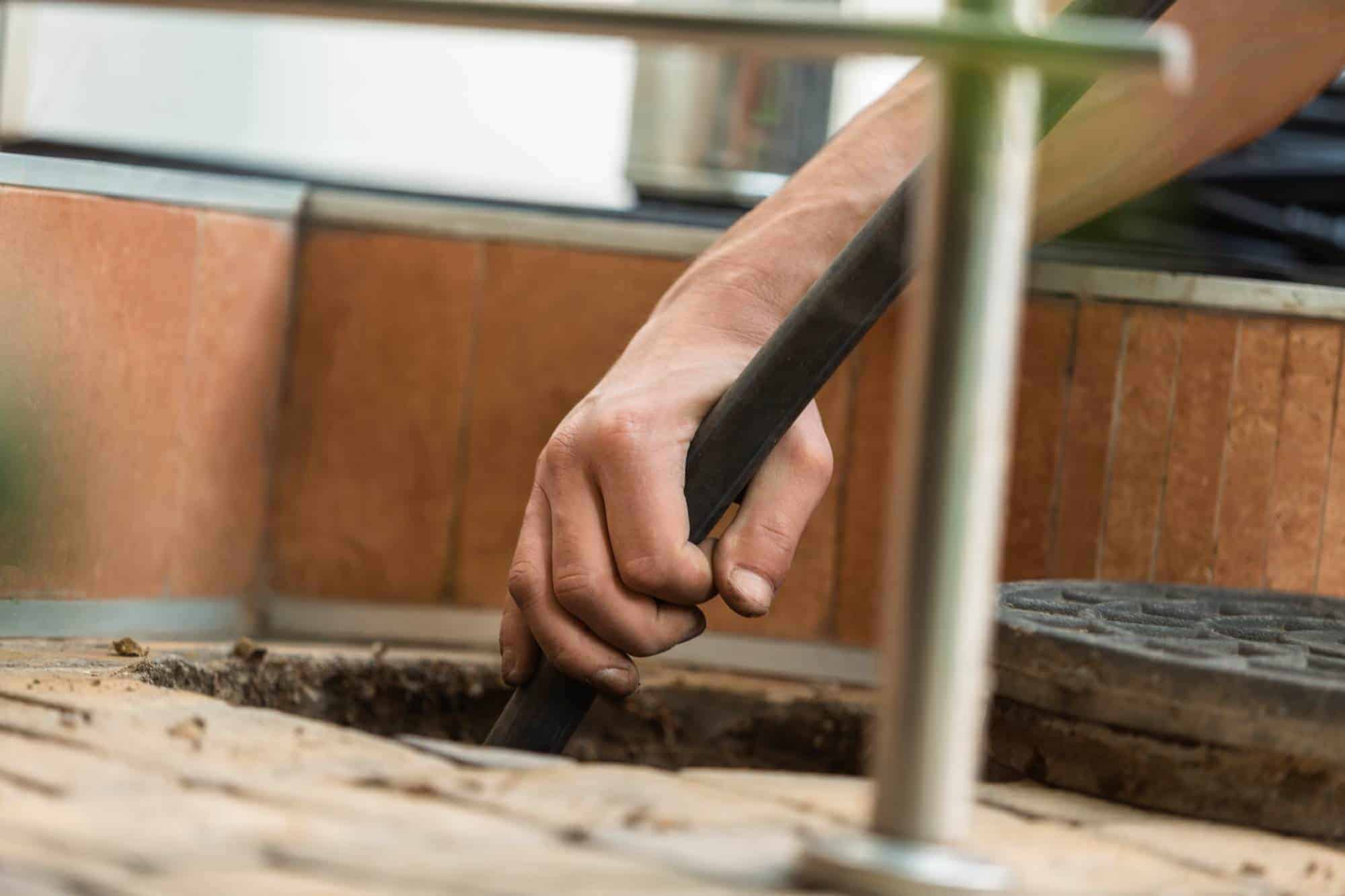
If your home inspector flags slow drains, gurgling sounds, or signs of backup anywhere in the house, that’s the obvious moment to call a plumber for a camera inspection. But in Cook County, the case for a sewer scope doesn’t require a red flag on the inspection report — it’s built into the age of the neighborhood.
Homes in Oak Park, Evanston, Skokie, and Wilmette sit under some of the most mature tree canopies in the metro area. Those roots travel toward water. Clay tile sewer laterals, which were standard in Chicago-area construction through much of the 20th century, have joints every few feet — and those joints are exactly where roots enter. A home inspection won’t catch that. A camera will.
The same logic applies to homes in Chicago’s denser neighborhoods. A two-flat in Logan Square built in 1922 has a sewer lateral that’s over 100 years old. The standard inspection will tell you the toilets flush and the visible drain lines look intact. It won’t tell you what’s happening underground between the foundation and the city connection.
Getting a plumbing camera inspection before or shortly after closing gives you a clear picture of what you’re working with. If the lateral is in good shape, you have documentation. If it’s not, you know before the problem becomes a crisis — and before you’re negotiating with a contractor from a position of zero leverage.
A sewer camera inspection from a licensed plumber is a different service than the sewer scope add-on some home inspection companies offer. A licensed plumber brings diagnostic equipment, the ability to interpret what the camera finds in the context of Chicago’s specific pipe infrastructure, and — critically — the ability to do something about it if there’s a problem.
In the Chicago area, plumbing camera inspections typically run in the range of $100 to $300 for a basic scope, though some providers charge more depending on access, pipe depth, and whether hydro jetting is needed to clear the line before the camera can pass through. Hydro jetting, which uses high-pressure water to clear blockages and buildup from drain lines, starts at $55 and is often the right first step when a camera reveals partial obstruction rather than structural damage.
If the camera inspection finds something that needs repair, the cost depends on what’s there. Root intrusion that hasn’t yet caused structural damage can often be cleared and managed. A collapsed section of clay tile lateral is a different conversation — and in Cook County’s older neighborhoods, it’s not an uncommon finding. Sewer line repairs in the Chicago area average $3,000 to $8,000. Knowing that before you close, rather than six months after, changes the entire negotiation.
We offer free quotes, upfront written estimates before any work begins, and $100 off sewer repair for customers who need to move from diagnosis to repair. We also offer $50 off main line rodding for buyers who need a lateral cleared rather than replaced. We serve Chicago and all of Cook County, we’re available 24/7, and we’ve been doing this since 2001 — which means we’ve seen what Chicago’s housing stock looks like underground, neighborhood by neighborhood.
A good home inspection is the starting point, not the finish line. The right inspector will be licensed, insured, credentialed through InterNACHI or ASHI, and willing to walk you through the house in real time. The companies listed here have earned strong reputations across Cook County for doing exactly that.
But a standard inspection has limits — and in Chicago’s aging housing market, those limits matter. Underground sewer lines, clay tile laterals, and root intrusion are not things a visual inspection will surface. A separate plumbing camera inspection fills that gap, and in most cases, it’s the smartest $100 to $300 you’ll spend in the entire transaction.
If your inspection flagged a plumbing concern, or if you’re buying an older home anywhere in Cook County and want to know what’s actually happening underground, we’re ready to help — same day, with upfront pricing and no surprises.
Article details:
Share:
Continue learning:
Request a Callback
Want to skip the wait?
Simply enter your contact details, and we’ll call you when a NY Spine Advisor becomes available.